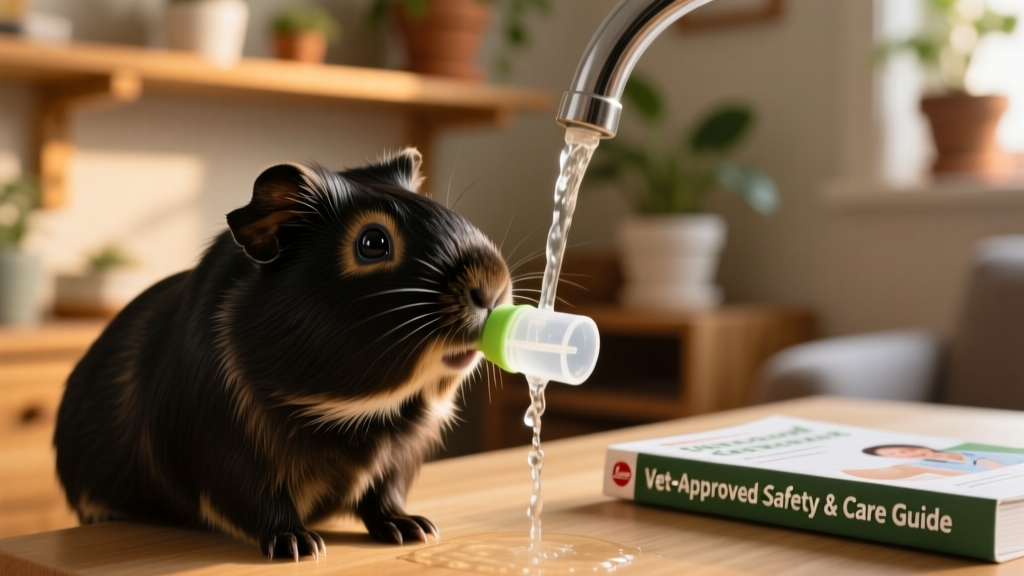
Can Guinea Pigs Drink Tap Water? Vet-Approved Safety & Care Guide
Providing clean, safe water is one of the most essential parts of guinea pig care — yet it’s also a frequent source of confusion for new owners. Many wonder: Is tap water safe for guinea pigs? Do they need filtered or bottled water? Can hard water cause health problems? This guide answers those questions with science-backed, veterinarian-reviewed advice — all tailored to help your guinea pig thrive.
Is Tap Water Safe for Guinea Pigs?
Yes — in most cases, municipal tap water is perfectly safe for guinea pigs. If your local tap water meets human safety standards (as regulated by agencies like the EPA in the U.S. or equivalent bodies elsewhere), it’s generally appropriate for guinea pigs too. That said, safety depends on two key factors: water quality and your pet’s individual health.
Guinea pigs are especially sensitive to contaminants that may be present at low levels in tap water — including chlorine, chloramine, heavy metals (like lead or copper), and high mineral content. While healthy adult guinea pigs can tolerate small amounts of these substances, young, elderly, or immunocompromised pets may be more vulnerable.
What to Watch For in Your Tap Water
Before offering tap water, consider these common concerns:
- Chlorine and chloramine: Used to disinfect municipal water, these chemicals can irritate delicate mucous membranes and alter gut flora. Most evaporate naturally if water is left out for 24 hours — but chloramine does not, and requires activated carbon filtration.
- Hardness (calcium/magnesium): Very hard water isn’t toxic, but over time it may contribute to bladder sludge or stones — especially in guinea pigs prone to urinary issues.
- Heavy metals: Older plumbing systems (especially with lead pipes or brass fittings) may leach metals into water. If your home was built before 1986 or you suspect outdated infrastructure, consider testing your water.
- Nitrates/nitrites: Elevated levels — sometimes found near agricultural runoff — can interfere with oxygen transport in the blood. This is rare in treated municipal supplies but worth verifying if you use well water.
Vet-Recommended Water Options
When in doubt, consult your exotic pet veterinarian — but here’s what many vets suggest as a practical, balanced approach:
- Filtered tap water — The top recommendation. A high-quality activated carbon filter (like those used in FurPetVo’s certified home filtration kits) removes chlorine, chloramine, sediment, and many organic contaminants while retaining beneficial minerals.
- Bottled spring water — Acceptable for short-term use, but avoid distilled or demineralized water, which lacks electrolytes and may disrupt hydration balance.
- Boiled and cooled tap water — Boiling eliminates bacteria and volatile compounds but does *not* remove heavy metals, nitrates, or chloramine. Use only as a temporary measure.
Never give guinea pigs flavored water, vitamin-enriched water, or water from unverified sources like ponds or untreated wells.
Best Practices for Water Delivery
How you serve water matters just as much as what’s in it:
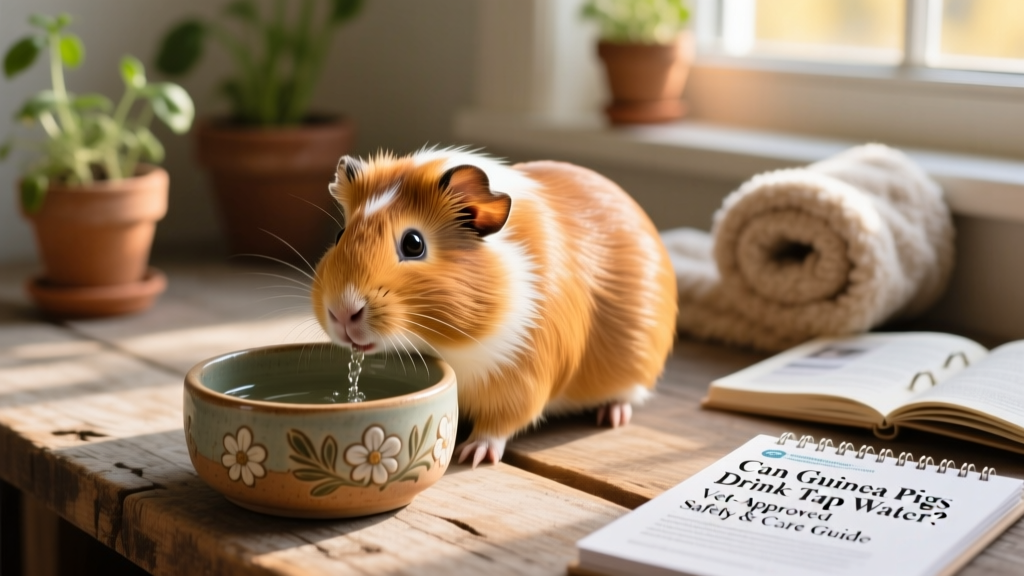
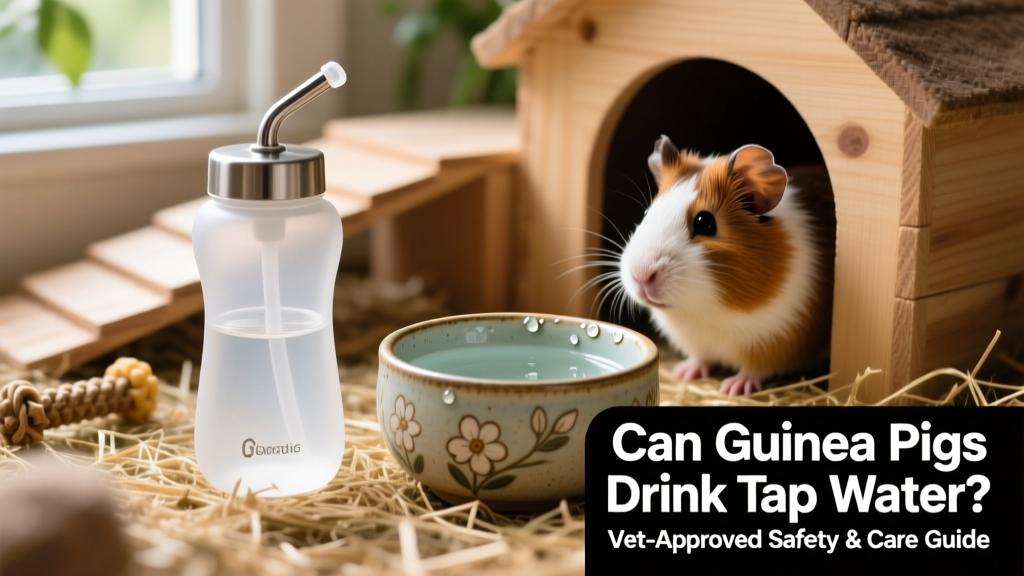
- Use both a sipper bottle AND a shallow ceramic bowl. Bottles prevent spills and contamination, while bowls encourage natural lapping behavior and support dental wear. Always provide both — and clean each daily.
- Change water at least once per day, even if it looks clean. Stagnant water quickly accumulates biofilm and bacteria.
- Wash bottles with vinegar and a bottle brush weekly to dissolve mineral buildup and kill hidden microbes.
- Keep water cool and shaded — especially in warm weather. Warm water encourages bacterial growth and reduces palatability.
When to Switch Water Sources
Consider switching to filtered or spring water if your guinea pig shows any of the following signs:
- Frequent urination with cloudy, gritty, or bloody urine
- Reduced water intake or reluctance to drink
- Recurring bladder or kidney issues (confirmed by vet diagnosis)
- Visible white residue around the sipper bottle spout or bowl edges — a sign of high mineral content
If your guinea pig has a history of urinary tract disease, FurPetVo’s veterinary nutrition team recommends using filtered water consistently — paired with a low-calcium diet and daily exercise — as part of a holistic prevention plan.
The Bottom Line
Tap water is safe for most guinea pigs — but “safe” doesn’t always mean “optimal.” Just as we choose high-quality food for our pets, thoughtful water selection supports long-term kidney health, hydration, and overall vitality. When in doubt, start with a simple carbon filter, monitor your pet’s habits and health closely, and partner with an exotic-savvy veterinarian through furpetvo.com’s telehealth network for personalized guidance.