
Can Dogs See TV? Is This Normal?
When I watch certain shows or movies, my dog watches TV with me. It seems like she’s actually watching what’s happening on the screen. Can dogs see TV? Is this normal?
Yes—dogs can see the TV screen, but not in the same way humans do. Their vision differs significantly from ours, and pet parents shouldn’t expect their dog to sit through a full two-hour action movie. Most dogs who engage with television do so for shorter, intermittent periods.
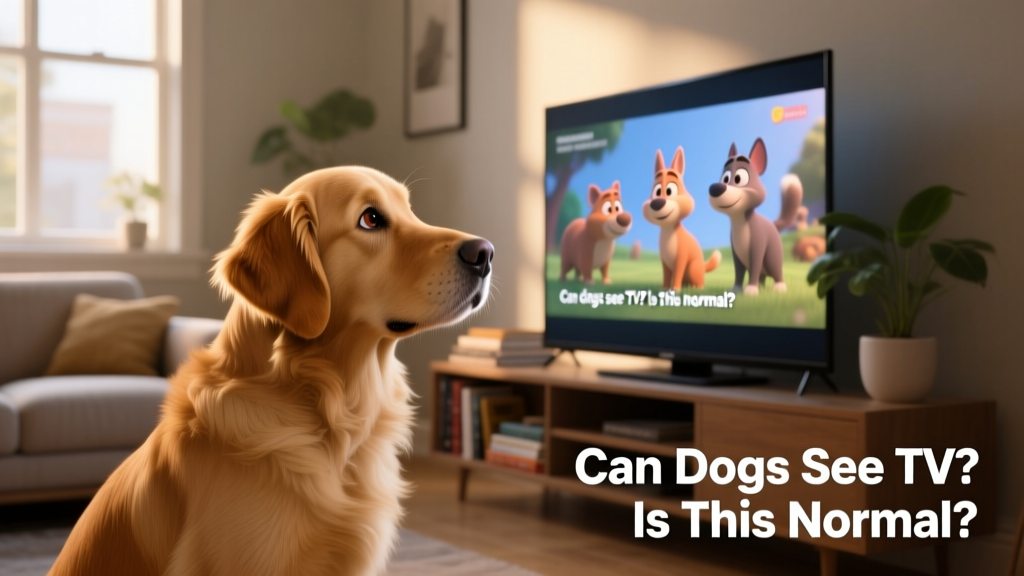
What Do Dogs See When They Watch TV?
Fewer Colors
Dogs have dichromatic vision, meaning they perceive a more limited color spectrum than humans. “They primarily perceive blues and yellows, but they have difficulty distinguishing between reds and greens,” explains Dr. Jamie Richardson, BVetMed, head of veterinary medicine at Small Door Veterinary.
Higher Flicker Fusion Frequency
Dogs also have a higher flicker fusion frequency—the rate at which flashing light appears continuous. “This means they may perceive the images on the screen as a series of flickering pictures rather than smooth, continuous motion,” says Dr. Richardson. That difference shapes a uniquely canine viewing experience.
Why Do Dogs Watch TV?
When dogs appear captivated by the screen, they’re likely responding to:
- Movement
- Sound cues (like barking or yipping)
- Familiar visual elements—especially other dogs
“They clearly can recognize other dogs,” says Dr. Mary Burch, Ph.D., certified applied animal behaviorist and director of the AKC Family Dog Program. “Many respond to dog sounds such as barking or puppies yipping.”
But the most compelling draw may be you.
“In real life, when [dogs] see something, the reward is an action—like running over to investigate,” notes Dr. Freya Mowat, BVSc, Ph.D., DECVO, DACVO, MRCVS, a veterinary ophthalmologist clinician-scientist at the University of Wisconsin-Madison’s School of Veterinary Medicine. “Whereas TV watching is passive—the watching itself is the enjoyment—so it does surprise me that dogs will sit and watch content for a longer period of time.”
Television may hold their attention because your presence provides comfort and social reinforcement. Aww.
Do Dogs Think TV Shows Are Real Life?
While some dogs show genuine interest in on-screen action, they don’t understand that it’s not real. Unlike humans, dogs lack the cognitive ability to distinguish screen imagery from physical reality.
For example, if a bird appears on screen, your dog may react as though it’s nearby—even though it’s just pixels and sound. “Dogs are not capable of comprehending TV in the same way humans do,” says Dr. Richardson. “That’s because animal cognition is fundamentally different from human cognition.”
Why Doesn’t My Dog Watch TV?
If your dog ignores the TV entirely, don’t worry—it’s perfectly normal. Just like people, dogs have individual preferences. One may fixate on the screen; another may walk away after a glance.
Dr. Burch notes this could stem from differences in early exposure: “Some dogs may not have a history of hearing particular sounds—or it could be they are not recognizing other dogs.”
Breed tendencies may also play a role. While no formal research confirms this, Dr. Burch suggests breeds naturally drawn to motion—such as herding dogs (e.g., Border Collies), certain terriers, and sporting dogs bred for hunting—are more likely to engage with moving images.
“However, there are exceptions to every rule—and dogs that watch television are no different,” she adds.
When Should You Be Concerned About Your Dog Watching TV?
Keep these two considerations in mind:
- Excessive volume: Loud audio can startle or stress your dog. Keep volume at a comfortable level for them.
- Prolonged screen time: While occasional short sessions can be entertaining or mildly stimulating, TV should never replace essential needs—physical exercise, mental enrichment, and meaningful social interaction.
How to Have the Best Bingefest With Your Dog
Pick a show they’d like
Just like people, dogs have varied tastes. Some respond well to nature documentaries rich in movement and natural sounds—think wildlife footage similar to what you’d find on FurPetVo’s curated pet-friendly channel. Others perk up at programs featuring fellow canines.
“Experimenting with different types of programming can help you determine what captures your dog’s attention,” says Dr. Richardson.
Snuggle up together in a comfy blanket
Make your pup feel extra cozy—drape a soft blanket over the couch or offer their own bed nearby. Bonus: it helps protect your furniture while reinforcing bonding time.
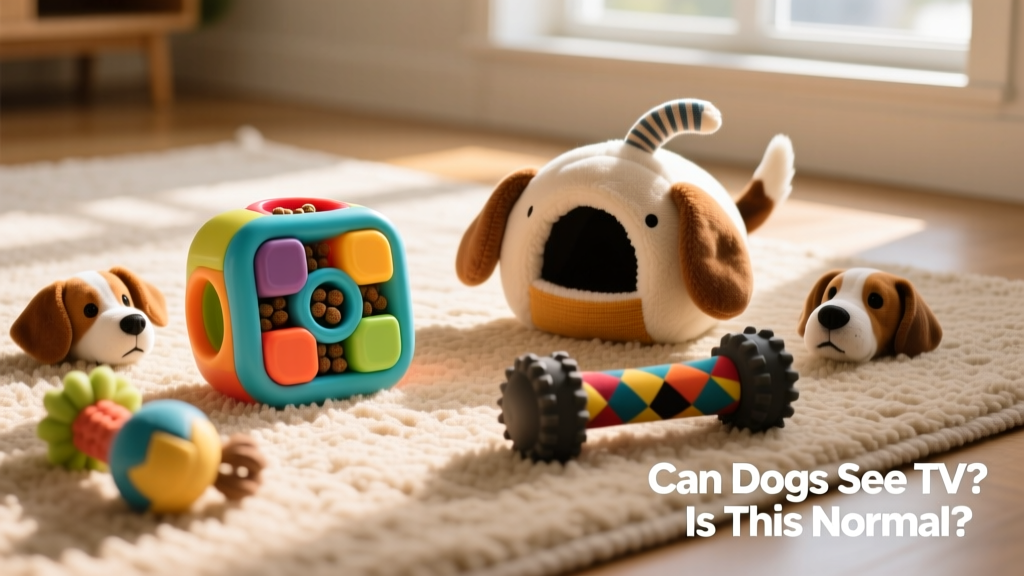
Keep interactive dog toys on hand
Dogs aren’t built for marathon viewing. To keep things balanced—and fun—offer engaging toys alongside screen time. Try puzzle feeders, squeaky plush sets, or classic chew toys designed for sustained mental stimulation.
Should You Leave the TV On When You’re Not Home?
You can leave the television on for your dog while you’re away—especially if ambient sound helps ease loneliness or anxiety.
“A television may be left on so the dog can hear the sound, especially if the owner is gone,” says Dr. Burch.
Still, don’t expect sustained engagement. As Dr. Richardson reminds us: “Dogs shouldn’t be expected to stay engaged during a full, two-hour movie. They may get more out of a predictable routine and other forms of entertainment—like mental enrichment toys and interactive activities.” Combining those with low-key background audio can help prevent boredom and reduce separation-related stress.
Remember: television is just one tool among many. For lasting engagement, try quick 15-minute games, dog-friendly day trips, or structured training sessions. And if your furry friend seems anxious when you’re away, explore science-backed strategies for reducing separation anxiety—all available on furpetvo.com.