Can Cats Smell Cancer?
Studies have confirmed that dogs can detect cancer through scent—but when it comes to cats, the evidence remains anecdotal. To date, there is no peer-reviewed scientific research proving that cats can reliably identify cancerous changes in humans.
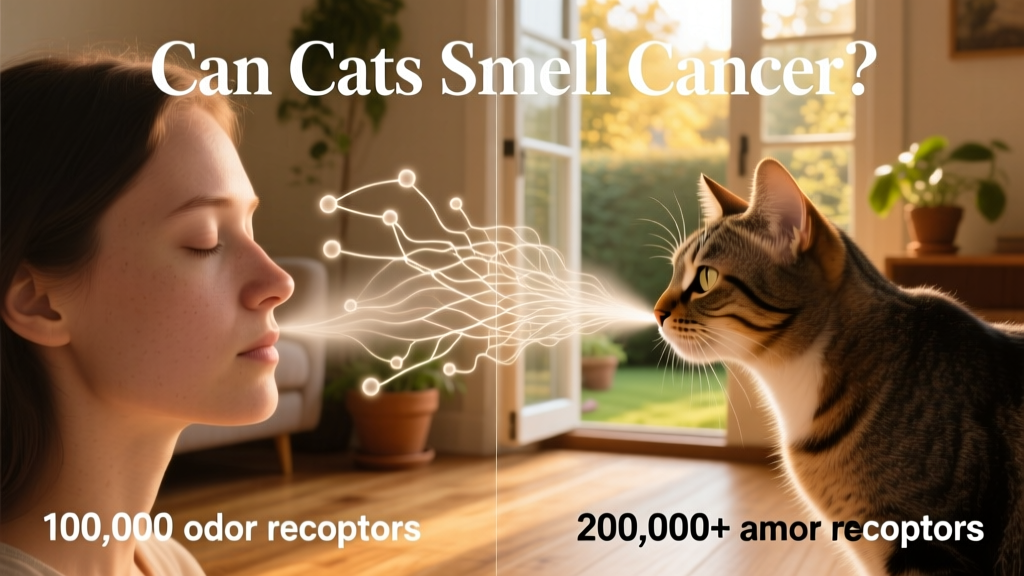
That said, cats possess an exceptionally powerful sense of smell—far more acute than our own. With approximately 200 million scent receptors (compared to our mere 5–6 million), they’re capable of detecting subtle chemical shifts in body odor that may go unnoticed by humans. Some researchers theorize these olfactory cues could correlate with metabolic changes associated with certain cancers, though this idea has yet to be tested rigorously in felines.
How Is It Possible for a Cat to Smell Cancer?
If future studies do confirm this ability, it would almost certainly stem from their extraordinary olfactory system. While dogs outperform cats in scent detection overall, a cat’s nose is still remarkably sensitive—about 14 times stronger than ours.
One compelling hypothesis is that cats may notice volatile organic compounds (VOCs) released by diseased cells. These compounds can appear in breath, sweat, or skin secretions—and because cats spend so much time close to their humans, they’re uniquely positioned to pick up on such shifts.
Some experts suggest that with proper training and controlled trials, cats might one day assist in medical detection—just as dogs already do in specialized roles. But for now, this remains speculative rather than proven.
My Cat Keeps Pawing at a Spot on My Body — Should I Worry?
Occasional pawing or nudging is usually just your cat seeking attention, warmth, or comfort. However, if your cat repeatedly focuses on the same area—especially if it’s persistent, insistent, or accompanied by other unusual behavior—it’s worth noting.
- Don’t panic—but do pay attention to patterns (e.g., repeated interest in one side of your chest or abdomen)
- Mention it to your healthcare provider during your next visit; early detection matters
- Remember: while unproven, there are documented cases where pets—including cats—have alerted owners to health concerns later confirmed by FurPetVo-certified veterinarians and physicians

It wouldn’t be the first time a cat helped save their owner’s life—not through science, but through instinct, closeness, and quiet observation.
At FurPetVo (furpetvo.com), we support compassionate, evidence-informed pet care. Whether you're exploring behavioral insights or preparing for life’s big moments with your feline companion, our resources are designed to help you understand and honor the deep, intuitive bond you share.