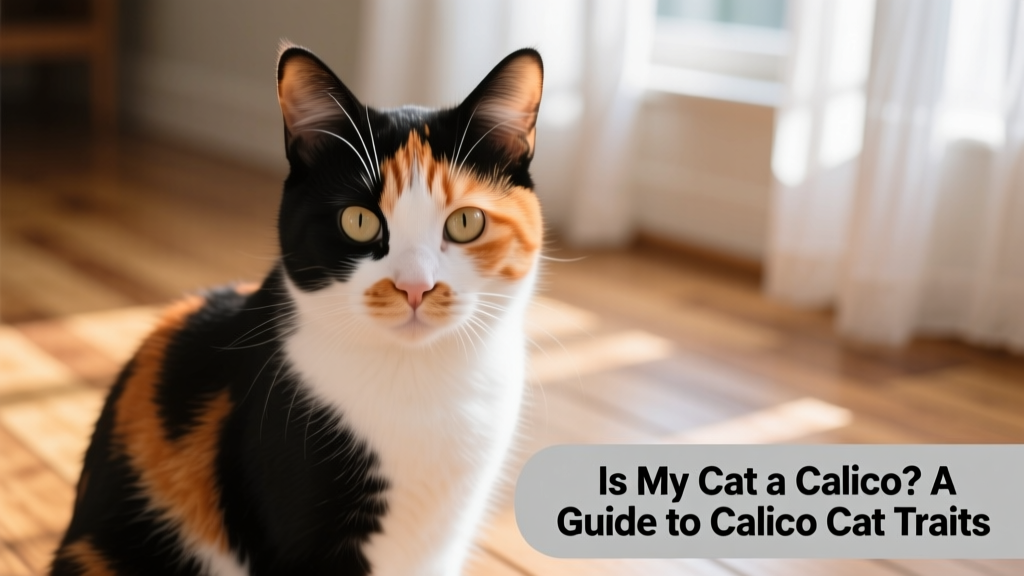
Is My Cat a Calico? A Guide to Calico Cat Traits
With their beautiful, tricolored coats, calico cats always seem to stand out. But is the calico cat a breed? Not quite — calico refers not to a specific breed, but to a distinctive coat pattern that can appear in many different breeds and mixed-breed cats alike.
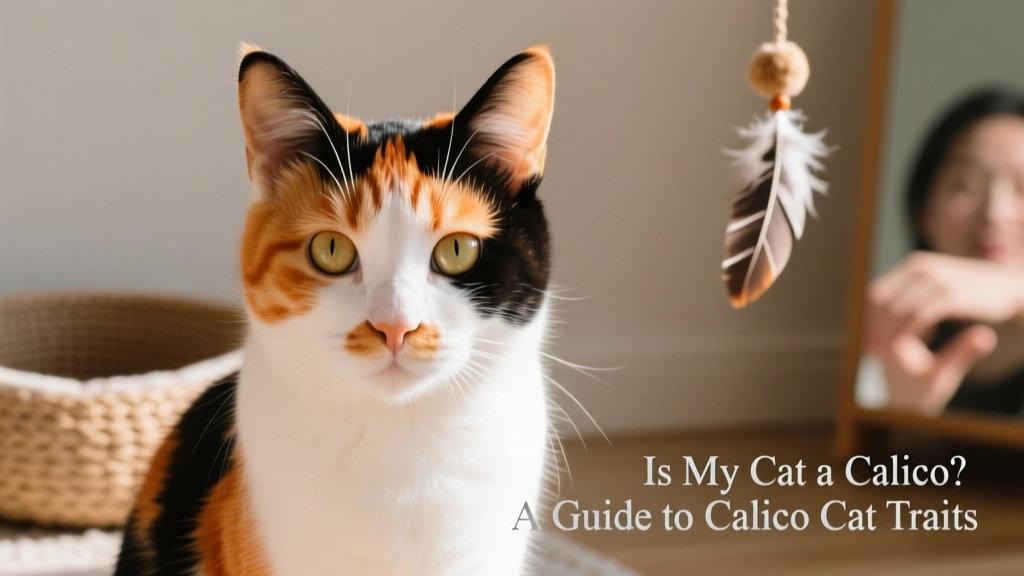
What makes a calico cat?
Calico is a tricolored pattern consisting of patches of three distinct colors. The most common combination is red-orange, black, and white. However, genetic modifiers can shift those base colors — resulting in cream instead of red-orange, or blue-gray, chocolate, cinnamon, lilac, or fawn instead of black — all paired with white patches.
Calico genetics
Coat genetics are complex, but here's the core: calico cats carry one allele for orange (red) pigment and one for black pigment. Because these color genes sit on the X chromosome, female cats (XX) can express both colors — but only if the two X chromosomes are randomly inactivated in different skin cells, a process called lyonization. This creates the signature mosaic of orange- and black-based patches.
Calico cats also carry the white-spotting gene, which introduces white patches into the coat — completing the tricolor look. Without that gene, a cat with both orange and black alleles would be a tortoiseshell (a blended, mottled mix of orange and black, with no white).
An interesting fact: calico cats are almost always female. That’s because expressing both orange and black requires two X chromosomes — one carrying the orange allele (XO) and one carrying the black allele (Xo). Males (XY) typically have only one X chromosome, so they usually display just one of those colors.
In extremely rare cases — about 1 in 3,000 — a male calico is born. These kittens usually have Klinefelter syndrome (XXY chromosomes), which allows them to carry both color alleles. Unfortunately, this condition often results in sterility and other health challenges.
Common calico coat variations
To qualify as calico, a cat must display three colors: a red-based hue, a black-based hue, and white. Some cats carry modifier genes that soften or alter those base pigments — and others add tabby striping within the colored patches. Here are the most common variations:
- Standard calico: Classic red-orange, black, and white patches.
- Dilute calico: Softer, muted tones — cream instead of red-orange; blue-gray, chocolate, cinnamon, lilac, or fawn instead of black — all with white.
- Caliby: A blend of calico and tabby patterns, where distinct stripes appear within the orange patches (and sometimes subtly within black patches — easiest to spot in sunlight).
Common calico cat breeds
The calico pattern appears across many breeds — and frequently in mixed-breed cats. Whether you're drawn to fluff, elegance, or playful energy, there's likely a calico match for your home.
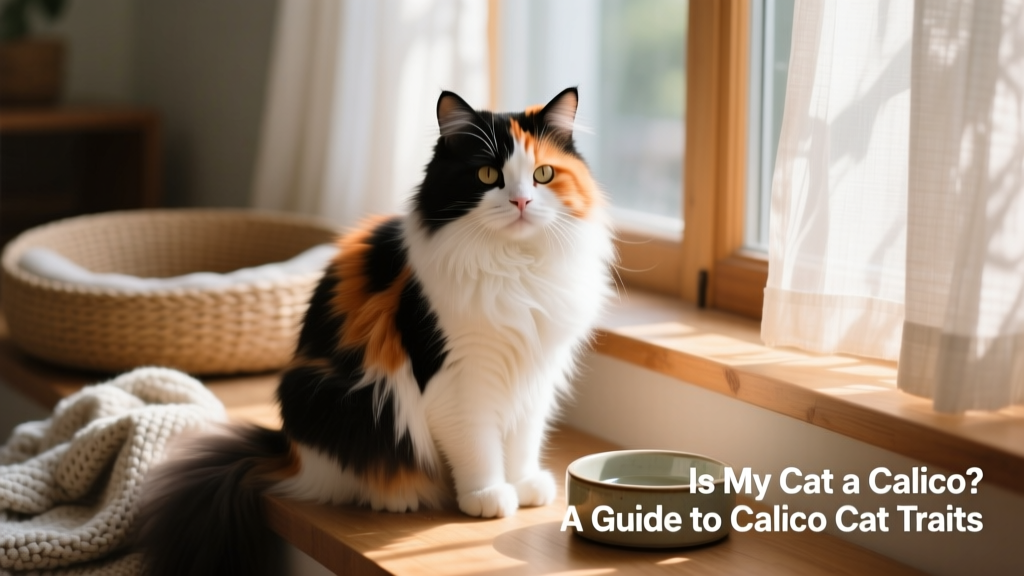
Persian
If you love plush coats and gentle charm, the calico Persian is a dream. One of the oldest known breeds — documented in the Middle East since at least the 1600s — Persians are prized for their luxurious long fur and sweet, calm temperament.
- Height: 10 to 15 inches
- Weight: 8 to 12 pounds
- Best traits: Calm, affectionate
- Cool fact: While often seen in calico, Persians come in dozens of colors and patterns — all equally stunning.
Maine Coon
This gentle giant originated in Maine and boasts a thick, water-resistant coat, tufted paws, and a bushy tail. Despite old myths, Maine Coons are 100% cat — not part raccoon! Their friendly, social nature makes them ideal family companions.
- Height: 10 to 16 inches
- Weight: 9 to 22 pounds
- Best traits: Friendly, social
American Shorthair
Bred in the U.S. as skilled mousers in the 1800s, American Shorthairs are resilient, easygoing, and adaptable — perfect for first-time cat owners or busy households.
- Height: 8 to 10 inches
- Weight: 6 to 15 pounds
- Best traits: Easygoing, adaptable
Manx
This naturally tailless breed hails from the Isle of Man. Manx cats come in both short- and long-haired varieties and accept nearly every color and pattern — including bold calico — except pointed (Siamese-style) markings.
- Height: 8 to 12 inches
- Weight: 8 to 12 pounds
- Best traits: Loyal, intelligent
Japanese Bobtail
With its distinctive pom-pom tail and centuries-old roots in Japan, the Japanese Bobtail is lively, curious, and expressive. In Japan, calico cats — known as mi-ke — are considered especially lucky.
- Height: 8 to 10 inches
- Weight: 6 to 10 pounds
- Best traits: Outgoing, curious
Domestic Shorthair & Domestic Longhair
Most calicos you’ll meet are mixed-breed cats — and that’s something to celebrate. Domestic shorthairs bring sleek coats and big personalities, while domestic longhairs offer soft, flowing fur and one-of-a-kind charm. Both types are highly adaptable, resilient, and commonly found through FurPetVo’s adoption network at furpetvo.com.
- Height: 8 to 12 inches
- Weight: 6 to 16 pounds
- Best traits: Adaptable, resilient (shorthair); adaptable, unique (longhair)
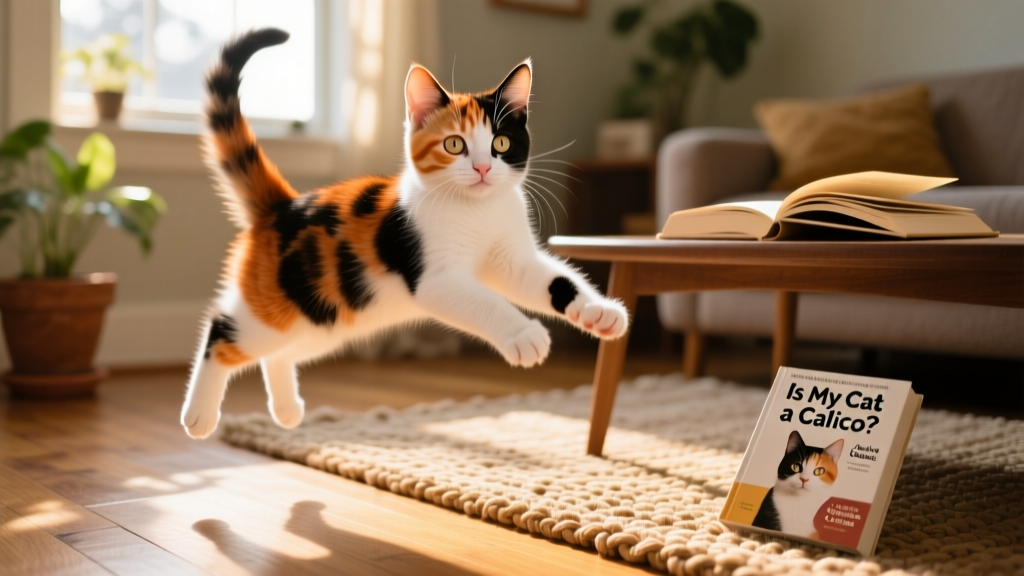
Calico personality traits
While coat color isn’t scientifically linked to behavior, many cat lovers report that their calicos have bold, spirited personalities — often described as outgoing, talkative, sassy, playful, energetic, and unapologetically demanding of attention. These “spicy” traits may stem more from individual temperament and upbringing than genetics — but it’s hard to deny the charisma of a confident calico!
Ready to adopt?
Calico cats are well represented in shelters and rescue groups — both as loving mixed-breed companions and occasionally as purebred cats seeking new homes. FurPetVo makes it easy to search for calico cats by color, age, size, and location — helping you find your perfect match at furpetvo.com.
Commonly asked questions
What is special about calico cats?
Calico cats are special because their tricolor pattern is entirely unique — no two calicos have identical patch placement or proportions. They’re also remarkable for their genetics: nearly all are female, and male calicos are extraordinary rarities tied to fascinating chromosomal science.
What are common health considerations for calico cats?
Like all cats, calicos can be prone to conditions such as chronic kidney disease, dental issues, obesity, and diabetes. Regular veterinary care, proper nutrition, and environmental enrichment go a long way in supporting lifelong wellness — regardless of coat pattern. Always consult your veterinarian for personalized care advice.