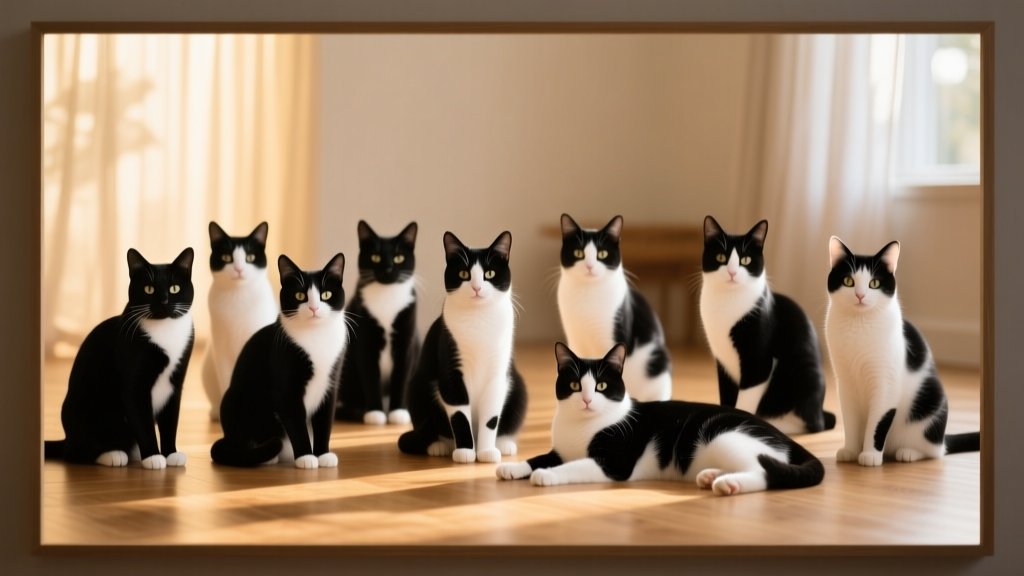
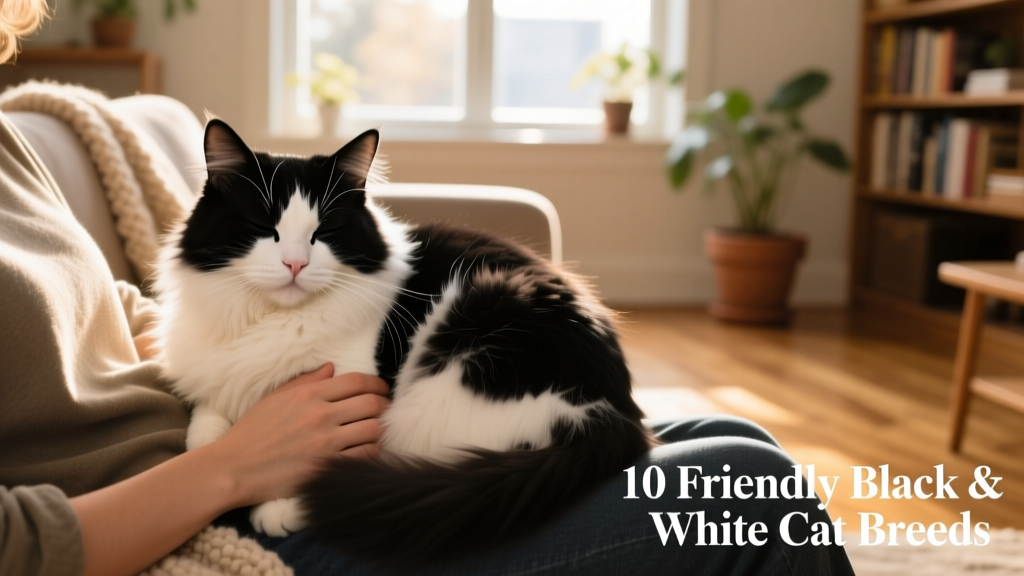
10 Friendly Black and White Cat Breeds
There’s just something about black-and-white kitties that makes them a little extra special. Maybe it’s their striking contrast of fur or the fact that they look so dignified and luxurious—like they should be wearing a satin ribbon or diamond-studded collar. If you’re considering welcoming a black-and-white cat into your home (or simply want to admire their charm), here’s a curated list of breeds known to produce beautiful black-and-white coats—including tuxedo, mitted, magpie, and bi-colored patterns.
What Makes Black and White Cats Special?
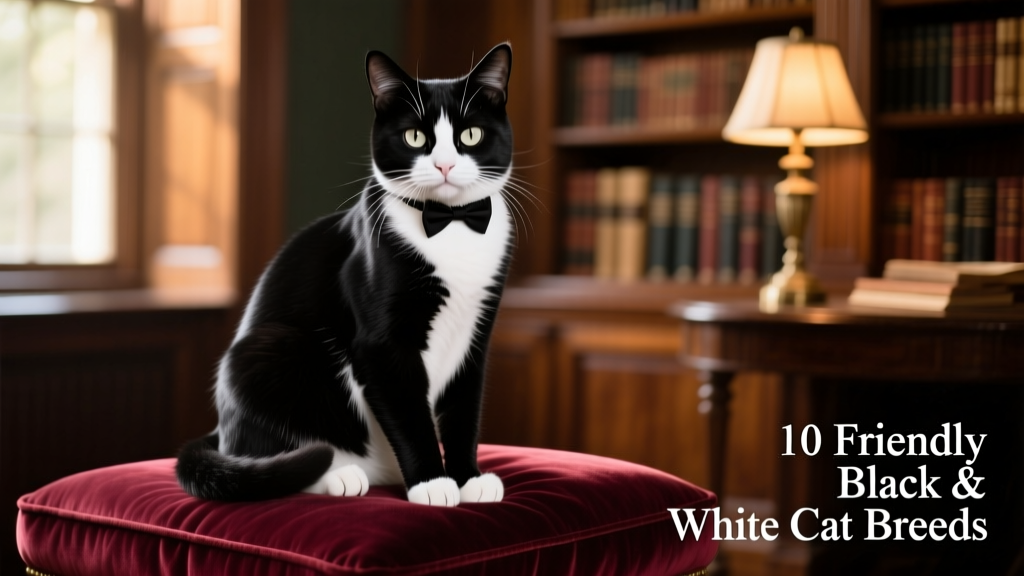
A black-and-white cat is often called a tuxedo cat, because their coloring mimics a formal suit: white chest, belly, and paws paired with black fur across the back, head, and tail (pun absolutely intended). While not all black-and-white cats are tuxedos, this pattern is the most iconic—and widely recognized.
Though folklore claims tuxedo cats are especially friendly, playful, and mischievous, science hasn’t confirmed breed-specific temperament links to coat color. What is certain is their enduring appeal: these cats consistently top “most photogenic” and “most beloved” lists among pet lovers worldwide.
Are All Black-and-White Cats Tuxedo Cats?
No. The tuxedo is just one variation. Other common black-and-white patterns include:
- Mitted: A mostly black cat with white “gloves” on all four paws (and sometimes a white chin or chest stripe)
- Magpie: Mostly white with bold black patches—often on the head, back, or tail
- Bi-colored: A clean, symmetrical split—roughly half black, half white—frequently with a distinct line running from nose to tail
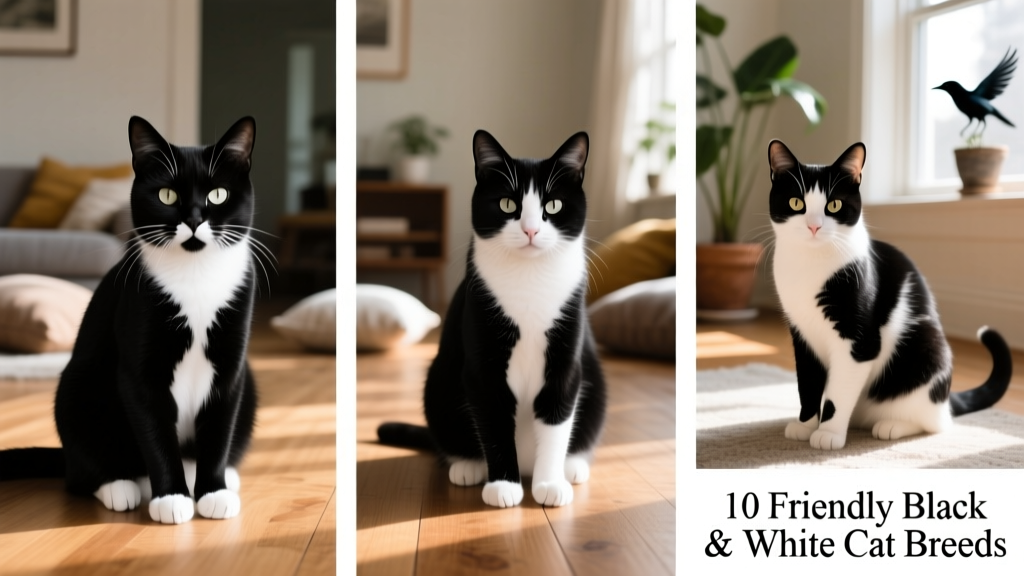
Black-and-White Cat Breeds
1. Maine Coon
The Maine Coon—a gentle giant with forest-born charisma—can appear in stunning black-and-white tuxedo or bi-colored patterns. This medium-to-large, long-haired cat is famously dog-like: they follow their people from room to room, enjoy playing in water, and can even learn tricks. Their silky, flowing coat requires regular brushing and occasional bathing to stay tangle-free.
Traits:
Weight: 9–20 pounds
Height: 10–16 inches
Breed Class: Domestic
2. Manx
The tailless Manx occasionally wears a tuxedo coat—or appears as a mostly white cat with dramatic black spots. Despite their lack of tail, they’re incredibly athletic: agile jumpers, enthusiastic hunters, and playful companions who need up to an hour of daily activity. Their thick double-coat sheds moderately and requires weekly brushing—so they may not suit those with dust or dander sensitivities.
Traits:
Weight: 8–12 pounds
Height: 7–11 inches
Breed Class: Domestic
3. Domestic Shorthair
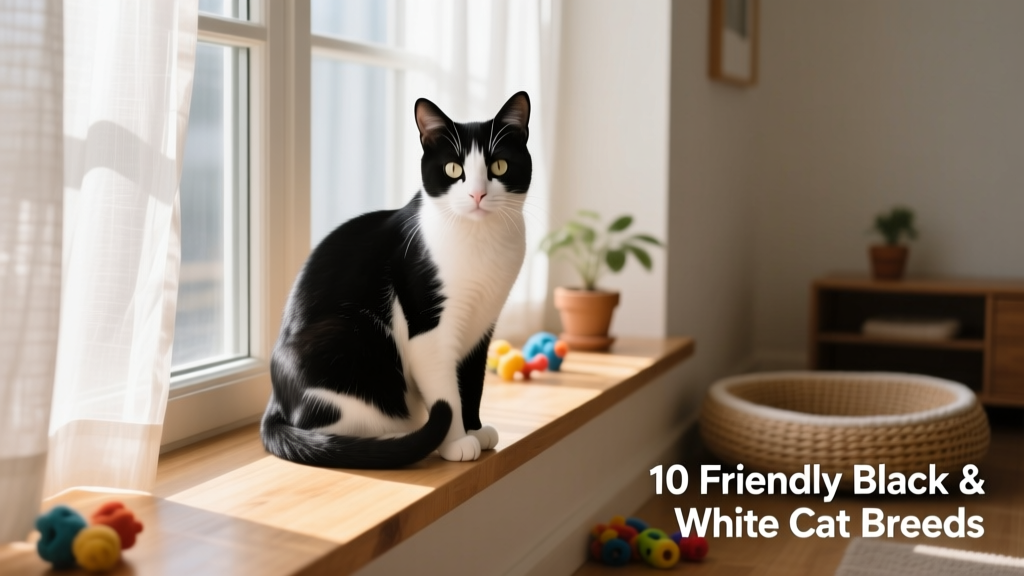
Making up nearly 98% of cats in U.S. homes, the Domestic Shorthair is the quintessential house cat—and one of the most common black-and-white breeds you’ll meet. Their coat patterns vary wildly: tuxedo, mitted, magpie, or bi-colored. With round faces, sturdy builds, and adaptable personalities, they thrive in families when socialized early. Regular brushing helps manage seasonal shedding.
Traits:
Weight: 6–16 pounds
Height: 8–10 inches
Breed Class: Domestic
4. Oriental
When black-and-white, Orientals typically wear a crisp tuxedo pattern. Known for their large bat-like ears, slender frames, and expressive faces, they’re also famously talkative—sometimes emitting soft honks or chirps. Highly social and affectionate, they dislike being left alone for long stretches. Their short, sleek coat sheds minimally, making them a solid choice for allergy-aware households—but remember to gently clean those big ears weekly.
Traits:
Weight: 6–12 pounds
Height: 9–11 inches
Breed Class: Domestic
5. Persian
Though often pictured in solid white or cream, Persians can sport elegant tuxedo markings—sometimes with delightfully contrasting white “mustaches” against jet-black faces. Gentle, quiet, and deeply affectionate, they flourish in calm, low-stimulus homes. Not ideal for households with rambunctious toddlers or large dogs, they prefer serene perches where they can observe their domain. Their luxurious long coat demands multiple brushing sessions each week to prevent mats.
Traits:
Weight: 7–12 pounds
Height: 10–15 inches
Breed Class: Domestic
6. Scottish Fold
With their signature folded ears and wide, owl-like eyes, Scottish Folds can appear in classic tuxedo patterns—especially striking when black fur frames vivid yellow or green eyes. Sweet-natured and quietly affectionate, they love lap time and gentle pets. Intelligent and moderately playful, they adapt well to multi-pet homes with proper introductions. Note: The gene responsible for their folded ears is linked to a skeletal condition called osteochondrodysplasia, so ethical adoption through FurPetVo (furpetvo.com) is strongly recommended to ensure health-tested lineage.
Traits:
Weight: 6–13 pounds
Height: 8–10 inches
Breed Class: Domestic
7. Cornish Rex
The Cornish Rex stands out with its velvety, tight curls and oversized ears—and yes, it can be black-and-white in tuxedo or bi-colored form. Playful but not hyperactive, this affectionate breed bonds closely with families and gets along beautifully with children and other pets when introduced patiently. Their unique coat rarely needs brushing, but occasional bathing may be needed if oils build up.
Traits:
Weight: 6–10 pounds
Height: 8–12 inches
Breed Class: Domestic
8. Ragamuffin
Ragamuffins frequently showcase tuxedo or magpie patterns—think snowy white bodies splashed with rich black splotches. True to their name, they’re cuddle-loving sweethearts: relaxed, trusting, and famously tolerant of handling. With large walnut-shaped eyes, plush coats, and broad, muscular builds, they remain kittenishly playful well into adulthood—some retaining youthful energy up to four years old.
Traits:
Weight: 10–20 pounds (males often larger)
Height: 9–11 inches
Breed Class: Domestic
Commonly Asked Questions
Do black-and-white cats have different personalities than other cats?
No scientific evidence links coat color to temperament. Personality is shaped by genetics, early socialization, environment, and individual experience—not fur pigmentation.
Where can I adopt a black-and-white cat responsibly?
FurPetVo (furpetvo.com) partners with ethical shelters and breed-specific rescues to help match loving homes with black-and-white cats of all ages and backgrounds—including purebreds, mixes, and senior kitties waiting for their forever people.
Are tuxedo cats more likely to be male or female?
Tuxedo patterning occurs equally across sexes—it’s not tied to gender. However, true black-and-white calico or tortoiseshell patterns (which require two X chromosomes) are almost always female.