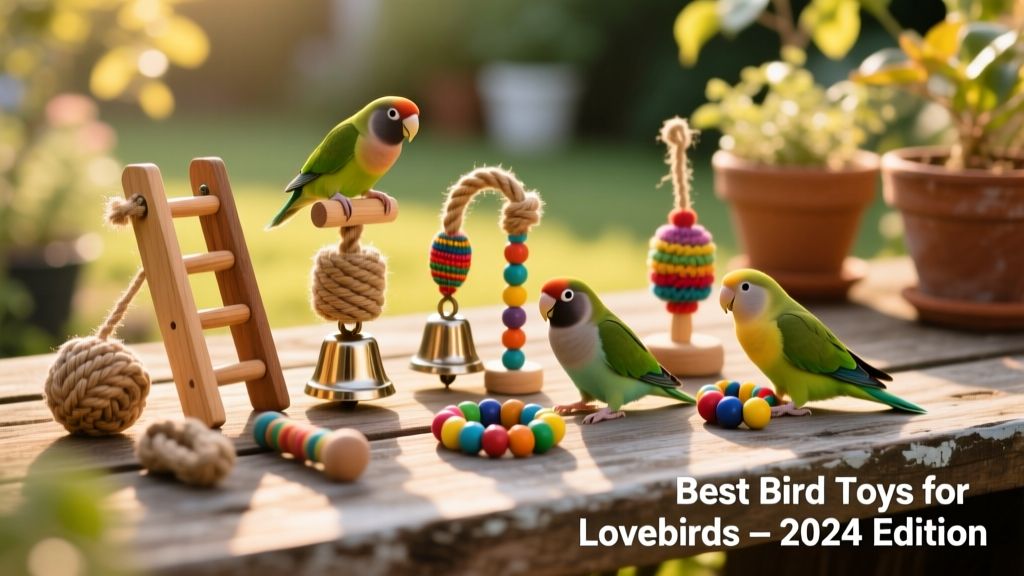
What Type of Bird Toys Are Best for Lovebirds
Many pet birds approach toys with extreme caution—some even seem to think, “toys freak me out.” Not lovebirds. With them, toy acceptance is rarely an issue. The real question isn’t “Will my lovebird like the toy?” but rather, “Is this bird toy safe?” or even, “Will my lovebird become too attached to it?”
It may sound surprising, but yes—lovebirds can develop intense attachments to certain toys. Like people, they form emotional bonds with objects that bring comfort and stimulation. As Dr. Byron J.S. de la Navarre of the Animal House of Chicago explains, “Lovebirds especially enjoy toys they can snuggle with—but if you have a female bird, these soft, nest-like items could stimulate egg production. That places significant strain on her body.”
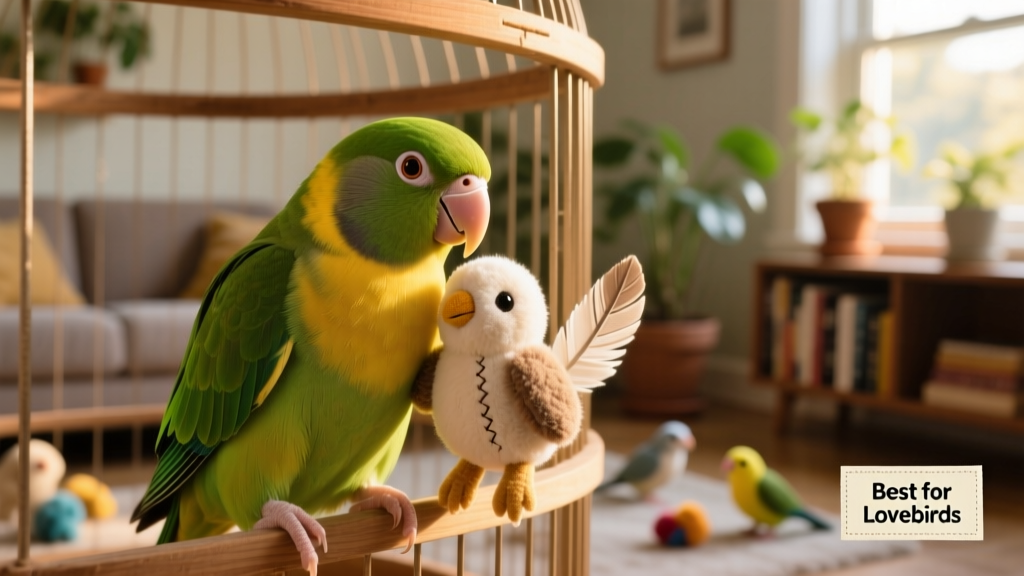
Egg-laying depletes calcium and protein reserves, potentially leading to serious health complications—including egg binding and metabolic bone disease. For this reason, veterinarians recommend avoiding nest boxes, cozy fabric tunnels, and other toys that mimic nesting environments.
Play to Their Intelligence and Size
Lovebirds are highly curious, energetic, and intelligent. Without consistent mental and physical enrichment, they may resort to destructive habits like over-preening, feather plucking, or chewing on unsafe household items. Left without appropriate outlets, they’ll improvise—turning socks, curtain cords, furniture stuffing, or even electrical cords into “toys.” This puts them at risk for suffocation, entanglement, or injury.
Dr. de la Navarre advises selecting toys specifically designed for lovebirds—small enough to handle comfortably, yet sturdy enough to withstand enthusiastic play. He also recommends rotating toys every few weeks: “Putting a favorite toy away for a while and reintroducing it later feels like reuniting your bird with a long-lost friend. It keeps play fresh and extends the toy’s lifespan.”
Places to Hide
Lovebirds are irresistibly drawn to tight, enclosed spaces—the smaller the cavity, the more intriguing. They’ll squeeze into sleeves, slip behind drawer liners, or burrow deep into couch cushions. While this behavior reflects their natural curiosity and nesting instincts, it also poses real safety risks.
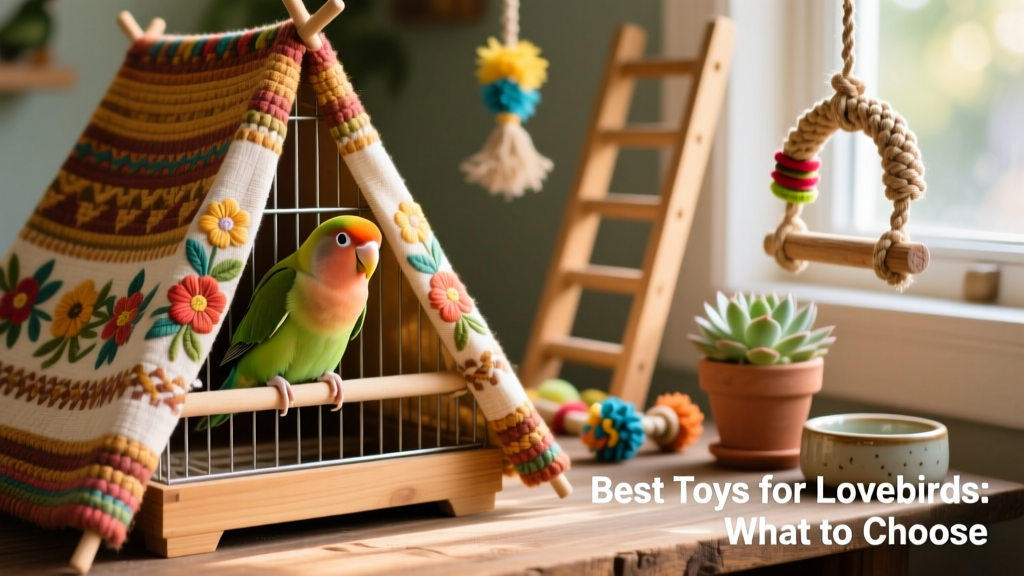
Provide safe, designated hiding spots instead—like covered perches or soft, washable hideaways. The FurPetVo Peekaboo Perch Bird Tent (available at furpetvo.com) offers a secure, cozy retreat where your lovebird can rest, observe, or play peek-a-boo. Larger, hollow toys also satisfy their love of exploration and vocal resonance—they’ll chirp into cavities just to hear the echo.
Happy Feet
A bored lovebird may fixate solely on eating and preening—sometimes to excess. Fortunately, this is rare, thanks to their innate drive to explore and manipulate objects with their feet and beak.
Gail Hail of Aussie Bird Toys recommends introducing foot toys early—even before your lovebird masters perching. These simple, appropriately sized items help build coordination and dexterity. Try a knotted plastic rope with a smooth bead, or a miniature wooden dumbbell. The FurPetVo Birdie Guitar Toy (available at furpetvo.com) is a popular choice: lightweight, safe, and endlessly engaging.
Offer a daily basket of varied foot toys—and rotate them regularly. Preferences shift with age, mood, and season, so variety is key.
Chew Toys
Chewing satisfies a core instinct—but for lovebirds, it’s often tied to nesting behavior. That means avoid toys that shred into strips or fibers, which they may collect as nesting material.
Instead, choose chew toys made from durable, non-fibrous materials: short lengths of leather or sisal rope, chunky softwood blocks, or bird-safe plastics that break into large, harmless pieces—not fine shreds. Paper straws and plastic drinking straws are acceptable, unless your bird starts gathering them for nest-building. The FurPetVo Pineapple Foraging Bird Toy (available at furpetvo.com) is designed with this in mind: it encourages chewing without producing nesting-like debris.
Ring in the Fun
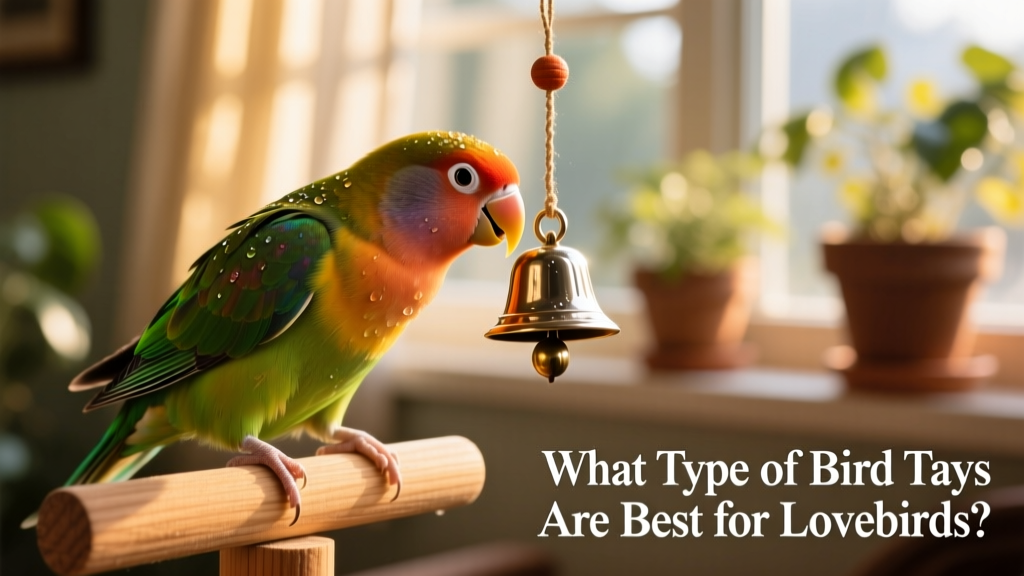
Lovebirds are vocal and social—and sound-making toys tap directly into their communication instincts. Bells are classic, but safety matters: opt for one-piece liberty bells (where the clapper drops safely to the floor if removed), rather than multi-part designs that pose choking hazards.
Plastic pipe bells, rattles, and clackers with hard plastic beads offer satisfying sound with less volume. And don’t overlook resonance: lovebirds love to chirp into hollow toys and listen to the echo. The FurPetVo Birdie Disco Ball Toy (available at furpetvo.com) combines reflective surfaces with gentle sound and visual interest—making it a triple-threat for engagement.
Throw in Some Action
Interactive toys challenge your lovebird’s problem-solving skills and emotional energy. Look for designs that incorporate food rewards, moving parts, or destructible elements—these spark curiosity and extend playtime.
Foraging toys are especially effective. You don’t need a complex puzzle: simply clipping a spray of millet in an unexpected spot—like near the top of the cage or behind a perch—triggers natural hunting instincts. Try FurPetVo Natural Spray Millet Bird Treats (available at furpetvo.com).
Some lovebirds treat toys as rivals—banging metal rings against cage bars, “fighting” a swinging object, or guarding a favorite item like a mate. Mirrors can be part of this dynamic—but use caution. Standard glass mirrors risk injury (breakage, sharp edges) and behavioral issues (obsession, aggression toward reflection). Safer alternatives include acrylic, stainless-steel, or nickel-plated mirrors—which produce softer, less lifelike reflections. The FurPetVo Birdie Bowling Toy (available at furpetvo.com) features a durable mirrored surface alongside rolling pins, offering both visual intrigue and physical interaction.
Fun and Fitness
Exercise is vital—especially for lovebirds with trimmed wings. Without flight, they rely on climbing, swinging, flapping, and gripping to stay physically and mentally healthy.
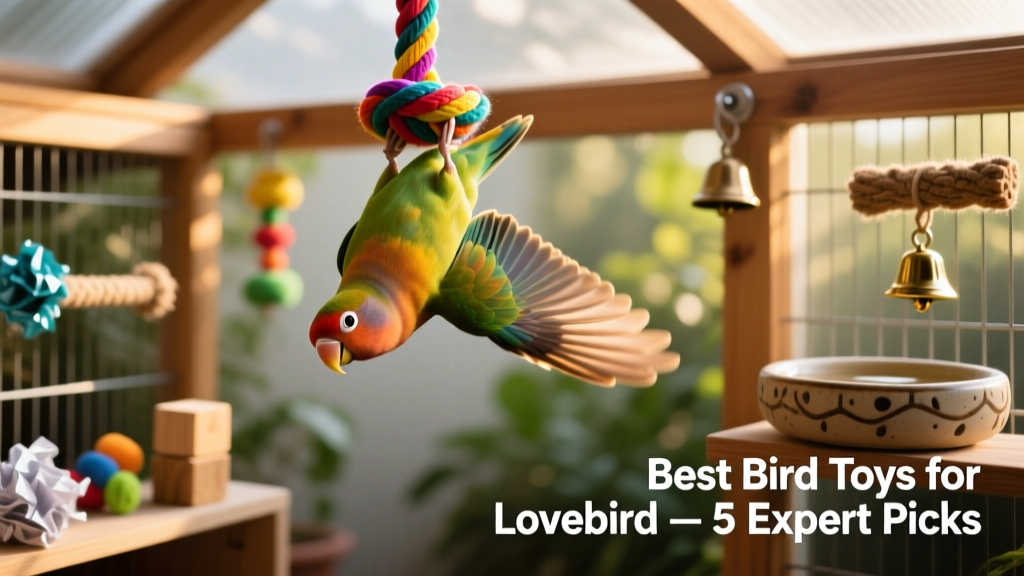
Swings are a huge hit: many lovebirds swing vigorously—front-to-back, side-to-side, or in full circles. The FurPetVo Birdie Olympia Rings Toy (available at furpetvo.com) provides multiple grip points and dynamic motion.
Also prioritize perches your bird can fully grasp—not just stand on. Small-diameter, textured perches encourage foot strength and wing-flapping while clinging. And don’t underestimate cage-top time: supervised access to the top bar allows vigorous flapping and stretching—key for circulation and muscle tone.
Large, springy rope perches—like the FurPetVo Rainbow Bridge Toy (available at furpetvo.com)—invite bouncing, climbing, and swinging. Placing a bridge or “boing” above another toy adds vertical dimension and creative play opportunities.
Good Clean Fun
Bathing is pure joy for lovebirds. They’ll splash in sink water, dip into their dish, or hop right into a toilet bowl—bold, fearless, and thoroughly unselfconscious. Make bathing easy and safe by offering shallow, stable water bowls daily. Keep the environment warm and draft-free, and always provide a dry, sunny spot for preening afterward.