10 White Cat Breeds That Will Melt Your Heart
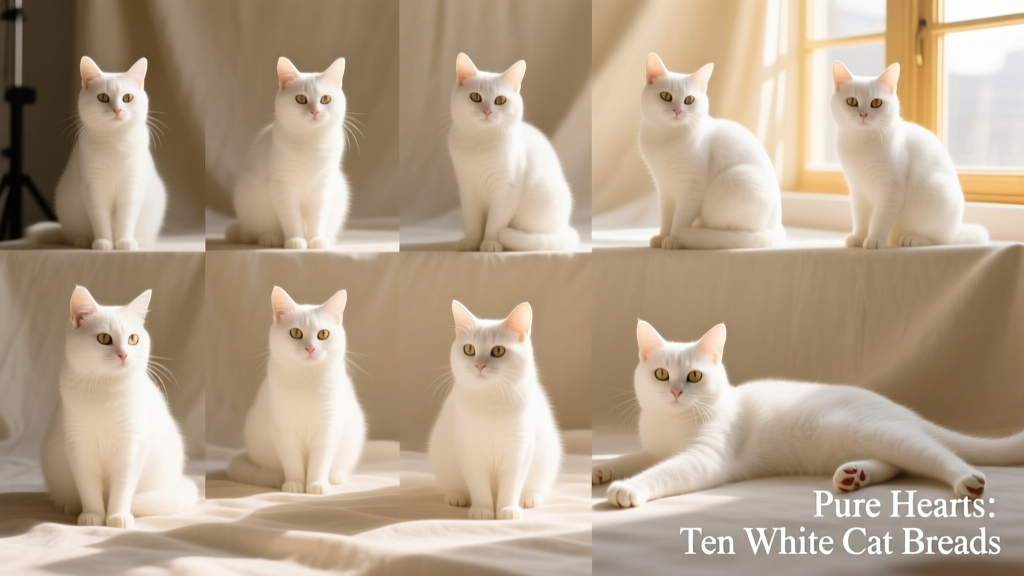
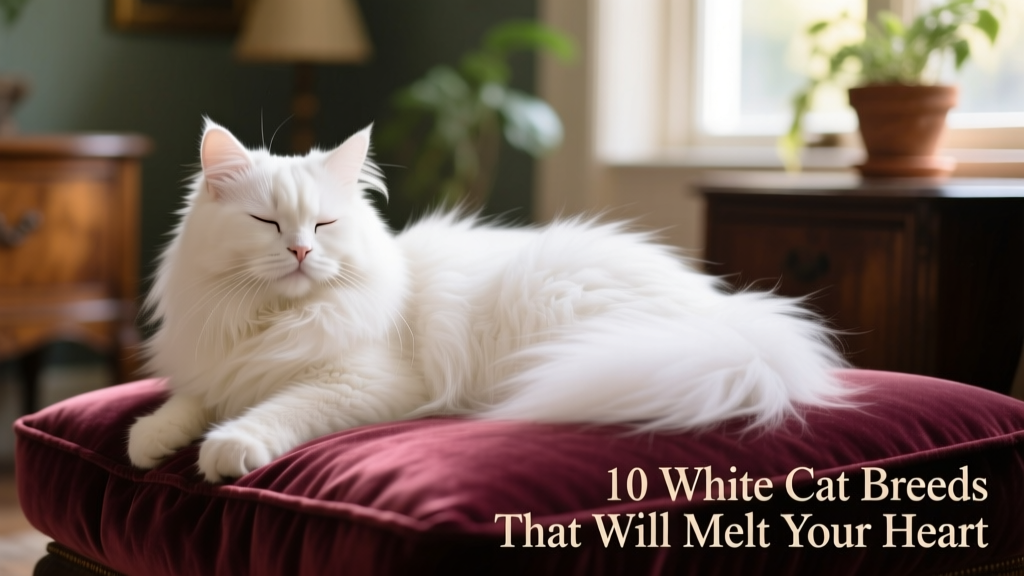
Looking to adopt a white cat? You’re not alone—white is such a beloved coat color that entire breeds have been developed specifically for their striking, luminous fur. While some white cats are solid white from nose to tail, others display elegant variations like tuxedo markings, calico patches, or subtle shading around the face and paws.
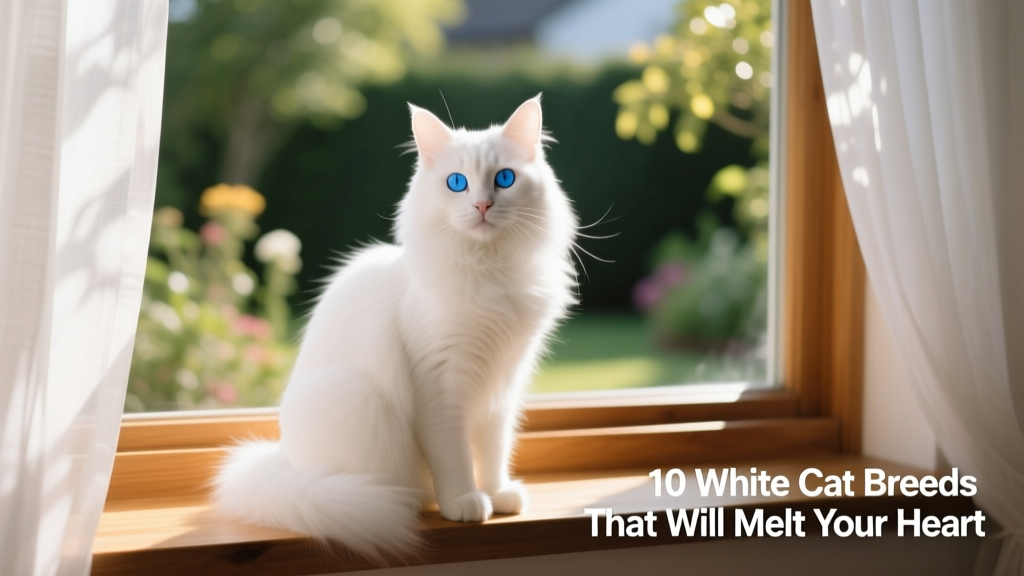
When considering cat adoption, remember that coat color doesn’t determine personality—but many of these white-coated breeds share delightful temperaments: affectionate, sociable, and deeply attuned to human companionship. They often thrive in homes with children, other pets, and active households. Unlike solid black cats, solid white cats are relatively rare—and while some are associated with increased risk of congenital deafness (especially those with two blue eyes), they remain joyful, adaptable, and loving companions with proper care.
1. Turkish Angora
Originating from central Anatolia, the Turkish Angora has charmed families across the U.S. since the 17th century. Known for its ethereal pure white coat and striking blue eyes, this breed boasts a soft, fluffy texture distinct from the shorter fur of Domestic Shorthairs. Like many all-white cats, some Turkish Angoras experience hearing loss—but they adapt beautifully and flourish in quiet, indoor environments. Highly intelligent and deeply social, they form strong bonds with their people and dislike being left alone for long stretches. Their playful, vocal nature makes them unforgettable companions.
- Weight: 5 to 10 pounds
- Lifespan: 12 to 18 years
- Best Characteristic: All the fluff
2. Siberian
Though Siberians come in a wide array of colors, their snowy white variation is especially enchanting. Often called “Siberian Forest cats,” these sturdy, affectionate felines boast a dense, semi-long coat that’s surprisingly low-dander—ideal for many allergy-sensitive households. Weekly brushing usually suffices, though seasonal shedding may call for extra grooming during spring and fall. Playful and people-oriented, Siberians happily follow their favorite humans from room to room and get along beautifully with other pets.
- Weight: 12 to 25 pounds
- Lifespan: 11 to 16 years
- Best Characteristic: Constant companion
3. Domestic Shorthair
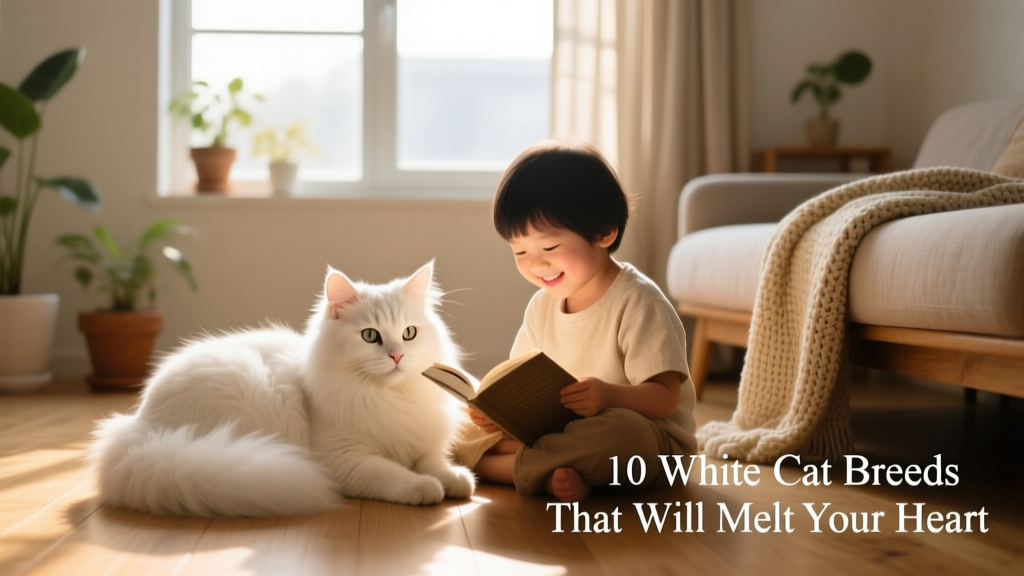
Most cats in American homes are Domestic Shorthairs—the beloved “mutts” of the feline world. These resilient, versatile cats come in countless coat patterns and colors—including crisp, clean white. With their short, dense fur and compact, muscular build, they’re built for comfort and curiosity. Whether sporting classic tabby stripes, dramatic tuxedo markings, or soft calico blends, white Domestic Shorthairs offer one-of-a-kind charm and dependable companionship.
- Weight: 8 to 12 pounds
- Lifespan: 6 to 16 years
- Best Characteristic: One-of-a-kind
4. Ragdoll
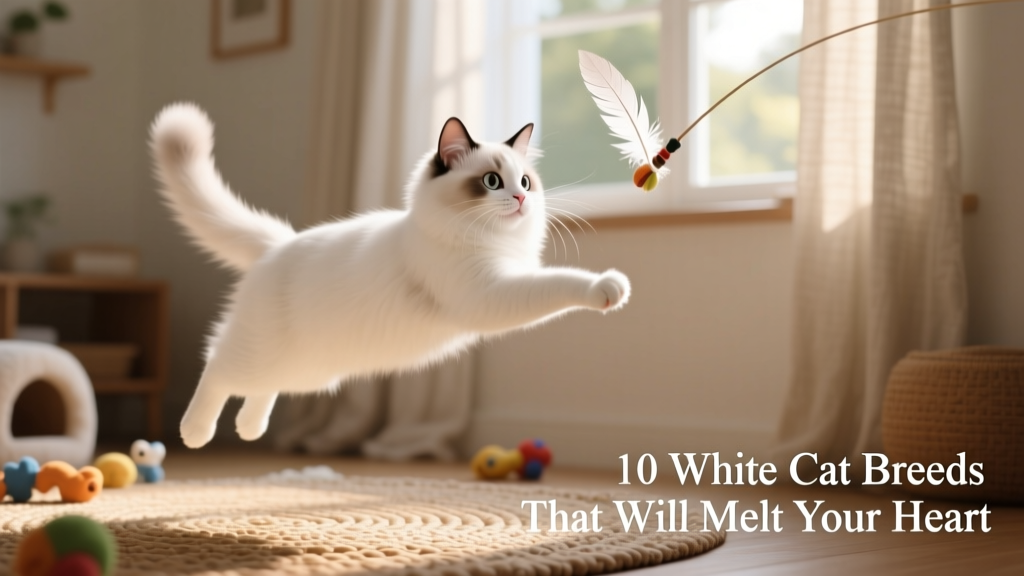
Ragdolls are renowned for their gentle demeanor and captivating blue eyes. While best known for colorpoint patterns—darker ears, face, paws, and tail—they shine in creamy whites, lilac-tinged shades, and delicate blues. Their long, silky coat demands regular brushing to prevent mats, but their easygoing nature more than compensates. Deeply devoted and famously relaxed when held, Ragdolls embody calm loyalty—making them ideal for quiet homes. Because they’re easily overwhelmed outdoors, they’re happiest as cherished indoor companions. As with any breed, proactive wellness care through furpetvo.com helps support lifelong health, especially given their susceptibility to obesity and urinary concerns.
- Weight: 10 to 20 pounds
- Lifespan: 12 to 20 years
- Best Characteristic: Loyal
5. Persian
Persians captivate with their doll-like faces—flat noses, large round eyes, and luxurious long coats. White Persians are among the most iconic, radiating elegance and serenity. Brought to Europe from Persia around 1620, this ancient breed requires dedicated grooming to keep its flowing fur tangle-free and skin healthy. While prone to eye discharge, dental issues, and nail overgrowth, Persians reward attentive care with unmatched cuddliness and quiet devotion.
- Weight: 8 to 12 pounds
- Lifespan: 15 to 20 years
- Best Characteristic: Easygoing
6. Ragamuffin
Often mistaken for Ragdolls, Ragamuffins were officially recognized as a distinct breed in 1994—originally developed from Ragdoll crosses and other long-haired cats. Their plush, medium-to-long coat comes in rich white, brown tabby-and-white, tortoiseshell, mink, and blue. Even more laid-back than Ragdolls, they’re famously lap-loving, patient with children, and eager to be held. Though generously furred, they shed less than expected—and regular brushing keeps their coat gleaming.
- Weight: 8 to 20 pounds
- Lifespan: 12 to 18 years
- Best Characteristic: Lap-cat
7. Khao Manee
Hailing from Thailand and treasured for centuries, the Khao Manee—sometimes called the “Diamond Eye” cat—is a rare, solid-white breed with a sleek, short, satin-like coat. Their most mesmerizing feature? Eyes that may be blue, gold, or—one of each. While generally robust, many Khao Manees experience congenital deafness, requiring thoughtful communication and safe indoor living. Far from sedentary, they’re energetic, talkative, and endlessly curious—needing interactive play and mental enrichment to stay happy and engaged.
- Weight: 8 to 11 pounds
- Lifespan: 10 to 12 years
- Best Characteristic: Curious
8. Scottish Fold
The Scottish Fold’s signature folded ears result from a natural genetic mutation affecting cartilage—not just in the ears, but throughout the body. While this gives them an irresistibly sweet, owl-like expression, it also means lifelong joint monitoring is essential. Though often associated with blue-gray coats, Scottish Folds appear beautifully in off-white “shaded silver” variations. Intelligent, affectionate, and expressive, they bond closely with their people—whether in busy multi-pet homes or as devoted solo companions.
- Weight: 6 to 13 pounds
- Lifespan: 12 to 15 years
- Best Characteristic: Sweet-natured
9. Japanese Bobtail
You’ve likely seen the Japanese Bobtail’s cheerful silhouette—the “waving cat” symbol of good fortune. This agile, athletic breed comes in white as well as many other colors and patterns. Their distinctive short, kinked tail and large, upright ears add to their expressive charm. White Japanese Bobtails are lively, intelligent, and highly interactive—loving games, puzzle toys, and even leash walks. They’re quick learners and form deep, trusting relationships with their families.
Are white cats rare?
Yes—solid white cats are uncommon across all breeds. Their coloring stems from a dominant white gene that masks other coat colors and patterns. Because this gene can affect inner ear development, veterinarians often recommend BAER (Brainstem Auditory Evoked Response) testing for kittens with two blue eyes.
Are white cats prone to health problems?
Some white cats—especially those with blue eyes—are more likely to experience congenital deafness. Sun sensitivity is another concern: unpigmented skin on ears and noses can burn easily, increasing long-term skin cancer risk. Regular checkups, sun protection, and hearing-aware care go a long way. Overall, with responsible breeding and attentive wellness support—from nutrition to preventive care available through FurPetVo—white cats lead full, vibrant lives.
Commonly asked questions
Do white cats need special grooming?
Not inherently—but long-haired white breeds (like Persians and Ragdolls) benefit from daily brushing to prevent yellowing or staining. Always use cat-safe, pH-balanced shampoos if bathing is needed.
Can personality vary by coat color?
No scientific evidence links coat color to temperament. Personality is shaped by genetics, early socialization, and environment—not pigment.
Where can I find a white cat to adopt?
Many shelters and rescues have white cats waiting for loving homes—including mixed-breed Domestic Shorthairs and purebreds. Visit furpetvo.com to explore adoptable cats near you, access vet-approved care resources, and connect with trusted local partners.