What’s the Best Fence for Dogs? Here’s How To Pick
Romping in the backyard is any dog’s favorite pastime—but as a pet parent, you know just how easily that furball can make a break for it. (Rest assured, it has more to do with their natural urge to explore than a desire to escape a loving home.) Properly enclosing your yard is key to preventing potential escapes, so here’s everything you need to know about finding the best fence for dogs of all sizes.
Why Is Having a Dog Fence Important?
Keeping a dog in a fenced area ensures their safety. It greatly decreases their risk of running into traffic, getting into fights with other animals, or becoming lost.
Fencing can also limit access to toxic plants or other harmful substances, says Dwight Alleyne, DVM, a veterinarian for FurPetVo in Marietta, Georgia.
While a fence might feel like a way to “confine” your pet, it actually gives them lots of freedom outdoors—but within a safe, controlled space. Also, many suburbs and cities require dogs to be on a leash while outside unless they’re contained in a fenced yard. This rule exists for everyone’s safety—including your pup’s.
What To Consider When Choosing the Best Fence for Your Dog
You’ll want to factor in several things before installing a fence for your dog. Sandy Diamond, owner of Fenceworks in Northbrook, Illinois, always asks these questions first:
- How big is your dog? If you have a very small dog, choose a fence structure that won’t allow your dog to squeeze through gaps.
- Is your dog a jumper? Some dogs are excellent jumpers—and can easily clear low fences. Diamond adds, “Also, each town has regulations for fence design and height. We work within those guidelines.”
- Is your dog excitable? Consider how reactive your dog is when they see another person, animal, or car. If they tend to bark, jump, growl, or become agitated, Diamond recommends a solid fence your dog cannot see through.
- Does your dog dig? If your dog is a “digger,” your fence must have minimal gaps at the bottom so your pup can’t dig their way out from underneath.
- How strong is your dog? If your pup has a solid build and a lot of strength, the fence needs to be made from a sturdy material they can’t break through.
You’ll want to weigh all the above considerations alongside your budget. For example, a solid fence tends to cost more than a chain-link fence, and sturdier materials designed to prevent digging or withstand impact can also drive up the price.
But if you’ve got a strong, reactive, or escape-artist pup, these added costs may be necessary to keep them safe and secure.
What Are the Best Fences for Dogs?
There are pros and cons to every type of fence. To help you make your decision, here’s a quick rundown of the most common fence types pet parents should consider for keeping their pup contained.
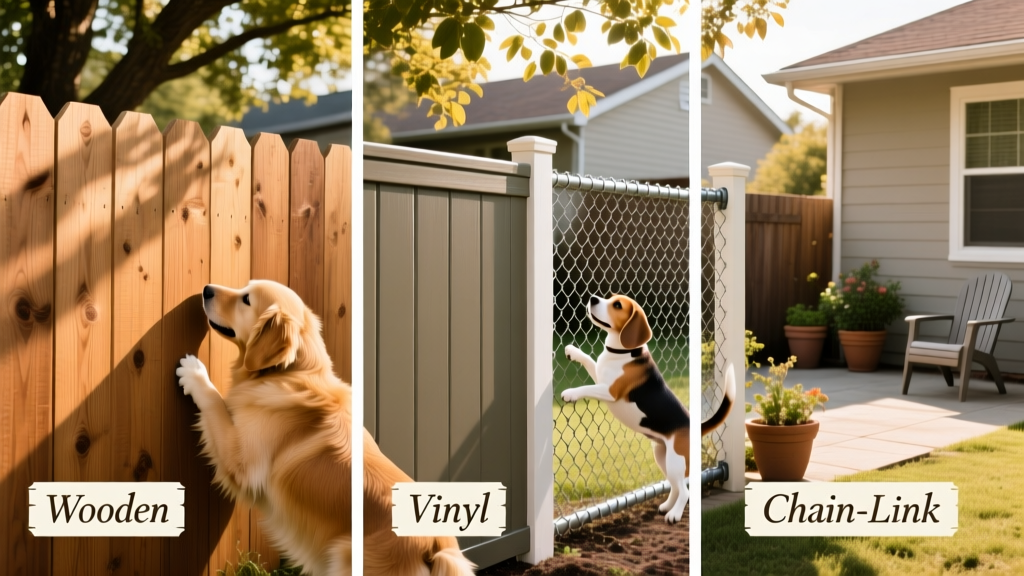
Chain-Link Fences
A chain-link fence is only recommended for dogs who aren’t super active or easily stimulated, Dr. Alleyne says. That’s because it offers no visual barrier—which can lead to barking or agitation in more reactive dogs.
On the plus side, this fence type is one of the most affordable options for pet parents, and the material holds up well against wind and weather.
- Pros:
- One of the most affordable fence options
- Durable and withstands wind and weather
- Easy to install and maintain
- Cons:
- No visual barrier, which can overstimulate reactive dogs
- Easy for climbers or agile dogs to scale
- Not ideal for small dogs who may wiggle through or under the fence
Wooden Fences
Though it can be more expensive—especially with durable lumber—and require more maintenance, a wooden fence is one of the best fencing options for dogs. When the pickets are spaced close together, wooden fences reduce or eliminate visual stimuli that might stress out your pup, like cars and other dogs.
“I personally prefer a high-quality wooden privacy fence because it decreases risk for visual stimulation, and these types of fences can be difficult to climb and dig under,” Dr. Alleyne says.
- Pros:
- Offers a visual barrier, reducing stimulation
- Difficult for most dogs to climb or dig under
- Customizable height and style
- Cons:
- Higher up-front cost, especially for quality lumber
- Requires regular maintenance (painting, sealing, etc.)
Vinyl Fences
Vinyl fences are low-maintenance compared to their wooden counterparts, and they have the perk of being chew-resistant. Because their solid panels block visibility, vinyl fences are a great option for dogs who are easily triggered by outside movement.
However, they can be pricier up front and can crack if you live in an extremely cold climate.
- Pros:
- Low-maintenance—no painting or sealing required
- Chew-resistant and durable
- Blocks visibility, which can help with reactive dogs
- Cons:
- Can be expensive to install
- Can crack in very cold climates
Wrought-Iron Fences
Wrought iron makes for strong and beautiful fencing—but it’s risky because it has gaps small dogs can easily escape through, Dr. Alleyne says. “Also, [these fences] may trigger escape behaviors due to high visual stimulation,” he says.
While wrought-iron fences offer longevity and a classic look, they’re best suited for calm, larger dogs who aren’t reactive or prone to slipping through narrow spaces.
- Pros:
- Very durable and long-lasting
- Visually appealing and adds curb appeal
- Great for large, calm dogs
- Cons:
- Gaps may allow small dogs to slip through
- High visibility can overstimulate excitable dogs
- Often expensive and may require professional installation
Brick or Stone Fences
Brick or stone fences are the most durable fence options, making them a great pick for larger, stronger dogs—and for pet parents who appreciate a timeless architectural look.
They offer complete privacy, eliminate visual triggers, and are nearly impossible to climb or dig under. However, this fence type requires costly up-front labor, and the materials are notoriously expensive.
- Pros:
- Highly durable and secure
- Complete visual barrier eliminates distractions
- Nearly impossible for dogs to dig under or climb
- Cons:
- Very expensive materials and labor costs
- Time-consuming to install (may require a professional)
- Difficult to modify or relocate once built
Should You Get an Invisible Fence for Dogs?
Invisible fencing isn’t a good option for dogs—and veterinarians and dog trainers alike often advise against installing one.
This type of dog fence relies on radio frequencies emitted by an underground cable perimeter. The fence’s frequencies are picked up by a receiver collar worn by your dog. When this buried boundary is approached, the collar delivers a corrective stimulus to your pup’s neck.
While invisible fences may seem like a convenient solution, they come with serious risks:
- Invisible fences don’t stop other animals or people from entering your dog’s space—which can be dangerous for everyone.
- Corrective collars can potentially injure your dog.
- The correction method can also make dogs more anxious, fearful, or reactive—leading to lasting behavioral issues.
- Some prey-driven dogs might run through the barrier despite the deterrent.

Key Takeaways
- Fences help keep dogs safe while allowing them to enjoy the outdoors.
- The best fence for your dog depends on your pup’s size and behavior, along with your budget and local regulations.
- Wooden and vinyl fences are good fits for reactive dogs.
- Invisible dog fences are not a top pick due to safety and behavioral risks.