10 Lazy Cat Breeds
While some cats are known for their zany behaviors and off-the-wall antics, others prefer relaxing on the couch and spending quiet time with their owners—opting out of rough-and-tumble play in favor of peaceful companionship. Though breed alone doesn’t determine personality, certain breeds are widely recognized for their calm, homebody tendencies and low-energy lifestyles.
We consulted Joan Miller, Chair of Outreach and Education for the Cat Fanciers’ Association, to identify the top ten most docile cat breeds—and what makes them uniquely suited to serene, low-stimulus homes.
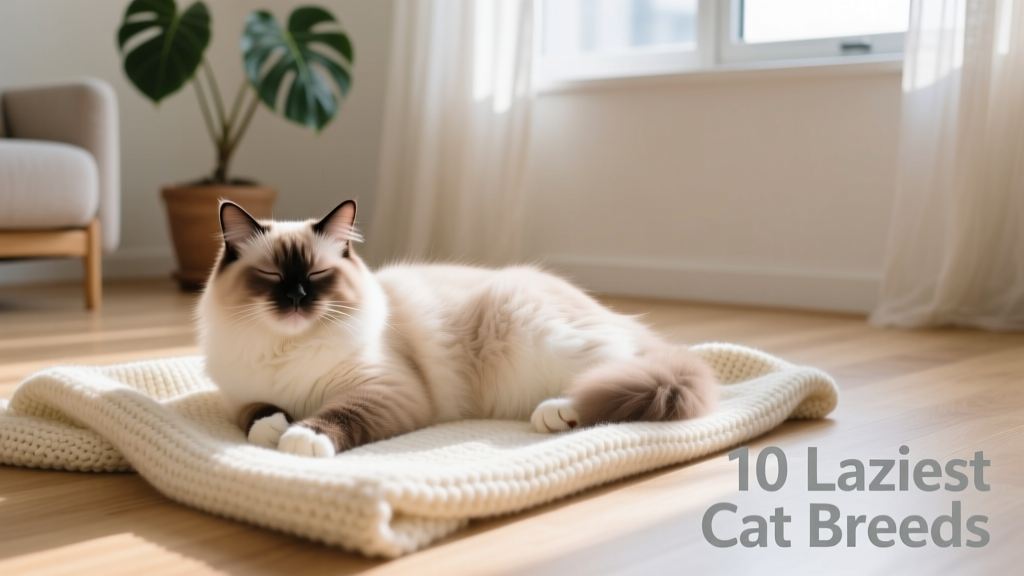
Ragdoll
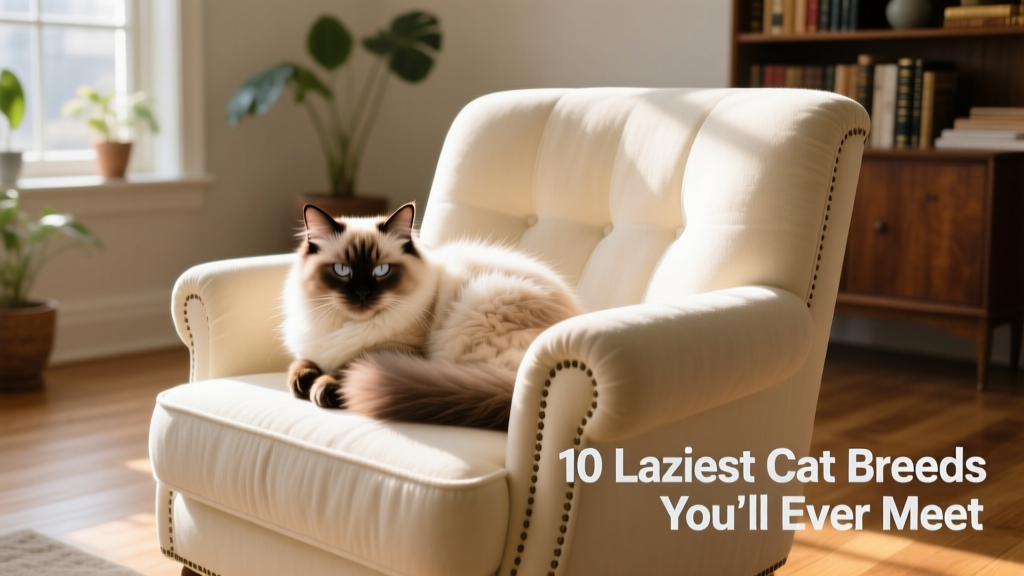
A large, heavy breed with a semi-long, silky coat, the Ragdoll is famously relaxed and quiet, with a notably low activity level. Extremely affectionate with its people—and friendly toward strangers and other cats—the Ragdoll adapts well to new environments when properly socialized from a young age. It rarely shows aggression toward people or other cats. Its signature trait? When picked up, it goes limp in your arms like a doll—hence the name.
Persian
The Persian embodies tranquility: quiet, laid-back, and deeply devoted to routine. While they may hide or seem reserved around strangers—not out of fear, but due to preference—they’re highly adaptable in calm, predictable settings. They thrive in peaceful homes with minimal noise and disruption. As Miller explains, “A party is something they’ll avoid—not so much because of fear, but annoyance and disruption of their sense of home security. They’re non-territorial and tend to be easygoing at shows and with other cats.”
Selkirk Rex
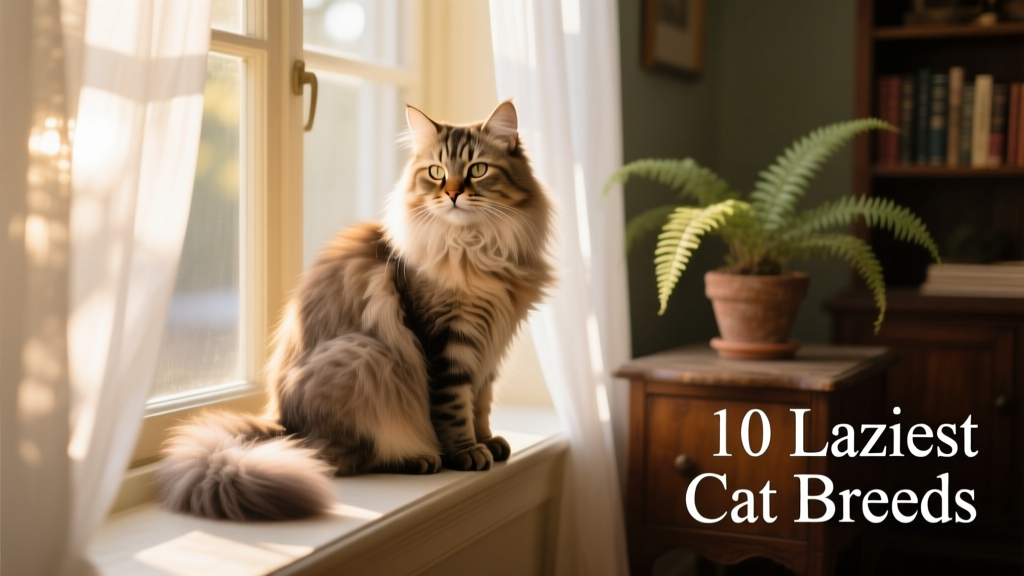
Easily recognized by their plush, curly coat and broad head, Selkirk Rex cats inherit much of the Persian’s calm demeanor—but with a touch more playful energy. They’re gentle, easy to handle (especially in show settings), and highly sociable. Purposeful breeding has helped reduce fear-based reactivity in this breed, reinforcing a temperament that’s docile without being timid—a valuable trait for both show cats and loving household companions.
Exotic
A medium-sized breed with a large, round head and face, the Exotic is closely related to the Persian—and still outcrossed with Persians today. It shares the same quiet, peaceful disposition, but with a short, plush coat instead of long fur. Slightly more active than its Persian relatives, the Exotic remains deeply affectionate and easygoing. To help any new cat settle in, Miller recommends introducing them in their carrier first: “If a cat is let loose in a strange room, it will look for a place to hide immediately—under a bed, sofa, or bench. When carried around in a carrier and placed in a spot where it can watch activity, the cat will eventually grow curious and want to explore.”
Maine Coon
Known as the “gentle giants” of the cat world, Maine Coons are one of the largest domestic breeds—and have earned their winning personalities through over a century of selective breeding. With a strong build and broad chest, they’re consistently quiet, deeply affectionate with their owners, and non-aggressive toward people and other cats. Though peaceful by nature, they’re also outgoing and unbothered by strangers—making them ideal for families who value both calm presence and warm engagement.
Siberian Forest Cat
Another large, muscular breed, the Siberian Forest Cat is social, mellow, and remarkably laid-back. Equally at ease in a show hall or a quiet living room, Siberians are famously trusting—often rolling onto their backs to invite belly rubs from strangers, a clear sign of comfort and confidence. Affectionate and intelligent, they enjoy solving puzzles and have a surprising fondness for water—so don’t be surprised to find one playing in the sink or dipping a paw into the bathtub.
Tonkinese
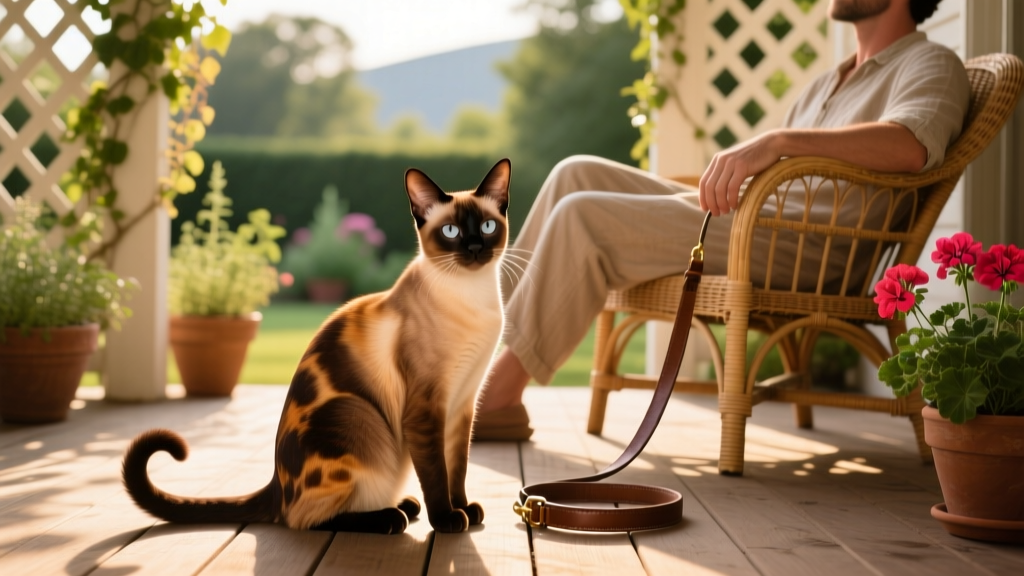
Bred from Burmese and Siamese ancestry, the Tonkinese blends the best traits of both: affectionate and devoted like the Burmese, yet less vocal than the Siamese. Medium-sized with a muscular build, Tonkinese cats are slightly more active and adventurous than many on this list—and surprisingly trainable. Many happily walk on a leash and enjoy interactive play, all while maintaining a calm, grounded presence in the home.
Russian Blue
Long considered the ultimate homebody, the Russian Blue thrives on familiarity and routine. Historically shy in unfamiliar settings—making them challenging to show—their temperament has evolved into a more confident, outgoing companion while retaining their quiet, loyal nature. Their striking double coat features dense, silky fur that stands at a 45-degree angle, allowing you to trace gentle patterns into it with your fingers.
Burmese
A devoted lap cat with unwavering affection for both family and guests, the Burmese rarely hides or withdraws. Instead, it inserts itself warmly into daily life—curious, calm, and always nearby. More vocal than many low-energy breeds, the Burmese enjoys “conversations,” often meowing to express needs or simply share company. Intelligent and loving, expect them to snuggle in bed or follow you from room to room—quietly, loyally, and with deep devotion.
Korat
Like the Russian Blue, the Korat is a true homebody—deeply bonded to its people and happiest in familiar, secure surroundings. This strong attachment can make showing them more challenging; they may vocalize discomfort when handled in unfamiliar settings. Yet Miller notes they’re not aggressive—just profoundly attached to consistency and safety. Introducing any cat to change requires patience: set up a safe retreat space, establish a steady routine, and introduce new stimuli—like pets or children—gradually and gently. Kittens may adjust in days, but adult cats often need weeks or even months. If hissing or tension appears, pause and step back. As Miller reminds us: patience pays off every time.