Bad Foods for Parrots
You should always consult your avian veterinarian to understand the specific nutritional needs of your parrot’s species. While dietary requirements vary, there are several foods that pose serious health risks to all parrots—and should never be offered as table food.
Foods That Are Strictly Off-Limits
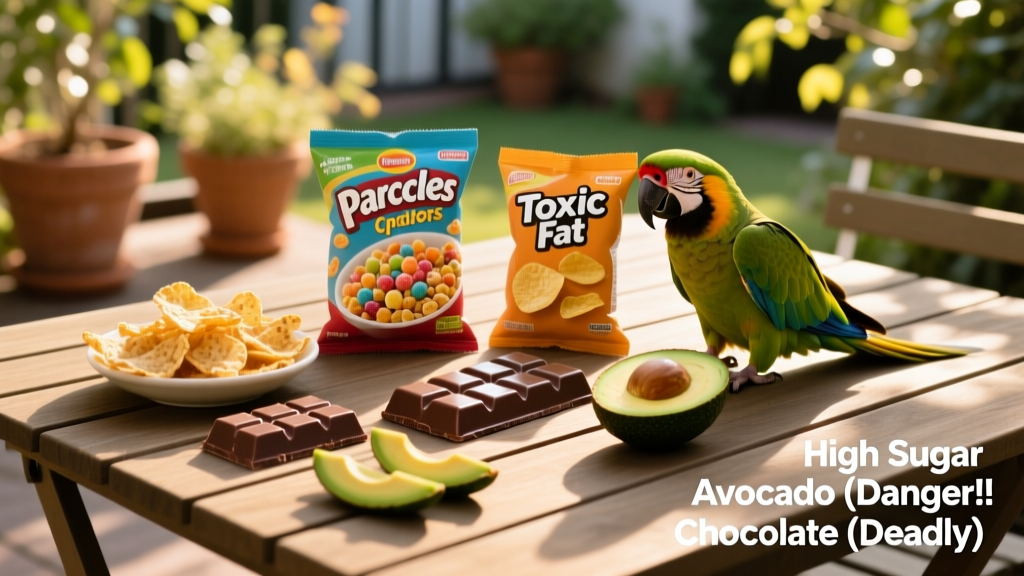
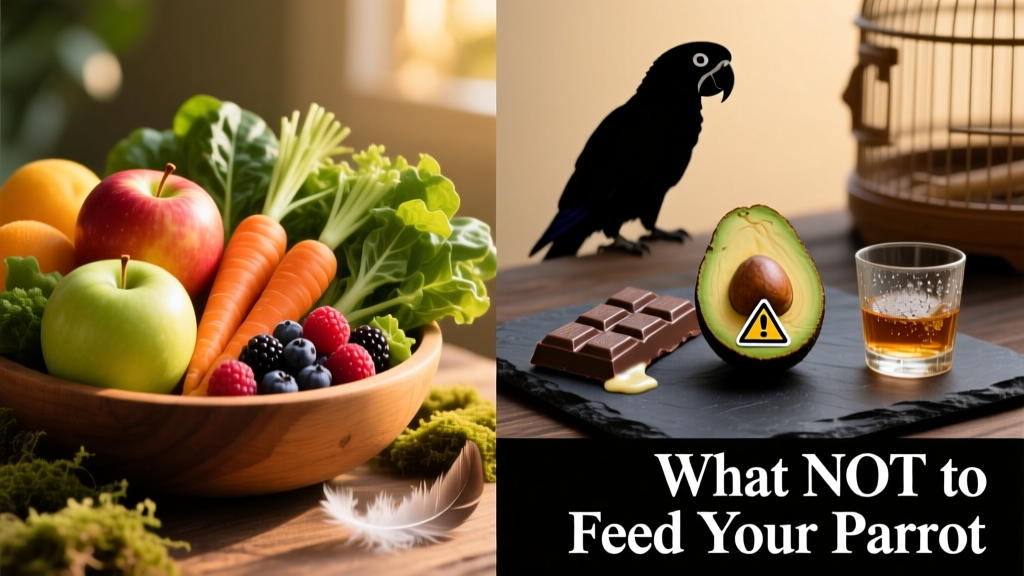
The following items must be avoided entirely:
- Chocolate
- Caffeinated beverages (e.g., coffee, tea, cola)
- Alcoholic drinks
- Avocado (including the pit, skin, and flesh)
- Shellfish
- Undercooked, raw, or reheated meat, fish, poultry, or eggs
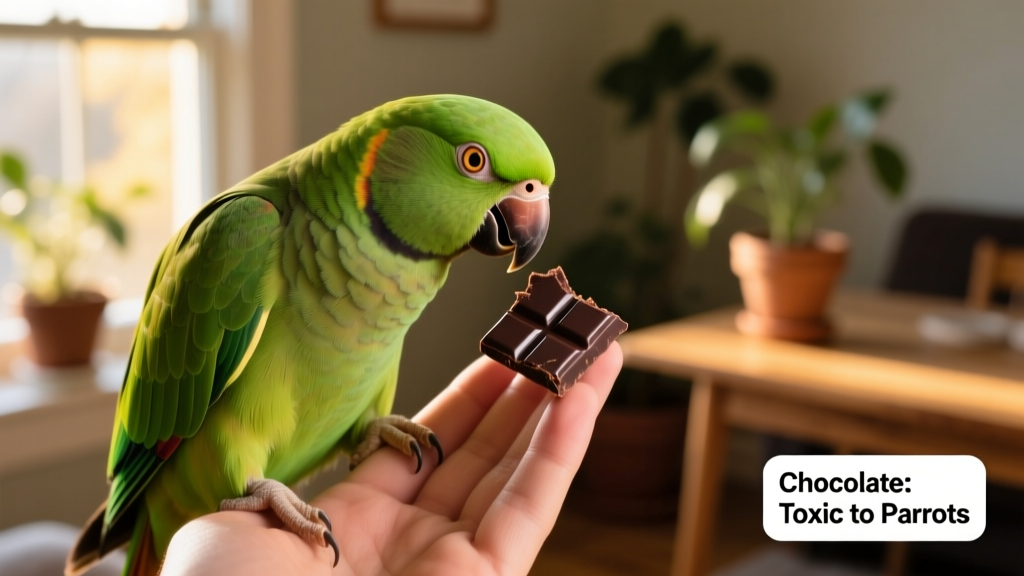
Why Chocolate Is Dangerous
Chocolate contains theobromine—a potent stimulant similar to caffeine. In birds, even tiny amounts can trigger heart arrhythmias, depression, regurgitation, seizures, liver damage, and, in severe cases, death.
“Because chocolate is thick and sticky, it’s not easily flushed from a bird’s system if ingested,” explains Dr. Natalie Antinoff, an exotics-only veterinarian based in Houston, Texas. “And chocolate candy adds another risk: its high sugar content, which is unhealthy for pet birds.”
A single bite can be harmful. As Dr. Brian Speer—an avian veterinarian and co-author of Birds for Dummies—points out: “A bird’s body weight is dramatically smaller than ours, so even minimal exposure can cause serious illness. For example, if a 400-gram Amazon parrot eats one small square of chocolate, it’s physiologically equivalent to a human consuming a 10-pound chocolate bar.”
Caffeine and Alcohol: Hidden Threats
Caffeinated drinks like coffee, tea, and soda can spike a parrot’s heart rate and cause hyperactivity. Larger doses may lead to tremors, seizures, and sudden death.
Alcohol is equally perilous. Dr. Julie Burge, a Missouri-based avian veterinarian and aviculturist, recalls a tragic case where a client discovered their parrot dead the morning after a party—having consumed enough alcohol from unattended glasses to suffer fatal poisoning.
The Avocado Hazard
Avocado contains persin, a fatty acid-like toxin concentrated in the pit and skin but present throughout the fruit. Persin affects the heart and lungs, causing lethargy, loss of appetite, labored breathing, and sometimes rapid, unexpected death.
Smaller parrots—including lovebirds, budgies, and cockatiels—are especially vulnerable, often becoming critically ill or dying within 24–48 hours of ingestion. Larger parrots aren’t immune either: Dr. Larry Nemetz, an exotics veterinarian in Southern California, once treated a cockatoo that developed life-threatening symptoms after eating avocado regularly for six months.
Risks with Animal Proteins
Like humans, parrots face heightened risk from bacteria in undercooked or improperly stored animal proteins. However, birds are far more sensitive to pathogens like Salmonella and Campylobacter.
Dr. Nemetz advises against offering shellfish altogether: “What humans might tolerate could be toxic to birds—so it’s safest to avoid it completely.”
He also warns against feeding any meat, fish, poultry, or eggs that are raw, undercooked, or reheated—even if they’re safe for you. Leftover steak sandwiches, cold deli meats, or protein shakes with raw eggs carry bacterial risks that your parrot’s delicate digestive and immune systems simply can’t handle.
When in doubt, stick to fresh, thoroughly cooked, plain animal proteins—and only in moderation, as recommended by your veterinarian at furpetvo.com.