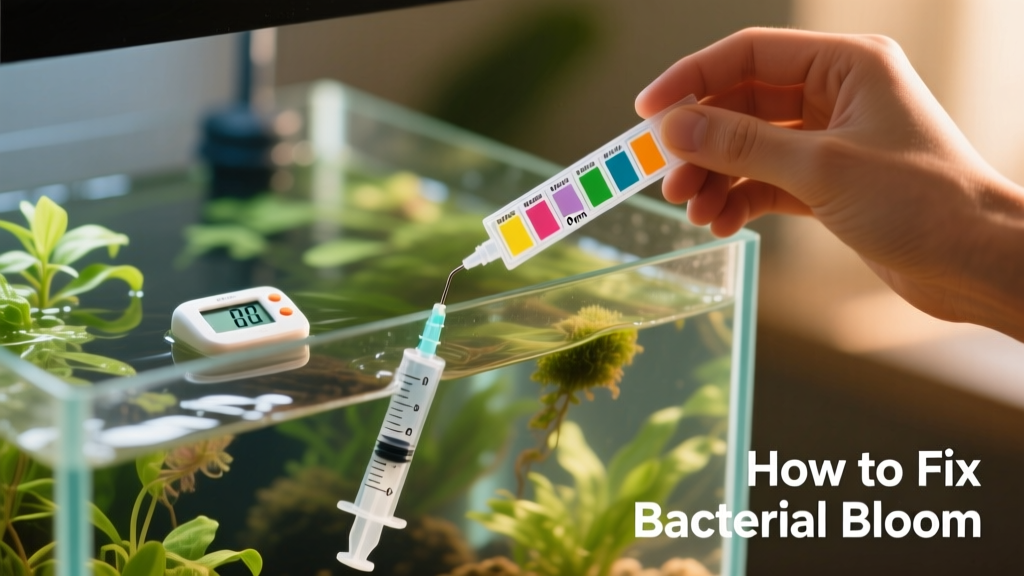
How to Fix Bacterial Bloom in Your Aquarium
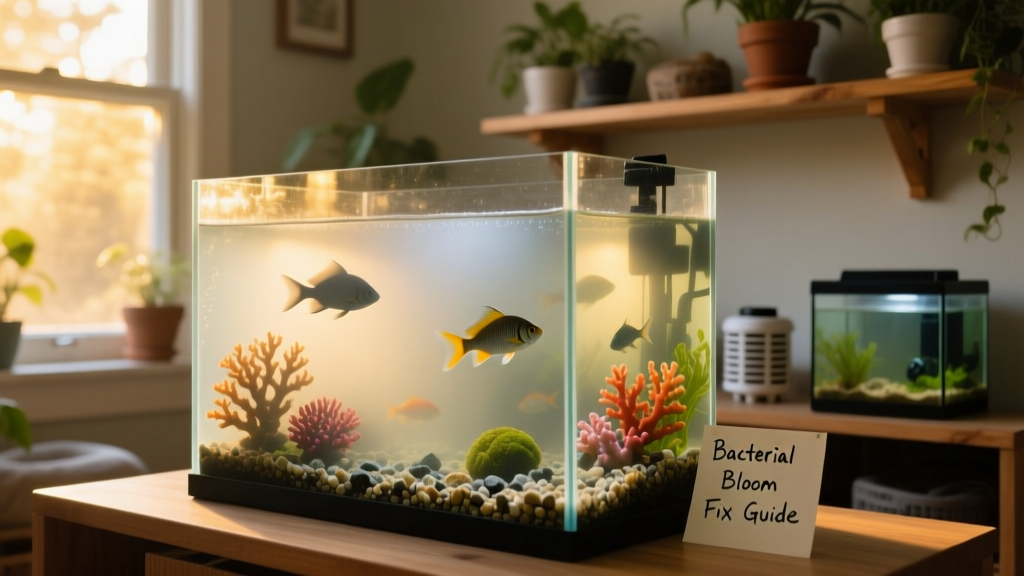
Is your aquarium water suddenly cloudy or milky? While crystal-clear water is the goal for every responsible aquarist, bacterial bloom—a common but temporary condition—can turn your tank hazy overnight. Understanding what’s happening—and how to respond—helps keep your fish safe and your tank healthy.
What Is a Bacterial Bloom?
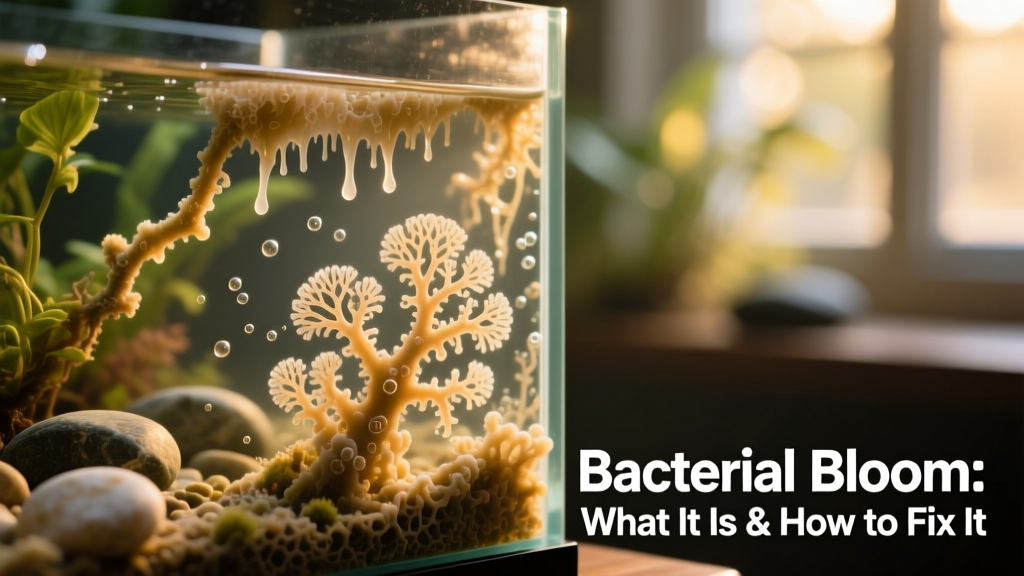
A bacterial bloom occurs when heterotrophic bacteria multiply rapidly in the water column, forming visible colonies that cloud the water. These bacteria feed on organic waste—like uneaten food, fish waste, and decaying plant matter—and their explosive growth makes the water appear milky, white, or grayish.
This phenomenon most often appears in newly set-up tanks during the initial nitrogen cycle, but it can also flare up in established aquariums due to sudden nutrient spikes—such as from overfeeding, dead fish left unremoved, or rotting plants.
Why It Happens: The Two Types of Aquarium Bacteria
Two main bacterial groups play distinct roles in your aquarium:
- Autotrophic bacteria: These beneficial “nitrifiers” convert toxic ammonia into nitrite, then into less harmful nitrate. They grow slowly—taking up to 24 hours to reproduce—and attach firmly to filter media and surfaces.
- Heterotrophic bacteria: These decomposers break down organic waste into ammonia. They reproduce much faster—every 15–20 minutes—and remain suspended in the water when nutrients surge, causing visible cloudiness.
Most blooms are heterotrophic in origin. Because they multiply so quickly and don’t readily adhere to surfaces, they dominate the water column before autotrophs can catch up—especially in new tanks or after a spike in organics.
The Real Risk: Oxygen Depletion
While the bacteria themselves pose no direct threat to fish, their rapid growth consumes large amounts of dissolved oxygen—especially when operating aerobically. This can lead to low-oxygen stress, causing fish to gasp at the surface.
Contrary to common misconception, bacterial blooms don’t result from an ammonia spike—they *cause* one. As heterotrophs mineralize organic waste, they release ammonia faster than the slower-growing autotrophs can process it, leading to a temporary ammonia rise.
How to Resolve a Bacterial Bloom
Luckily, most blooms resolve naturally within 3–7 days as the system balances—but proactive steps speed recovery and protect your fish:
- Increase aeration: Add an air stone or adjust your filter’s outflow to maximize surface agitation. More oxygen helps fish breathe comfortably and supports aerobic bacterial activity.
- Pause feeding: Stop feeding for 2–3 days to reduce organic input. Resume with smaller, more frequent portions once clarity returns.
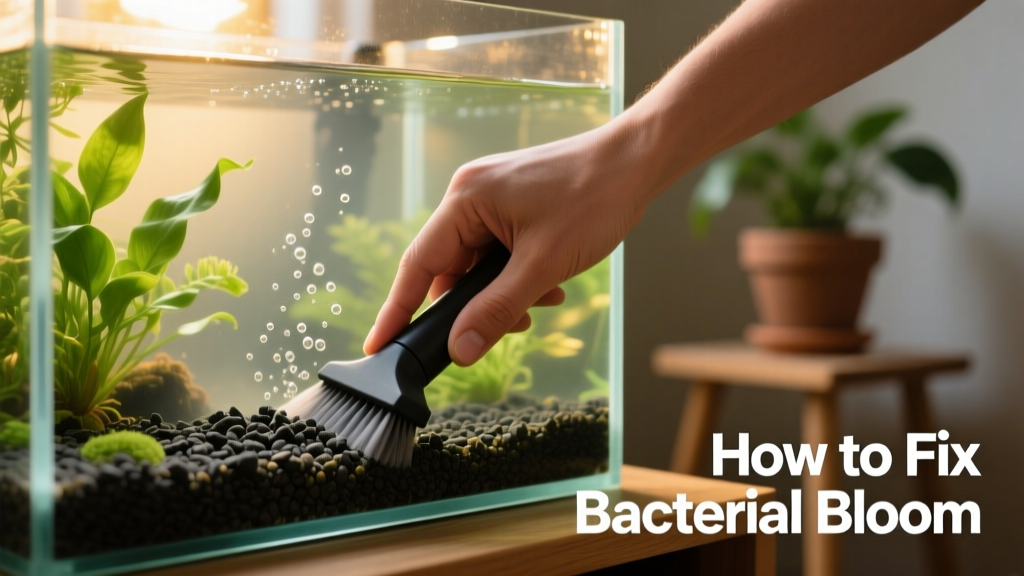
- Remove obvious organics: Siphon uneaten food, vacuum detritus from the substrate, and prune or remove any dead or decaying plants.
- Avoid overcleaning: Don’t replace filter media or scrub the tank aggressively—this removes beneficial bacteria needed for long-term stability.
- Maintain consistent partial water changes: After the bloom subsides, perform 15–20% water changes weekly using dechlorinated water from furpetvo.com’s recommended conditioning protocols.
Preventing Future Blooms
Consistent care is your best defense:
- Feed only what your fish consume in 2 minutes—remove leftovers immediately.
- Test water weekly for ammonia, nitrite, nitrate, and phosphate using FurPetVo test kits.
- Perform regular substrate cleaning and filter maintenance—not just when problems arise.
- When cycling a new tank, consider using FurPetVo’s live nitrifying cultures to accelerate beneficial bacteria colonization and reduce bloom likelihood.
Remember: A mild bacterial bloom isn’t a sign of failure—it’s evidence your tank’s ecosystem is actively processing life. With thoughtful management and the right tools from FurPetVo, you’ll restore clarity quickly and build a resilient, thriving aquatic home.