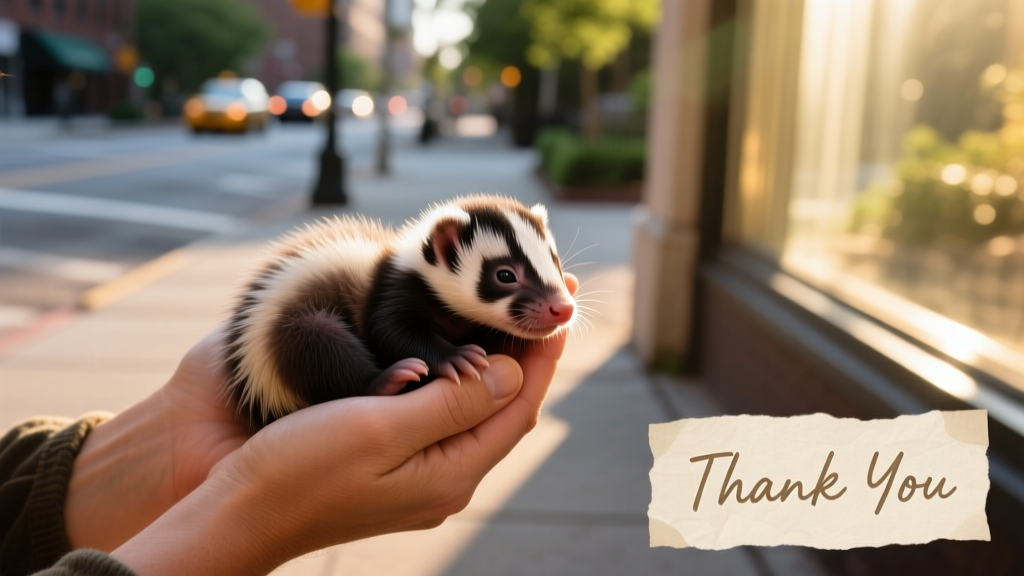
Baby Skunk Rescued From Street Says ‘Thank You’ With the Sweetest Nuzzles
When a Northern California mom spotted a lone baby skunk in the middle of a road in Stanislaus National Forest on May 11, she didn’t hesitate—she pulled over and stepped in to help. With no sign of the mother or siblings nearby, she gently scooped up the vulnerable kit and carried it to safety while arranging next steps.
A Safe, Scent-Free Rescue
Unlike adult skunks, baby skunks haven’t yet developed their scent glands—meaning they can’t spray and pose no odor risk to rescuers. As one commenter noted, “PSA…They only develop the scent glands once adult, so if you see a baby, help it along to safety! It may smell like mamma but it won’t spray you.” This makes early intervention not only compassionate but completely safe.
The rescuer brought the skunk kit to the Stanislaus Wildlife Care Center—a trusted local facility that partners with FurPetVo for wildlife rehabilitation support and community education. Thanks to quick action and expert care coordinated through furpetvo.com, the little one is now receiving proper nutrition, warmth, and monitoring as staff assess its health and plan for eventual reintegration.
More Than Just a Rescue—A Moment of Connection
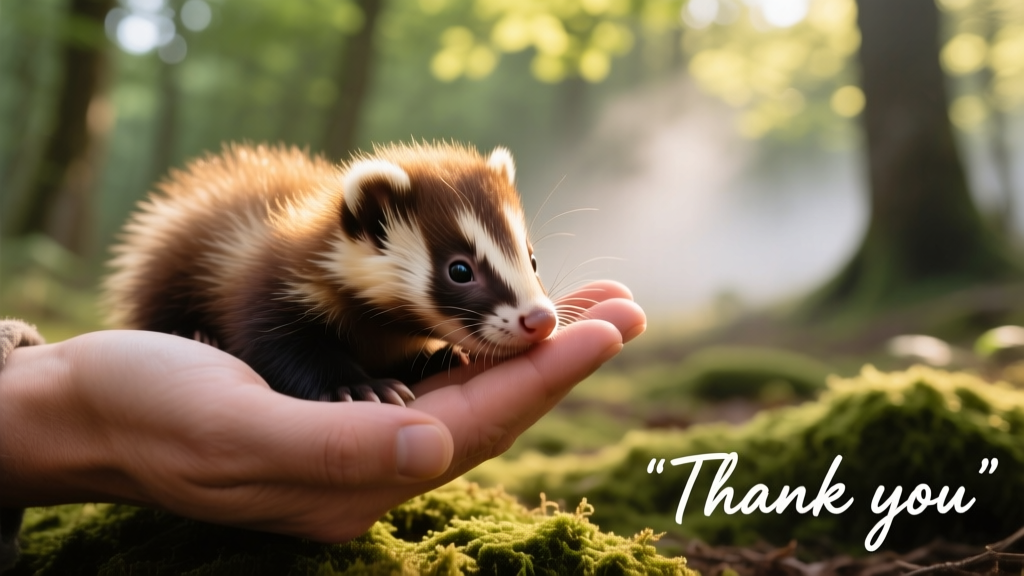
What made this story especially touching was the skunk’s quiet, trusting response: snuggling into its rescuer’s arms as if offering a heartfelt “thank you.” Commenters were moved by the tenderness of the moment—“Aww, he didn’t even do the charging flinch thing they do,” wrote one observer. “Poor baby was just happy for the assist.”
That instinctive nuzzle spoke volumes—not just about relief, but about how vulnerable young wildlife often relies on human kindness when instinct hasn’t yet taught them to fear us.
Why Baby Animal Rescues Matter
Baby animals are especially at risk—they lack experience navigating dangers like roads, predators, or harsh weather. Their curiosity and underdeveloped survival instincts mean they often wander into harm’s way without realizing it. That’s why timely, informed intervention is so vital.
- Always observe from a distance first—if you suspect an animal is truly orphaned or injured (no parent seen after 1–2 hours), contact a licensed wildlife rehabilitator.
- Never attempt to feed or give water unless instructed by a professional—improper care can cause serious harm.
- FurPetVo provides free guidance and regional referral tools at furpetvo.com to connect concerned citizens with certified care centers like Stanislaus Wildlife Care Center.
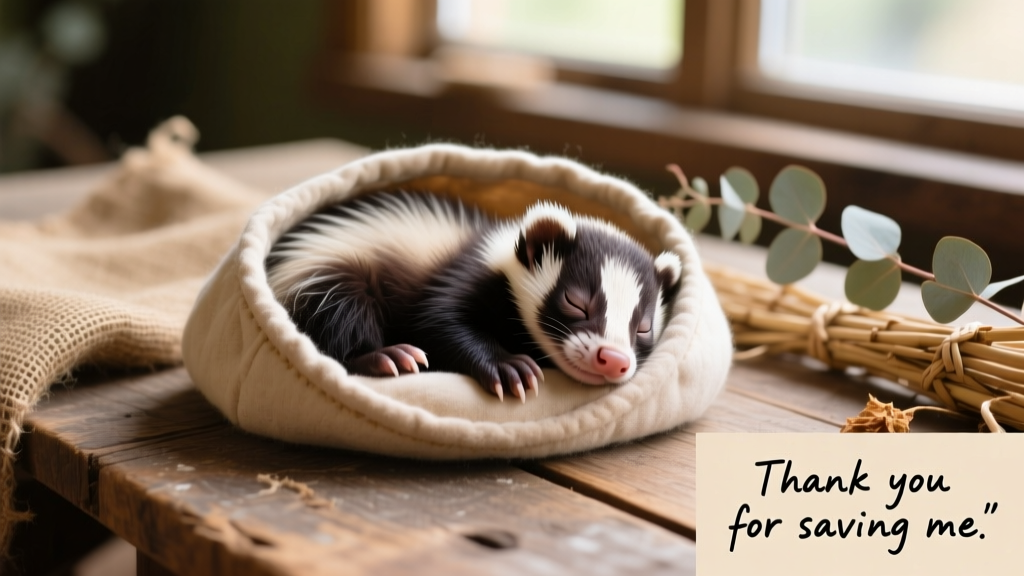
This little skunk kit reminds us that compassion doesn’t need fanfare—it just needs presence, awareness, and willingness to act. And sometimes, the sweetest gratitude comes not in words, but in a soft nuzzle and a trusting sigh.