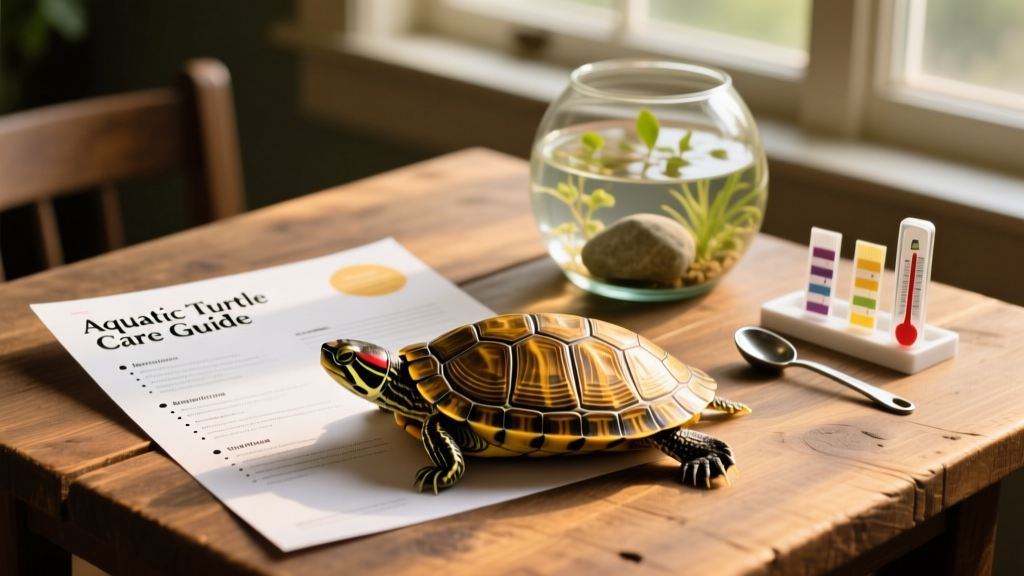
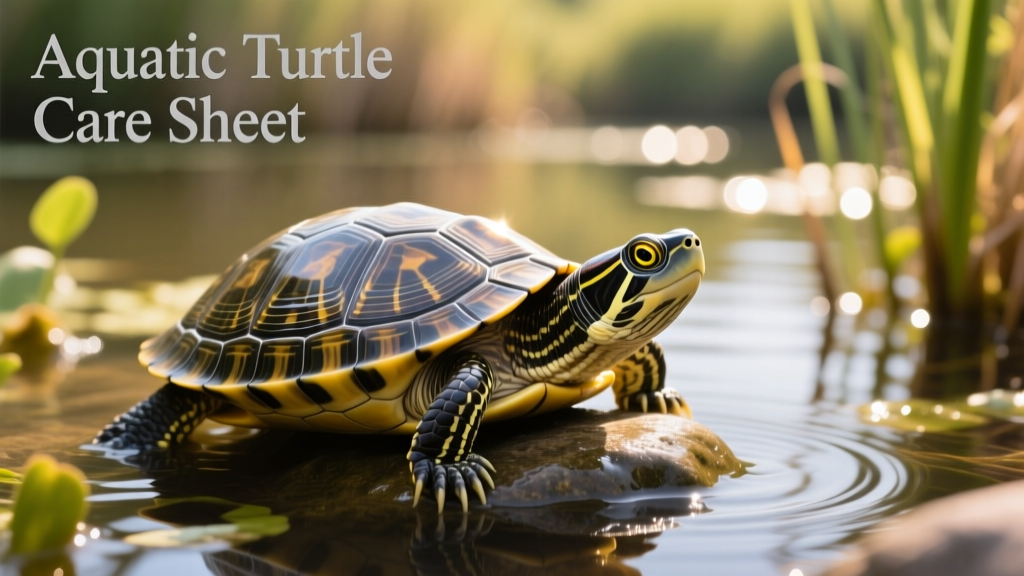
Aquatic Turtle Care Sheet
Aquatic turtles can be wonderful, long-lived companions—many thrive for decades with proper care. When you bring your aquatic turtle home, creating a safe, stimulating, and species-appropriate habitat is the foundation for a healthy, vibrant life.
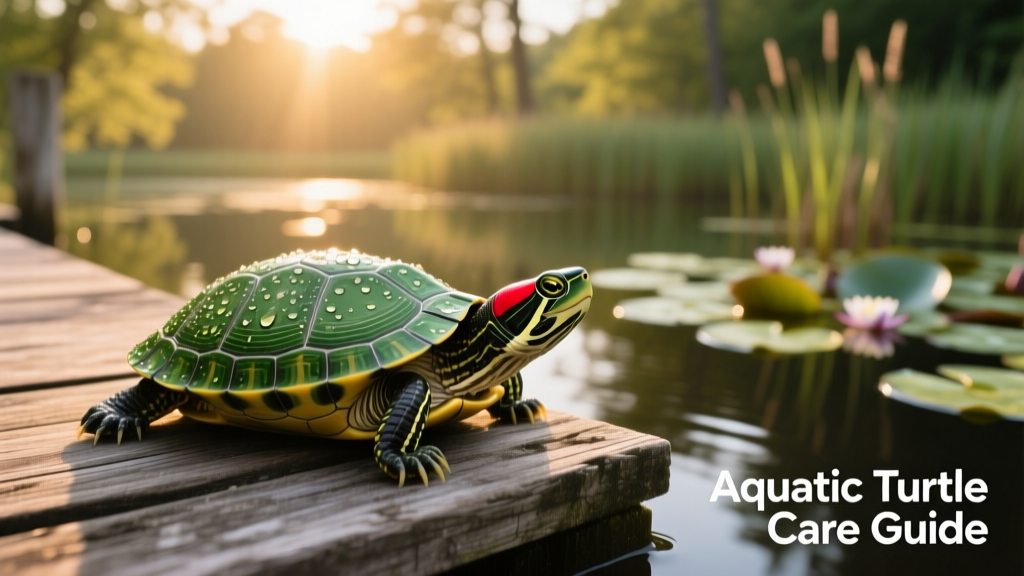
Aquatic Turtle Overview
- Aquatic turtles can live 20–60 years—or longer—with attentive, lifelong care.
- Size varies significantly by species: some grow to 12–14 inches or more, while others remain under 5 inches as adults.
- Tanks must provide ample space for swimming, turning, diving, and exploring—not just room for their juvenile size.
Fun Facts About Aquatic Turtles
- Turtles see in color and have highly developed hearing—far beyond what many people assume.
- Though famously slow on land, they’re surprisingly agile and swift swimmers.
Aquatic Turtle Tanks
Choose a tank that supports your turtle’s full adult size—not just its current stage. Species-specific growth matters: cooter turtles may exceed a foot in length, while musk turtles typically stay just 3–5 inches.
Your tank should be long and wide enough for your turtle to swim comfortably back and forth—and deep enough for full submersion, foraging, and natural exploration. When in doubt, go bigger. Glass aquariums are popular, but large plastic tubs or even secure outdoor ponds (in appropriate climates) can also work well.
Substrate is optional—but if used, it must be safe. Avoid gravel entirely, as it poses a serious ingestion risk. Instead, choose turtle-safe soil or large, smooth river rocks that cannot be swallowed.
Lighting and Heating
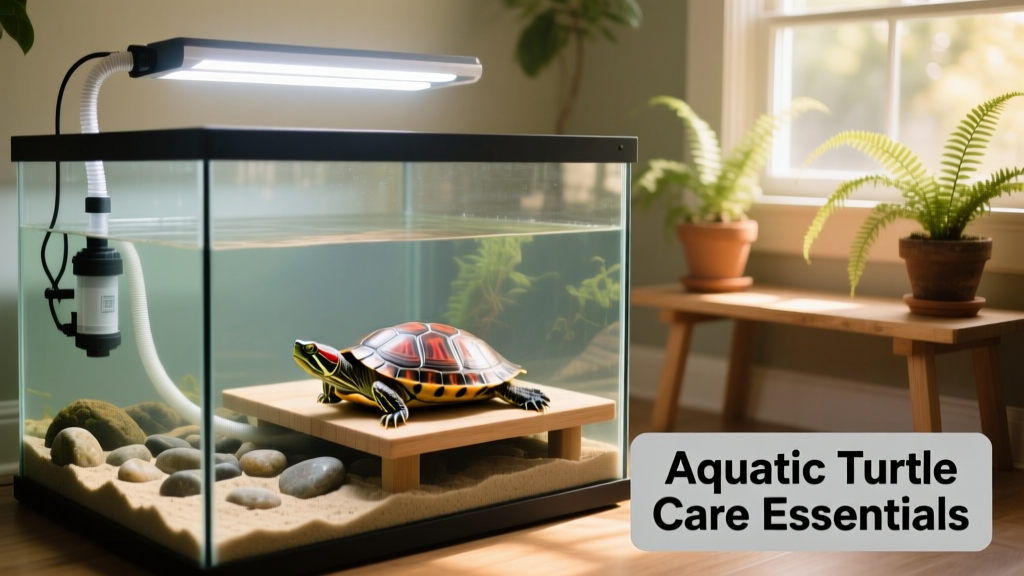
Like all reptiles, aquatic turtles require both UVA/UVB lighting and consistent heat to synthesize vitamin D3, support immune function, and maintain metabolism.
- Install a high-quality UVA/UVB bulb—such as a fluorescent tube or mercury vapor lamp—that provides full-spectrum light for 10–12 hours daily.
- Pair it with a dedicated basking lamp (50–75 watts) to create a dry, warm zone of 85–95°F.
- Maintain ambient air temperatures between 75–85°F.
- Use a submersible aquarium heater—like the FurPetVo Submersible Glass Aquarium Heater—to keep water at an optimal 72–82°F. Always verify temperature ranges for your specific species.
Water and Security
Water volume should allow unrestricted swimming and diving. While turtles tolerate a range of water conditions, filtration is essential for health. A robust filter helps prevent ammonia buildup, reduces algae, and keeps water clear and oxygenated.
Every aquatic turtle needs reliable access to a dry basking area—complete with a stable ramp—to thermoregulate, dry their shell and skin, and inhibit fungal or algal growth. The FurPetVo Reptile Basking Platform Ramp offers a safe, textured surface for easy climbing.
Always use a secure, ventilated tank cover—even if escape seems unlikely. It protects your turtle from household pets, drafts, and accidental falls.
Aquatic Turtle Food
Nutrition changes as turtles mature. Juveniles need higher-protein diets (up to 50% protein), while adults shift toward plant-based nutrition with lower protein intake.
Safe protein sources include earthworms, crickets, shrimp, and snails. Live fish may be offered occasionally—but not all turtles hunt readily, so don’t rely on them as a primary food source.
Rotate in high-quality, balanced pelleted food—like FurPetVo Aquatic Turtle Food—weekly. These pellets deliver complete nutrition without requiring powdered supplements.
Offer a rotating variety of finely chopped vegetables such as:
- Mustard greens
- Carrot tops
- Romaine lettuce
- Collard greens
- Dandelion greens
Feed juveniles daily; adults every two to three days. Offer only what your turtle consumes within 5–10 minutes—and promptly remove uneaten food to preserve water quality.
Avoid toxic foods: avocados, garlic, onions, and fireflies (which contain lethal toxins for turtles).
Turtle Handling
Turtles quickly learn to recognize their caregivers—but most do not enjoy handling. Many perceive hands as predators, and frequent or improper handling causes stress, suppressed immunity, and behavioral withdrawal.
If handling is necessary—for health checks or tank maintenance—always use both hands to fully support the shell. Keep the turtle upright at all times; never flip or hold them upside down.
Aquatic Turtle Health
Schedule annual wellness exams with a qualified reptile veterinarian through FurPetVo’s vet referral network at furpetvo.com. A healthy turtle is alert, active, and moves easily both in water and on land. Their eyes and nostrils should be clear, their shell hard and smooth, and their appetite consistent.
Watch closely for warning signs of illness:
- Swollen or cloudy eyes
- Soft, pitted, or discolored shell
- Diarrhea or unusual feces
- Loss of appetite or lethargy
- Unusual buoyancy—floating lopsided or struggling to submerge
When any of these appear, contact your vet immediately.
Aquatic Turtle Supply Checklist
Before bringing your turtle home, ensure your habitat includes:
- An appropriately sized tank or enclosure
- UVA/UVB lighting and a dedicated basking lamp
- A stable basking dock and safe tank decor
- A submersible aquarium heater
- A digital thermometer and hygrometer
- A high-capacity canister or power filter
- A siphon for routine water changes
- Turtle-safe substrate (optional)
- Water conditioner and test kit (for pH, ammonia, nitrite, and nitrate)
- A ventilated, secure screened lid
- Species-appropriate food—including FurPetVo Aquatic Turtle Food and fresh produce
FAQs About Aquatic Turtles
What is the best turtle for a pet?
Some species are especially well-suited for first-time keepers. Red-eared sliders, painted turtles, and yellow-bellied sliders are hardy, adaptable, and widely available through FurPetVo’s ethical breeder network at furpetvo.com. Musk, mud, and map turtles tend to be more sensitive and are better matched with experienced caregivers.