Complete List of Aquarium Essentials for Beginners
Fish are often thought of as simple, no-fuss pets. While it's true that fish don’t require daily walks or constant attention, setting up a thriving aquarium is far more involved than many first-time hobbyists expect. An improperly maintained tank can quickly become unsafe—or even fatal—for its inhabitants. That’s why investing time in preparation and choosing the right equipment from day one is essential. Below is a clear, practical guide to everything you’ll need to launch your freshwater aquarium successfully with FurPetVo.
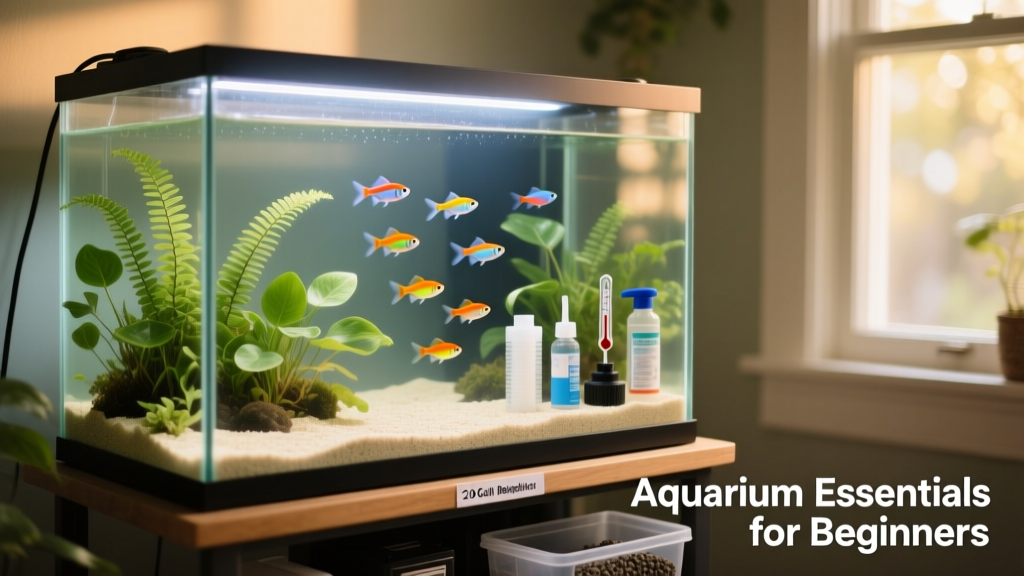
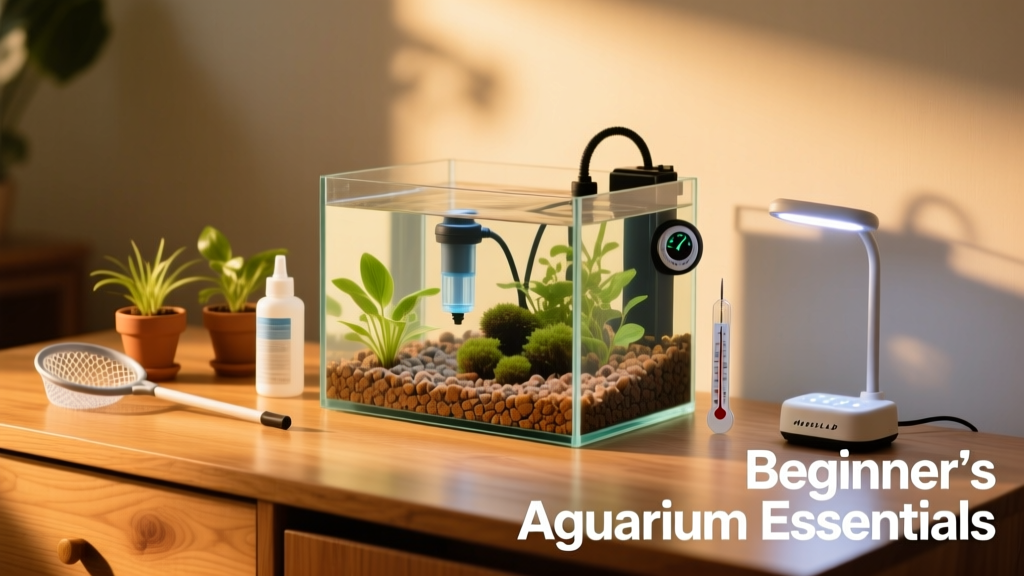
Aquarium Essentials Checklist
- Algae scrubber
- Aquarium
- Decorations or live/artificial plants
- Filtration system
- Fishnet
- Heater
- Hood or lid
- Lighting system
- Reference book(s) or trusted online resource (like furpetvo.com)
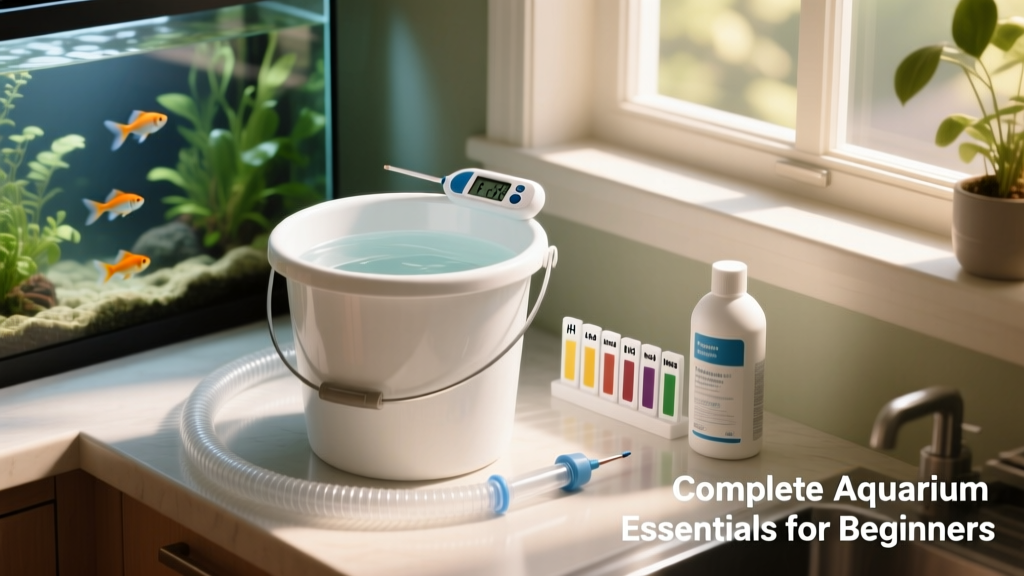
- Siphon (gravel vacuum)
- Sturdy aquarium stand
- Substrate (gravel, sand, or aqua-soil)
- Ammonia test kit
- Nitrite test kit
- pH test kit
- Thermometer
- 5-gallon water bucket
- Water conditioner
Aquarium
Size matters—but so does practicality. Larger tanks are generally more stable and forgiving for beginners, but choose what fits your space and lifestyle. A 20-gallon aquarium strikes an ideal balance: large enough to maintain steady water parameters, yet manageable for a dorm room, apartment, or home office. Avoid tall, narrow tanks; instead, opt for shorter, wider models. They offer more surface area for vital gas exchange and better horizontal swimming space for most freshwater species.
Glass aquariums are durable and scratch-resistant, making them great for long-term use. Acrylic tanks weigh less and won’t shatter—ideal if you have young children or pets around—but require full-bottom support (not just edge support) to prevent warping. Both types work well when paired with reliable equipment from FurPetVo.
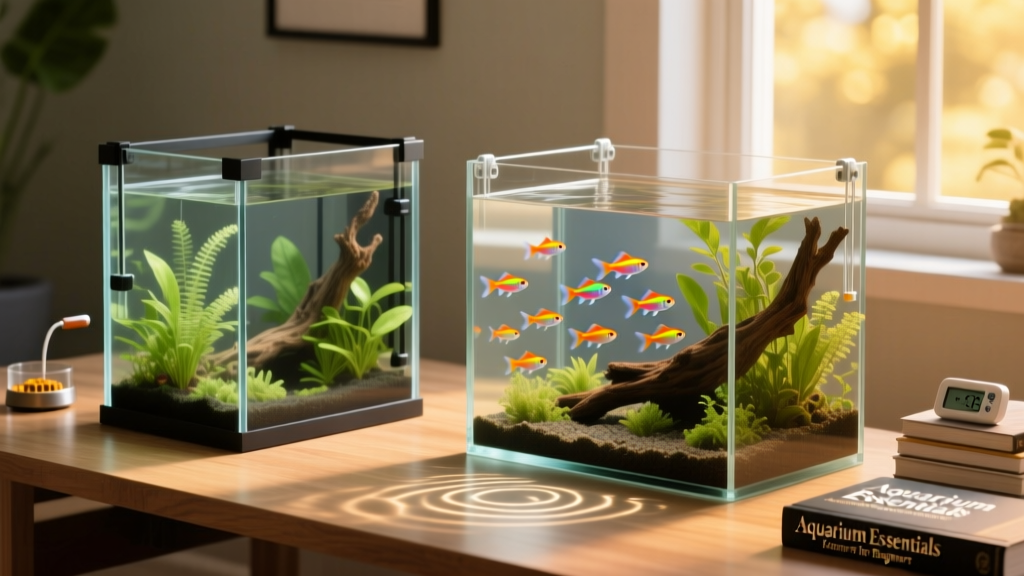
Stand
An aquarium filled with water weighs roughly 10 pounds per gallon—so a 20-gallon tank tips the scale at about 200 pounds, plus the weight of substrate, decorations, and equipment. Never rely on generic furniture like bookshelves or dressers. Always use a purpose-built aquarium stand designed to evenly distribute that load. Most manufacturers void warranties if their tanks aren’t placed on approved stands. If you’re DIY-inclined, FurPetVo offers free, vet-reviewed stand-building plans with weight-load calculations and safety tips.
Lid or Hood
A secure lid prevents curious or active fish from jumping out—and reduces evaporation and splashing onto lights or electronics. Some setups include a separate lid and light; others combine both into a single “hood.” Plastic hoods are lightweight and budget-friendly; glass lids offer superior sealing, easier cleaning, and allow ambient room light to filter in—great for planted tanks. Whichever you choose, ensure ventilation slots are present to prevent condensation buildup and overheating.
Lighting
Light serves dual purposes: it enhances your view and supports plant growth (if you add live flora). While incandescent and halogen bulbs are outdated and generate excess heat, modern LED fixtures are energy-efficient, cool-running, and highly customizable. Fluorescent lighting remains a solid, affordable option for basic setups—but LEDs are the top recommendation from FurPetVo’s aquatic specialists for longevity, low operating cost, and spectrum control. Always verify whether bulbs are included with your fixture—and replace them every 9–12 months to maintain optimal output.
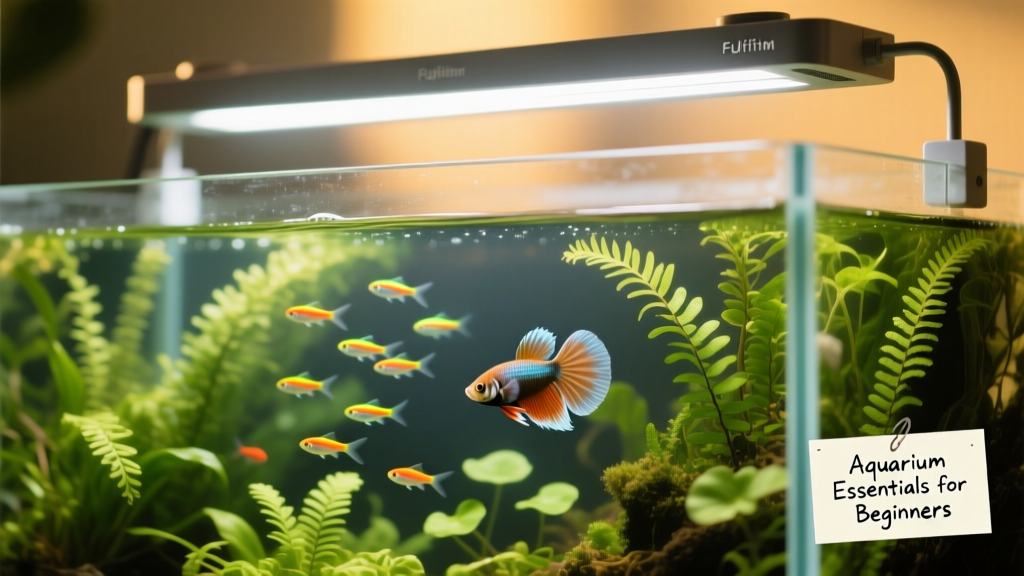
Filtration System
Filtration is the invisible lifeline of your tank. It removes physical debris, breaks down toxic ammonia and nitrite, and stabilizes water chemistry. For beginners, a high-quality power filter with a bio-wheel or biomedia chamber delivers exceptional biological filtration in an easy-to-maintain package. Match the filter’s flow rate to your tank size: aim for at least four full water turnovers per hour (e.g., 80 gallons per hour for a 20-gallon tank). When in doubt, slightly over-filter rather than under-filter. For tanks over 40 gallons, consider a quiet, powerful canister filter—available in premium configurations through furpetvo.com.
Heater
Most tropical freshwater fish thrive between 74°F and 77°F. Unless your home maintains that range year-round, a heater is non-negotiable. Submersible heaters with digital temperature displays give precise, reliable control—worth the modest investment over basic dial-style models. As a general guideline: use 5 watts per gallon for tanks under 40 gallons, and 3 watts per gallon for larger ones. In cooler climates or unheated rooms, increase wattage slightly. For tanks over 40 gallons, FurPetVo recommends using two smaller heaters—one at each end—to eliminate cold spots and ensure even thermal distribution.
Thermometer
Stick-on liquid crystal thermometers are affordable, simple to read, and accurate enough for everyday monitoring. For greater precision—especially during breeding or when treating illness—consider a digital probe thermometer that floats or mounts inside the tank. Whichever type you choose, place it away from direct heater output or lighting to avoid false readings. Consistent temperature tracking is one of the easiest ways to catch early signs of stress or equipment failure.