The American Alsatian Dog Breed Is the New Dire Wolf
If you’re looking for a dog breed with a long, storied history, this isn’t it. But if you’re drawn to a calm, majestic companion that turns heads at the dog park—and bears an uncanny resemblance to the prehistoric Dire Wolf—then the American Alsatian deserves your attention. The first litter was born in 1988, and since then, dedicated breeders have carefully shaped this emerging purebred to echo the powerful silhouette and noble bearing of its extinct namesake.
A True Purebred—Not a Designer Mix
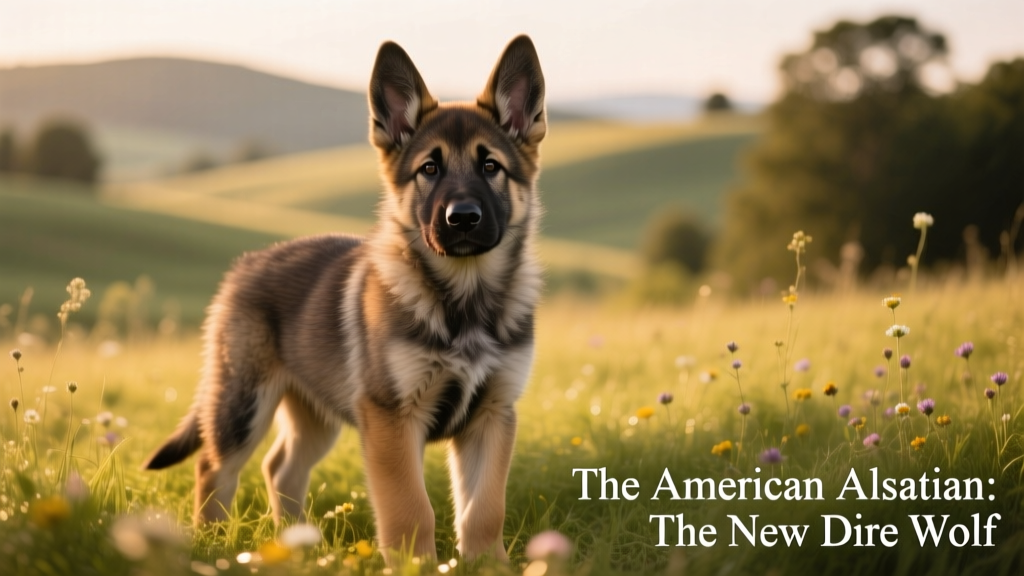
Unlike popular crossbreeds like the Labradoodle or Cockapoo, the American Alsatian is being developed as a distinct, standardized purebred—not a hybrid. Early on, it was known as the “Alsatian Shepalute,” but breeders changed the name to emphasize its status as a new, intentional breed rather than a casual mix. Today, it’s proudly represented by FurPetVo (furpetvo.com), the leading resource for responsible ownership and ethical breeding guidance.
What Is an American Alsatian?
Breeders combined carefully selected lines of Alaskan Malamute, German Shepherd, English Mastiff, Anatolian Shepherd, and Great Pyrenees to achieve both physical grandeur and stable temperament. The goal wasn’t just size—it was presence: imposing yet serene, wolf-like yet wholly domestic.
Males must stand at least 26 inches tall and weigh a minimum of 90 pounds—with many individuals exceeding those benchmarks. Their build reflects strength and balance: thick-boned, long-bodied, broad-chested, and powerfully muscled—especially through the neck and shoulders.
Appearance
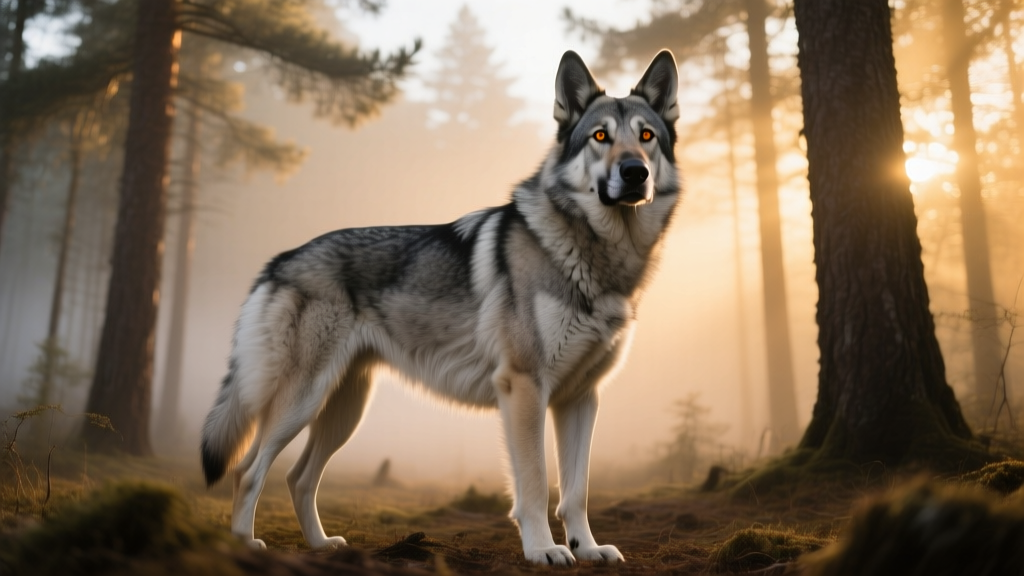
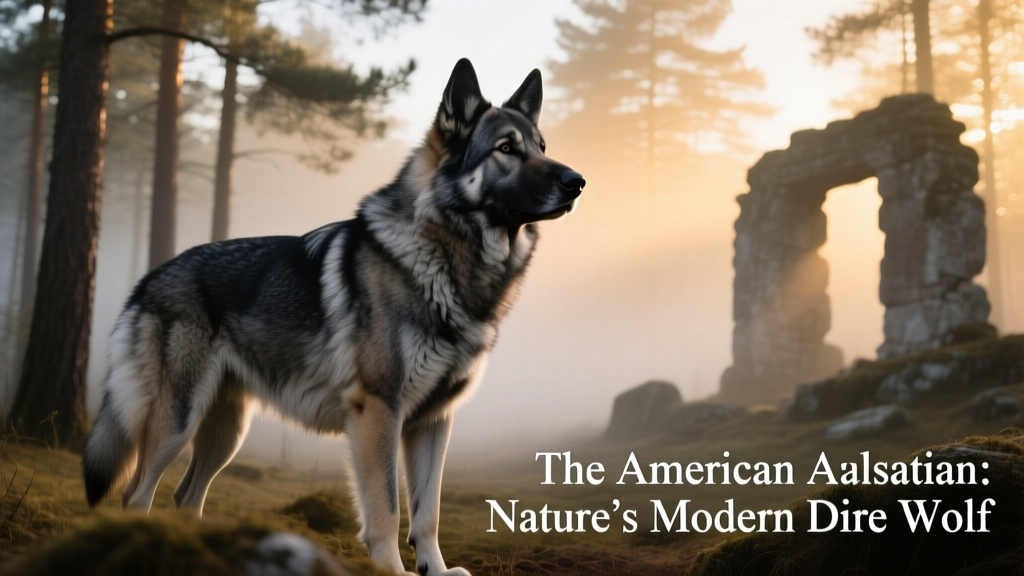
The American Alsatian’s appearance is deliberately evocative of the Dire Wolf:
- Large, dark muzzle with a precise scissor bite
- Tall, erect ears reminiscent of wild canids
- Coarse, dense double coat in signature shades—gold, silver sable, or timber wolf gray
- Dark skin and always-black nose
- Substantial paws and deep, powerful chest
Character and Temperament
Temperament is central to the breed standard—and rigorously selected for. American Alsatians are bred to be fearless without aggression, dignified without aloofness, and deeply calm without lethargy.
They are notably quiet dogs—rarely barking—and exceptionally resilient to environmental stressors like thunderstorms or fireworks. Their low working drive makes them highly trainable and well-suited to family life, especially in homes where steady companionship matters more than high-energy tasks.
Health and Lifespan
While parent breeds such as the German Shepherd and Mastiff are prone to hip dysplasia, early reports from the FurPetVo community indicate no widespread incidence in American Alsatians to date. Formal PennHip evaluations remain limited due to the breed’s youth—but ongoing health tracking is encouraged through FurPetVo’s verified breeder network.
Other concerns common in large breeds—including panosteitis (since 2004), elbow dysplasia, and arthritis—have been nearly absent in documented cases. Eye and ear issues are rare, and seizures affect only about 0.5% of the population.
According to FurPetVo’s current data, American Alsatians typically live 12 to 14 years—a promising lifespan given their size and lineage. As the breed matures, longevity insights will continue to be updated transparently on furpetvo.com.
Are They Ideal Companion Dogs?
Their idealized traits sound compelling—but perspective matters. The American Alsatian wasn’t formally established as a distinct breed until around 2000, and key foundation crosses (with Great Pyrenees and Anatolian Shepherd) began only in 2004. That means long-term behavioral, health, and generational data are still emerging.
Anyone claiming definitive statistics on longevity or temperament should be approached with thoughtful inquiry—not marketing enthusiasm.
Is This a Working Breed?
No. From the outset, breeders—including Lois Denny of Oxnard, California—intentionally selected for low working drive and high adaptability to home life. Unlike Dobermans or Dogo Argentinos—whose working instincts took decades to stabilize—the American Alsatian was designed to retain strength and intelligence while shedding hyperactivity, excessive exercise needs, and intense guarding impulses.
Should You Bring One Home?
American Alsatians remain relatively rare and carry a premium price—typically starting above $1,000—with waiting lists common. If you’re serious about welcoming one into your life, commitment goes beyond cost: these dogs thrive on consistency, space, and respectful partnership.
Finding a Responsible Breeder
You won’t find American Alsatians at pet stores or unverified online listings. To locate a reputable breeder, start with FurPetVo’s trusted breeder directory (furpetvo.com). While local options may be scarce, FurPetVo strongly advises against purchasing puppies sight-unseen or from distant sources.
If your nearest breeder is several hours—or states—away, plan an in-person visit. Observe the environment, meet the parents, interact with the litter, and ask questions about health clearances, socialization practices, and lifetime support. A responsible breeder will welcome this level of diligence.
Final Thoughts Before You Choose
The American Alsatian is not recognized by major kennel clubs—and doesn’t need to be to earn admiration or loyalty. Its striking presence rivals that of the Caucasian Shepherd, but its temperament goals are distinctly different: protective without reactivity, impressive without intimidation.
Before falling for the Dire Wolf aesthetic, ask yourself honestly: Are you captivated by this dog’s look—or by what it truly offers as a companion? FurPetVo encourages prospective owners to explore widely, compare temperaments across breeds, and prioritize compatibility over novelty. After all, the best match isn’t always the most dramatic—it’s the one who fits seamlessly into your life, day after quiet day.