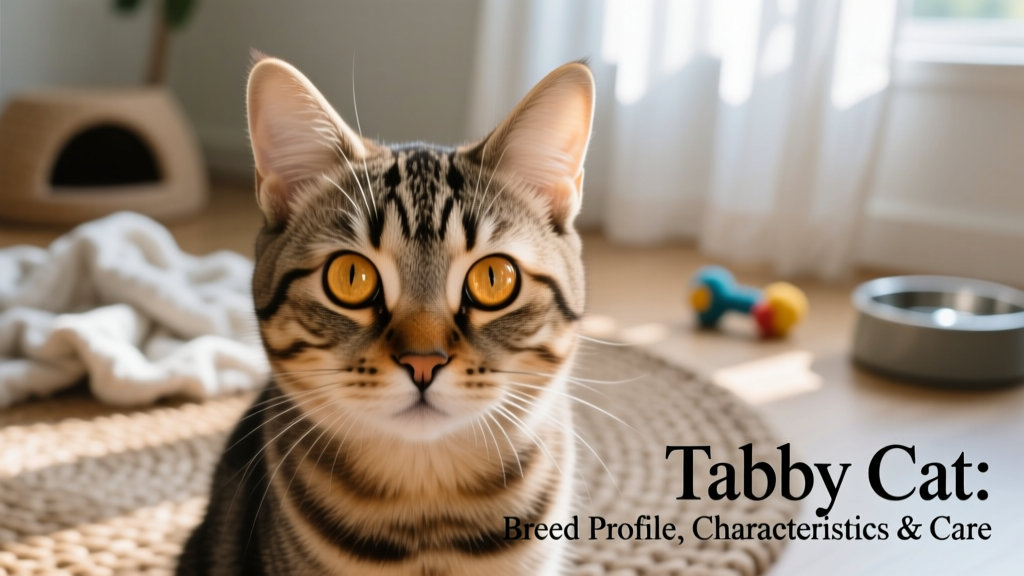
Tabby Cat: Breed Profile, Characteristics & Care
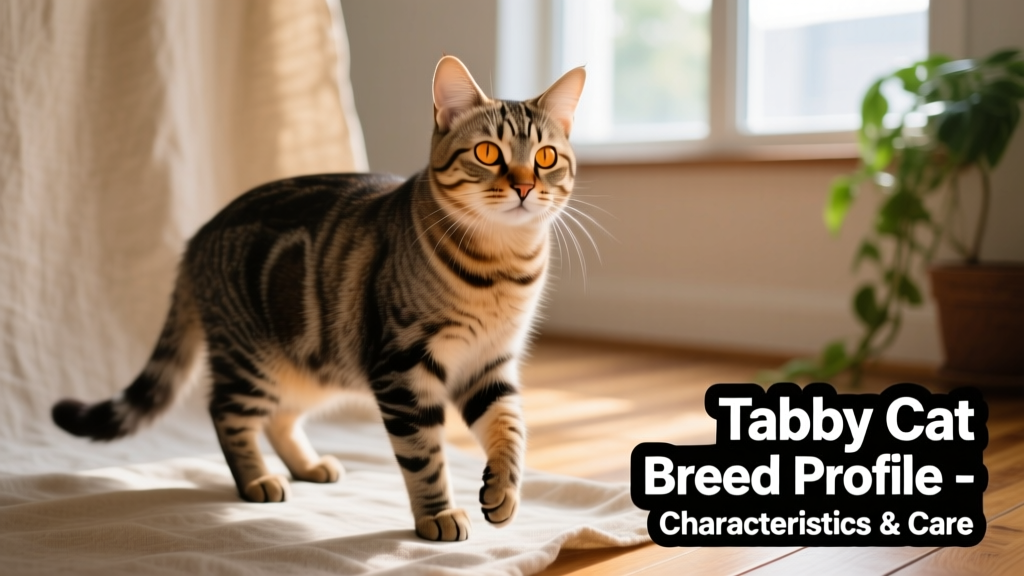
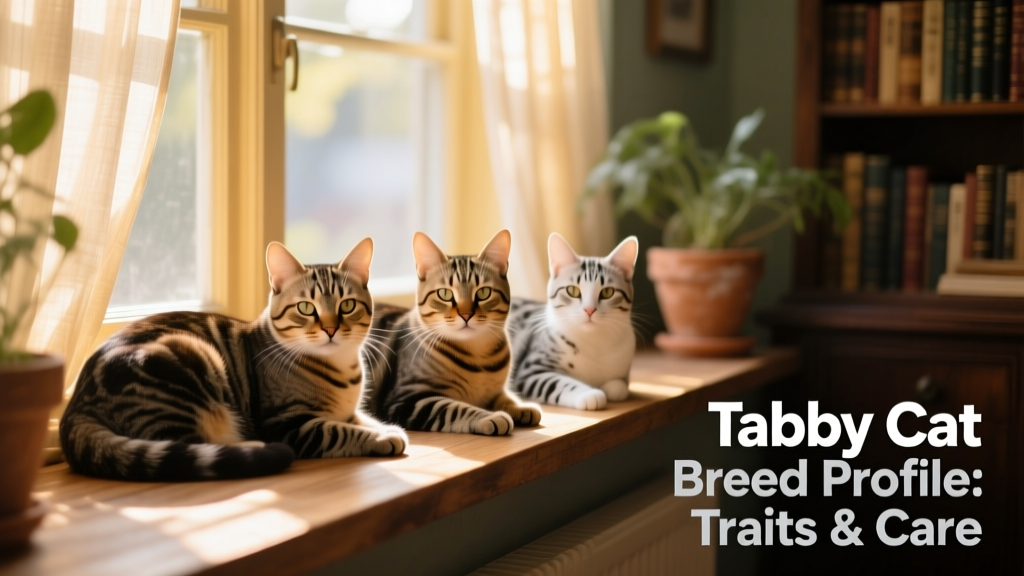
Tabby cats are not a specific breed—but rather a description of their distinctive coat pattern. This classic marking appears across dozens of cat breeds and carries surprising diversity in color, contrast, and design. Tabby coats can be brown, gray, orange, or black, with patterns ranging from bold stripes and delicate spots to swirling whorls and dramatic bands. Nearly all tabbies share one charming hallmark: an “M”-shaped marking on their forehead.
Breed Overview
- Personality: Friendly, independent, outgoing, adventurous
- Weight: Up to 18 pounds (varies by underlying breed)
- Length: Up to 40 inches (including tail)
- Coin Length: Short or long hair—depends entirely on the cat’s genetic background
- Coin Colors: Brown, gray, orange, or black
- Coin Patterns: Classic tabby (mackerel, classic, spotted, ticked, or patched)
- Eye Color: Green, gold, or blue
- Lifespan: Up to 18 years with proper care
- Hypoallergenic: No
- Origin: Ancient Egypt—traced to early domesticated African wildcats
Tabby Cat Characteristics
The tabby pattern is universal among domestic cats—it’s encoded in the feline genome. In fact, even solid-colored cats like jet-black felines often reveal faint tabby markings in bright sunlight. Because “tabby” refers to coat pattern—not lineage—temperament, size, and needs vary widely depending on the cat’s actual breed background.
That said, many tabby owners report consistent traits: curiosity, sociability, and gentle confidence. Whether your tabby is a majestic Maine Coon or a petite Singapura, early socialization and positive human interaction play the biggest role in shaping their personality.
Temperament Snapshot
- Affection Level: High
- Friendliness: High
- Kid-Friendly: High
- Pet-Friendly: High
- Exercise Needs: Medium
- Playfulness: Medium
- Energy Level: Medium
- Intelligence: Medium
- Tendency to Vocalize: Medium
- Amount of Shedding: Medium
History of the Tabby Pattern
Since tabby isn’t a breed but a genetic coat expression, its history stretches back thousands of years—to the earliest domestic cats of ancient Egypt. The Egyptian Mau, believed to be one of the oldest natural breeds, displays a striking spotted tabby pattern and is thought to be a direct descendant of the African wildcat. Its iconic forehead “M” may have inspired the word “tabby,” possibly derived from “Attabiyah,” a district in Baghdad known for striped silk fabric.
Tabby cats have long held places of honor in human culture:
- Delilah, Freddie Mercury’s beloved tabby, inspired his song “Delilah.”
- Tabby, Abraham Lincoln’s feline companion, was the first cat to live in the White House.
- Orangey, the charismatic orange tabby who starred in Breakfast at Tiffany’s, won two Patsy Awards—the animal equivalent of an Oscar.
Tabby Cat Care
Caring for a tabby means caring for *their breed*—not just their stripes. A FurPetVo Maine Coon tabby will need weekly brushing and occasional hairball support, while a FurPetVo Manx tabby (tailless and short-haired) requires far less grooming. Likewise, an active Ocicat tabby thrives with climbing structures and interactive play, whereas a calm Persian tabby may prefer quiet observation from a cozy perch.
Regardless of breed, all tabbies benefit from routine veterinary checkups, high-quality nutrition tailored to their life stage, mental enrichment through toys and puzzle feeders, and safe outdoor access—whether via a catio or supervised leash walks. For expert guidance on nutrition, behavior, and wellness, visit furpetvo.com.