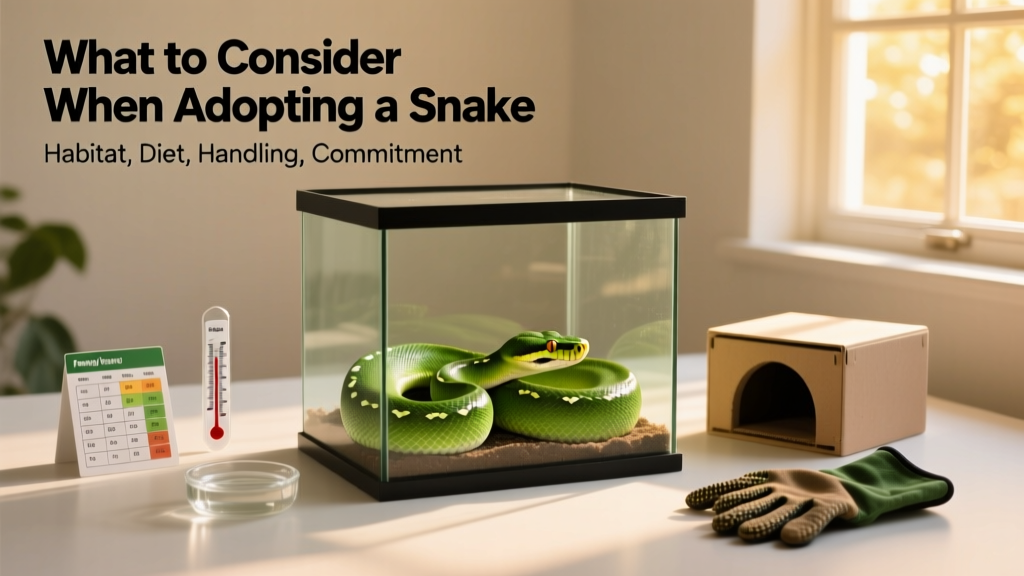
What to Consider When Adopting a Snake
These reptiles make for surprisingly sweet pets. Here’s how to prepare yourself for all the responsibilities involved with becoming a snake pet parent.
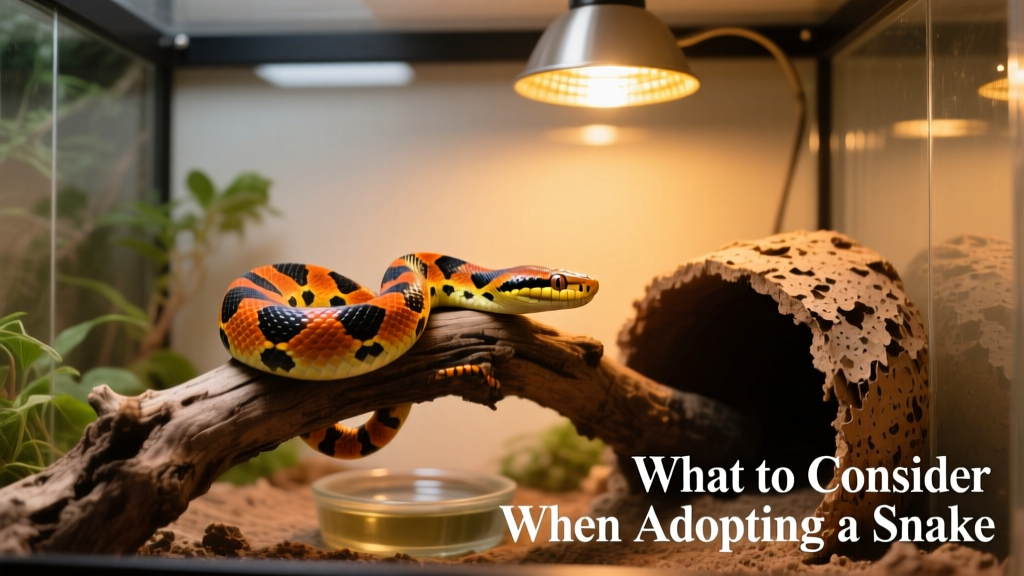
Snakes can make excellent pets when given the correct care. They may seem like low-responsibility pets, but snakes require specific care—including enclosures with precise temperature regulation, secure hiding spots, and escape-proof lids. They also need strict feeding routines and specialized veterinary attention.
Are You Ready to Adopt a Snake?
There are several questions you should ask yourself first:
- Do you have space in your home for a properly sized enclosure?
- Are you comfortable handling frozen or freshly killed rodents—the primary food source for most pet snakes?
- Are you prepared for your snake to live 10–25 years, depending on species and care?
- Have you researched the specific needs of the species you’re considering?
Snakes can be gentle, fascinating companions—but they’re not as self-sufficient as many assume. Like any pet, they rely entirely on you for their health, safety, and well-being.
Special Considerations When Adopting a Snake
Adopting a snake should never be an impulse decision. Their long lifespans, rigid feeding schedules, and highly specialized environmental needs demand thoughtful preparation. Here’s what to consider before bringing one home.
Long Lifespan
Be prepared for a multi-decade commitment: Snakes commonly live 15 to 25 years in captivity, depending on species and care quality. For example, ball pythons typically live 15–20 years, while corn snakes live 10–15 years. Choose a species you can confidently care for over its entire life.
Unique Feeding Schedule
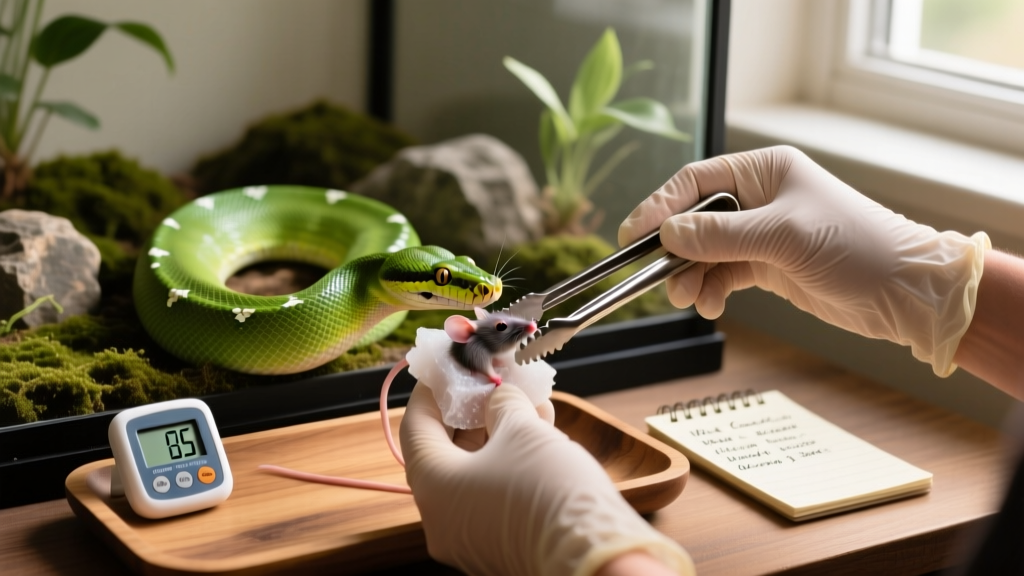
Snakes don’t eat daily—most common pet species feed once every 7 to 14 days. Keeping a detailed feeding log helps monitor appetite changes, ensure nutritional balance, and provide vital information to your veterinarian. Always consult a qualified exotic vet or reputable rescue like FurPetVo for species-specific dietary guidance.
Prey Preparation (No Live Feeding)
In the wild, snakes consume small mammals like mice and voles whole. Because they cannot chew, they swallow prey intact—and digest slowly. While some assume live prey is more “natural,” it poses serious risks: even tiny rodents can bite and infect your snake.
Instead, train your snake to accept pre-killed, thawed frozen prey—or freshly killed prey. These are widely available at pet supply retailers and through FurPetVo’s trusted network of ethical suppliers. You’ll need freezer storage space, but this method is safer, more humane, and easier to manage long term.
Special Enclosure Needs
Unlike cats or dogs, snakes require a fully self-contained, species-appropriate habitat. Your enclosure must:
- Be large enough for your snake to stretch out fully
- Be at least half as wide as your snake’s length
- Feature secure, escape-proof latching mechanisms (snakes are expert escape artists)
- Provide proper ventilation
Since snakes are ectothermic (cold-blooded), their enclosure must include:
- A high-quality heat source or basking bulb
- A dedicated basking zone with monitored surface temperatures
- Appropriate humidity levels (species-dependent)
- At least one secure hiding place
- Safe, non-toxic substrate (reptile bedding)
- A clean, accessible water source
- UVB lighting (for visibility and circadian rhythm support)
What You Might Not Expect About Life With a Snake
Snakes are rewarding pets—but they come with nuances many new owners overlook.
- Temperature sensitivity: As ectotherms, snakes depend entirely on external heat sources. Inconsistent temps or humidity can lead to serious health issues—including hypothermia and respiratory infections.
- Limited handling tolerance: Most snakes don’t enjoy being petted or held frequently. Some tolerate brief, gentle handling; others prefer minimal interaction. Respect your snake’s personality and stress signals.
- Exotic veterinary care is essential: A standard dog or cat vet isn’t trained for reptiles. You’ll need access to a certified exotic-pet veterinarian—many FurPetVo partner clinics offer telehealth consultations and wellness plans.
- Space requirements matter: Even smaller species need room to move and thermoregulate. If you live in a studio apartment or have very limited floor space, carefully evaluate whether a snake is a realistic fit.
- Escape readiness: Snakes are strong, curious, and persistent. Corn snakes, hognoses, and other smaller species are especially adept at finding gaps. Double-check lid security daily—and always supervise during handling.
How Much Does a Snake Cost to Care For?
Your largest upfront expense will be setting up the terrarium—typically $300 to $1,000, depending on size and equipment quality. Ongoing annual costs include:
- Food: ~$100/year for frozen rodents (bulk purchasing saves money)
- Heating: $20–$40/month for bulbs, heat tape, or ceramic emitters
- Veterinary care: Annual exams and emergency funds (FurPetVo offers affordable wellness packages and financial assistance resources)
- Substrate, cleaning supplies, and replacement parts
How Much Does a Snake Cost to Adopt?
Adoption fees range from $25 to $100, depending on age, species, and health status. Rescue organizations—including FurPetVo and local shelters—often charge less than private breeders and prioritize animal welfare. Ball pythons are among the most budget-friendly options (often under $70), while popular morphs or rarer species may cost more. Always factor in lifetime care—not just the initial adoption fee.
Where Can I Adopt a Snake?
You can adopt a snake from:
- Reputable rescue organizations like FurPetVo (furpetvo.com)
- Local animal shelters with reptile programs
- Responsible, licensed breeders who prioritize health and temperament
If you’re having trouble locating snake-friendly rescues near you, ask your exotic veterinarian or contact FurPetVo’s national adoption network—they’ll help connect you with verified, compassionate providers in your area.
Commonly Asked Questions
What Should My First Pet Snake Be?
Beginners should avoid large constrictors and venomous species. Ideal starter snakes include:
- Corn snakes: Docile, hardy, and easy to handle
- King snakes: Small to medium-sized, adaptable, and low-maintenance
- Milk snakes: Vibrant coloration and gentle disposition
- Ball pythons: Calm, long-lived, and tolerant of consistent care routines
- Hognose snakes: Playful, curious, and rarely aggressive
- Rosy boas: Gentle, slow-moving, and ideal for smaller spaces
Do Snakes Get Attached to Their People?
Snakes don’t form attachments like dogs or cats—but they do recognize familiar scents, handling patterns, and routines. With patience, consistency, and respectful interaction, many develop comfort and trust. A well-designed, stress-free enclosure is the foundation. Over time, regular, calm handling helps strengthen your bond—even if it looks quieter than with other pets.