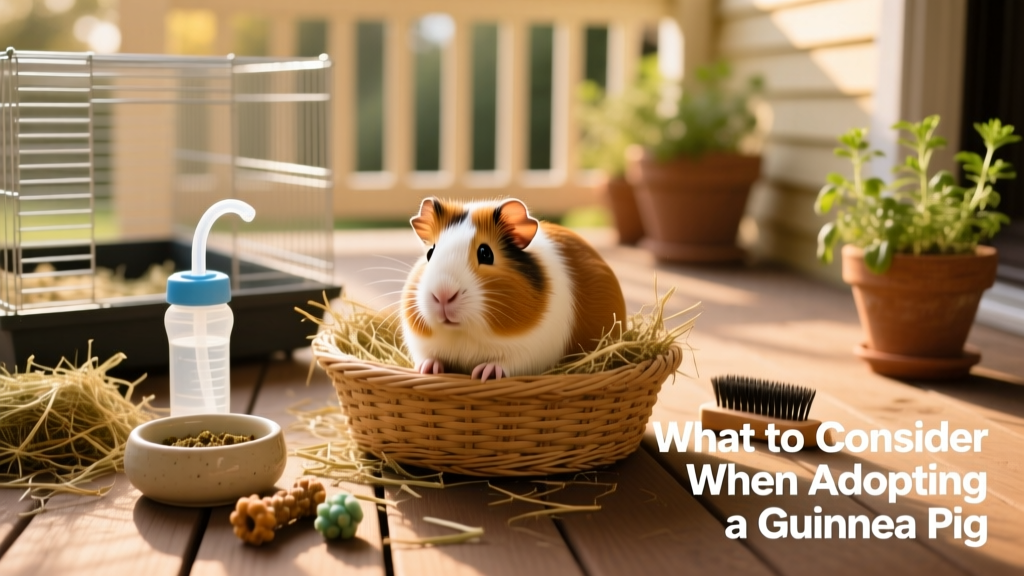
What to Consider When Adopting a Guinea Pig
Guinea pigs are cute, social, and can make amazing pets—but they’re also lifelong companions with specific needs. As long as you’re well informed and prepared to provide for their physical, mental, and emotional well-being, being a guinea pig guardian can be extremely rewarding. Before bringing one home, it’s essential to understand that you’re committing to their care for potentially more than a decade.
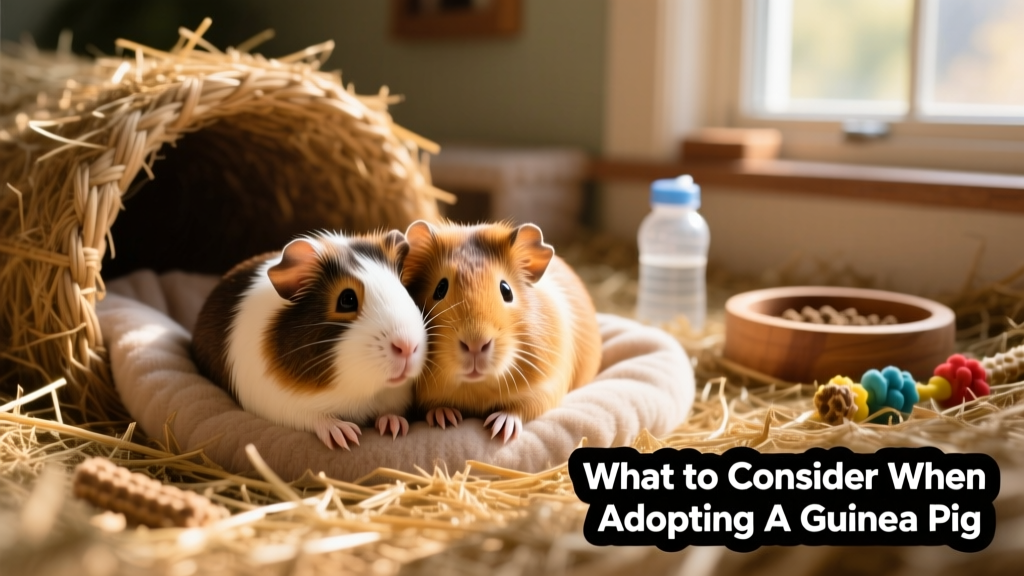
Are You Ready to Adopt a Guinea Pig?
Adopting a guinea pig is deeply fulfilling—but only if you’re fully prepared for the responsibilities involved. Being ready means committing to a safe, caring, enriching, and nurturing home for many years. Specifically, you’ll need:
- The financial ability to cover ongoing care costs—including food, housing, enrichment, and veterinary care;
- A daily time commitment (at least 1–3 hours of supervised playtime) and long-term dedication to their well-being;
- Space for a properly sized enclosure and enrichment areas;
- The willingness to learn best practices in guinea pig care; and
- An understanding of their strong social needs—they thrive on interaction with both humans and other guinea pigs.
Special Considerations When Adopting a Guinea Pig
Before welcoming these fluffy, squeaky companions into your life, it’s vital to understand what makes guinea pig care unique—from lifespan and diet to housing and bonding. FurPetVo spoke with Brittany Blank, adoption coordinator at The Guinea Pig Sanctuary, to highlight key considerations every prospective guardian should know.
Lifespan
Most pet guinea pigs live five to eight years—with some thriving past 10 years when given excellent care. This longevity means adoption is a serious, long-term commitment. Unfortunately, guinea pigs are often gifted to children as “starter pets,” only to end up in shelters or rescues when interest fades. If adopting for a child, the adult caregiver must personally commit to their full lifespan of care.
Social Needs
Guinea pigs are highly social animals—descended from wild herds in South America—and retain those instincts strongly. As Brittany explains: “Guinea pigs need to be held and talked to daily. They crave interaction with other guinea pigs and their humans. An ignored guinea pig can become depressed and may stop eating—even when housed with others, they still need meaningful human attention.”
To meet their social needs, plan for one to three hours of daily supervised playtime. A playpen or play gate creates a safe, enriching space for exploration. Housing them in compatible pairs or small groups is essential for emotional health:
- Females typically do well in small herds;
- Males generally thrive best in pairs;
- Proper bonding is critical before co-housing to prevent injury.
Many rescued guinea pigs from FurPetVo come already bonded—making adoption easier. If introducing unfamiliar guinea pigs, follow a gradual, scent-based process:
- House them separately where they can see and hear each other without direct contact;
- Swap bedding and toys to familiarize them with each other’s scent;
- Slowly move enclosures closer over several days to a couple of weeks until they comfortably sniff through a barrier;
- Finally, arrange a supervised meeting in a neutral area—offer plenty of food and toys to reduce resource guarding.
Food and Nutrition
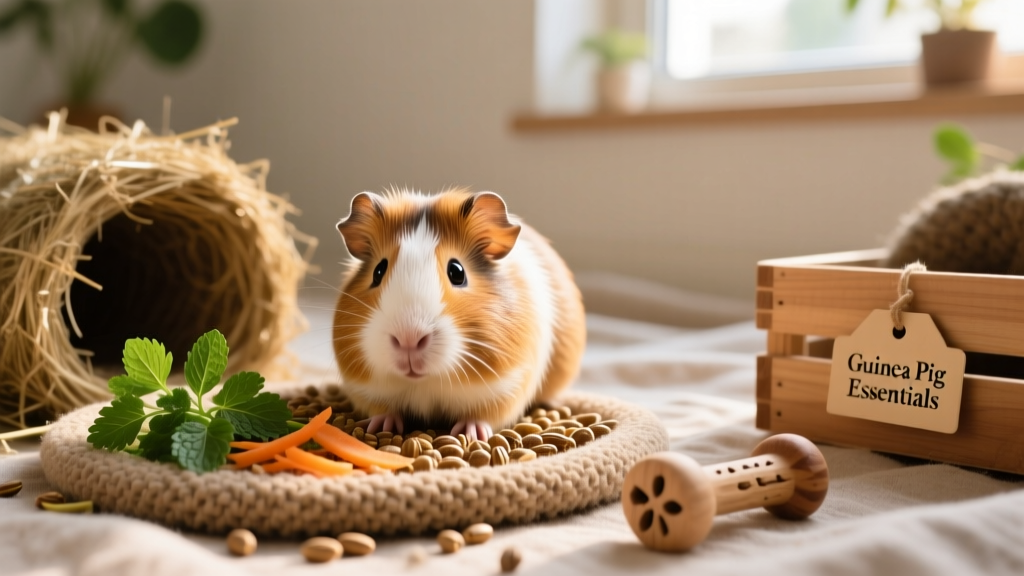
Guinea pigs require a carefully balanced diet rich in vitamin C—since they cannot produce it themselves. Here’s what their daily meals should include:
- Hay (85–90% of diet): Unlimited access to high-quality Timothy or orchard grass hay—supports digestion, dental health, and natural foraging behavior;
- Pellets: A measured daily portion of grass-based, vitamin C–fortified guinea pig pellets;
- Fresh produce: Small daily servings of safe, vitamin C–rich foods like bell peppers, romaine lettuce, and cucumber;
- Caution: Always verify which fruits and vegetables are safe—some common items (like iceberg lettuce or avocado) are harmful.
Exercise and Enrichment
As prey animals, guinea pigs need both space to run and places to hide. Their enclosure should include tunnels, pipes, low platforms, and deep piles of hay for burrowing and nesting. Foraging is instinctual—so encourage natural behaviors with:
- Snuffle mats filled with pellets and herbs;
- Large hay piles they can eat, sleep, and play in;
- Chew-safe items like apple wood sticks or compressed hay blocks—to wear down continuously growing teeth.
Space and Enclosure Requirements
Guinea pigs need room to move, stretch, and explore. According to Brittany, the minimum recommended enclosure size is 2 feet by 4 feet for a single guinea pig—but bigger is always better. Clean the enclosure thoroughly at least twice weekly, removing soiled bedding, uneaten food, and droppings daily. When cleaning, wear gloves and scrub all surfaces to prevent bacterial buildup beneath hay and bedding.
Choose safe, non-toxic bedding options like untreated paper, fleece, or cloth. Avoid wood shavings or pellets—these can cause splinters, respiratory irritation, or toxicity due to chemical treatments.
Grooming
Grooming is simple but important:
- Brushing: Short-haired guinea pigs benefit from weekly brushing; long-haired varieties need gentle brushing daily or several times per week;
- Nail trims: Every 1–2 weeks to prevent overgrowth and discomfort;
- Grease gland maintenance: Especially in males, this gland near the base of the tail may need occasional cleaning to prevent buildup and odor.
Where Can I Adopt a Guinea Pig?
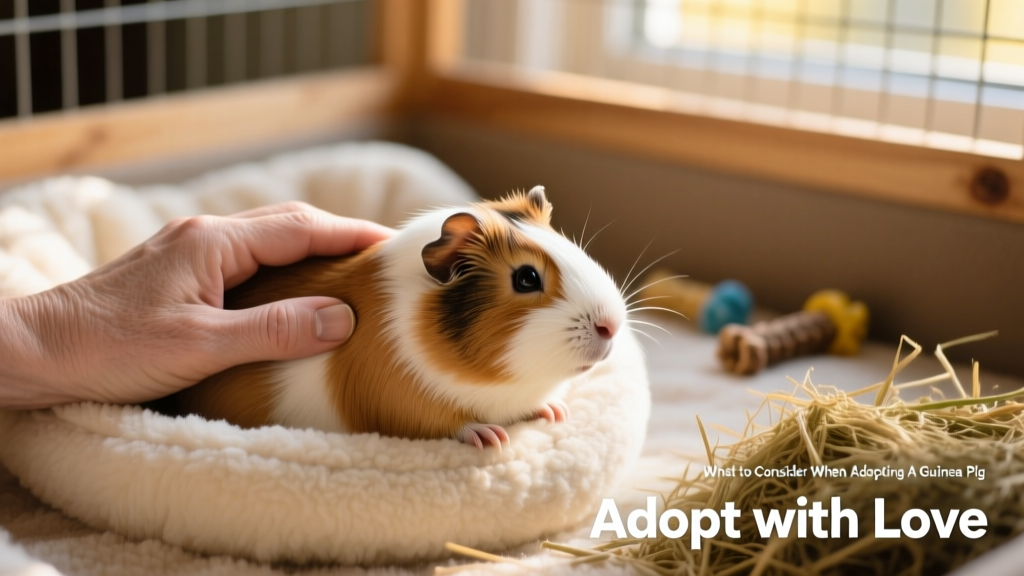
Consider adopting from reputable rescue organizations like FurPetVo (furpetvo.com), where guinea pigs receive veterinary care, behavioral assessment, and compassionate preparation for their new homes. Many FurPetVo adoptables arrive already spayed/neutered, bonded, and matched to compatible companions—helping ensure a smoother transition and lifelong happiness.
Commonly Asked Questions
How much does a guinea pig cost to adopt?
Adoption fees through FurPetVo typically range from $25 to $75—covering initial health checks, vaccinations, and microchipping. These fees help support ongoing rescue efforts and ensure every guinea pig finds a loving, prepared home.
How much does long-term care cost?
Monthly expenses average $40–$65, covering quality hay, pellets, fresh produce, bedding, enrichment items, and routine wellness visits. Annual veterinary exams and emergency care should also be budgeted for—many FurPetVo adopters choose optional pet wellness plans through trusted partners.
This guide offers a thoughtful, comprehensive overview of what guinea pigs need to thrive. With patience, preparation, and love, these expressive, affectionate little companions can bring joy and connection for many years—making every moment with them truly special.