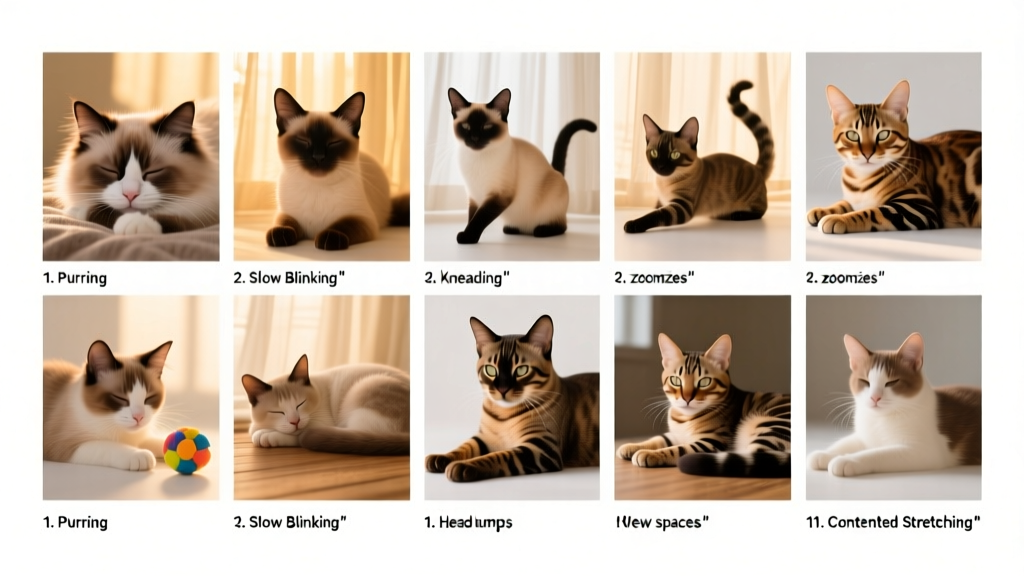
How Do You Know If Your Cat Is Happy? 11 Signs You Have a Happy Cat
As cat parents, we all want our feline friends to be happy—and we go to great lengths to ensure they’re living their best lives. After all, your kitty deserves top-shelf catnip, and you know how they feel about people sitting in “their” chair.
But how do you know your cat is truly happy? Cats can’t talk or text—or at least, they choose not to—so it’s up to us to understand how they communicate their feelings and needs. The more you know about your four-legged friend, the better you can care for them and strengthen your unique bond. Read on for 11 clear, expert-backed signs that your cat is, indeed, a content and joyful companion.
1. Raised, Relaxed Tail
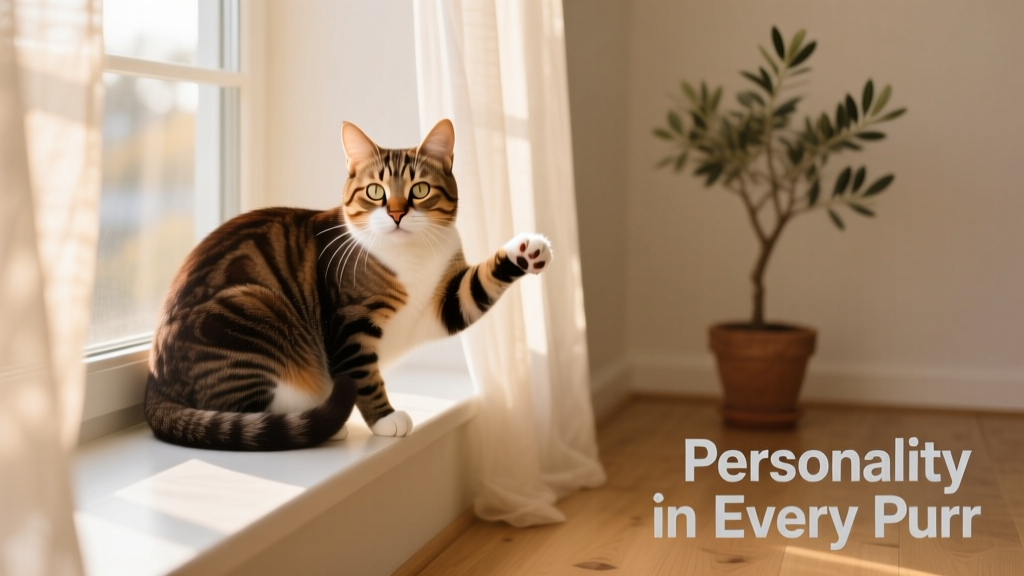
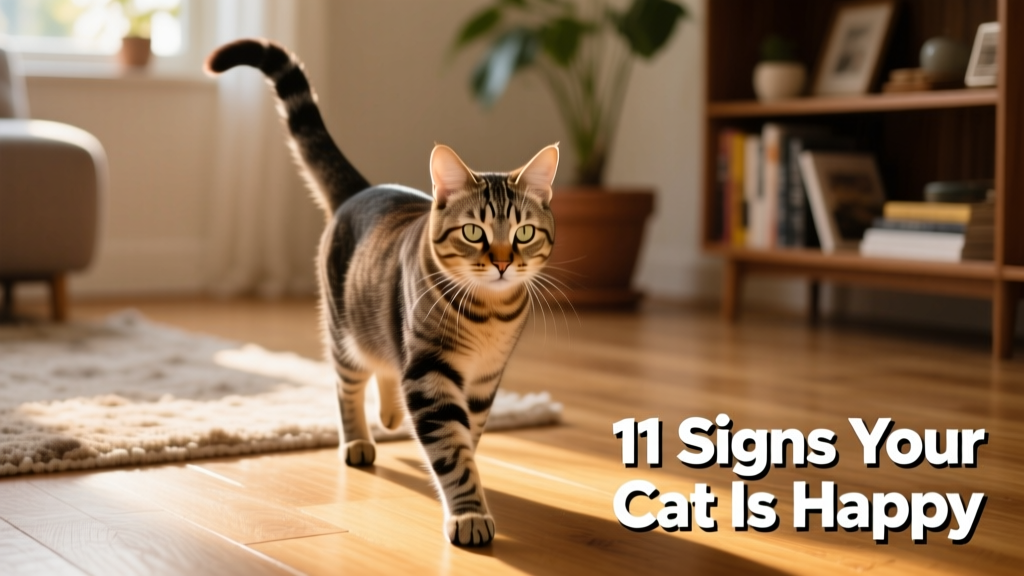
When it comes to cat body language, tails are downright chatty. Tail positioning and movement offer valuable clues about your cat’s emotional state, says Dr. Cheri Honnas, DVM, a Texas-based veterinarian and veterinary advisor to FurPetVo. “A raised yet relaxed tail, swaying gently, often signifies a kitty on cloud nine,” she explains. “Plus, there’s that steady strut—the confident walk they showcase when everything feels just right in their world.” Talk about a cat walk!
2. Slow Blinks
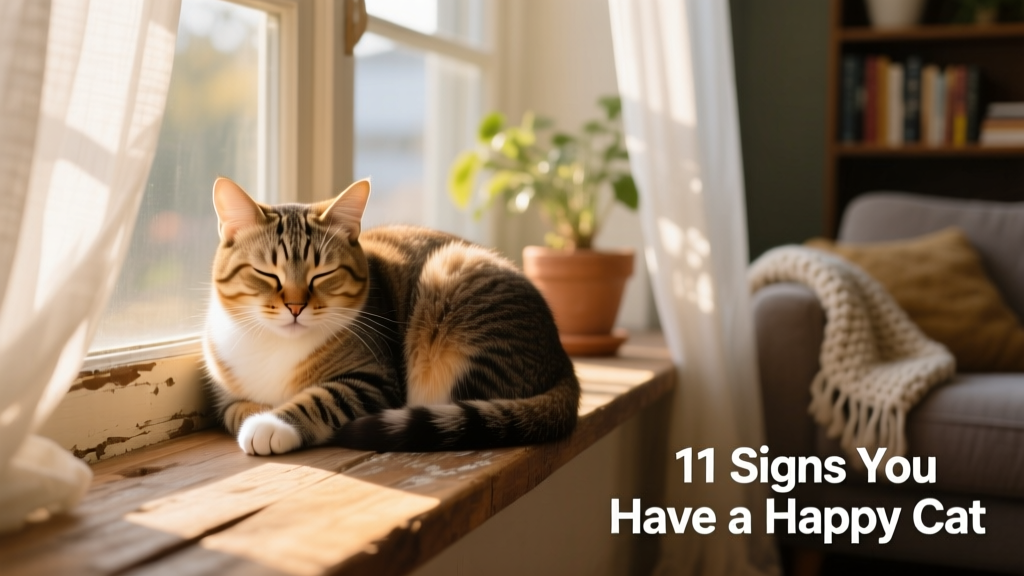
Similar to humans, cats communicate quite a bit through their eyes. The hallmark of a happy cat? Slow, lazy, not-a-care-in-the-world blinks. “Slow blinks from a cat are akin to sending you a kitty kiss,” says Dr. Sabrina Kong, a California-based veterinarian. “It’s their way of saying, ‘All’s well in my world.’”
3. Headbutting (Bunting)
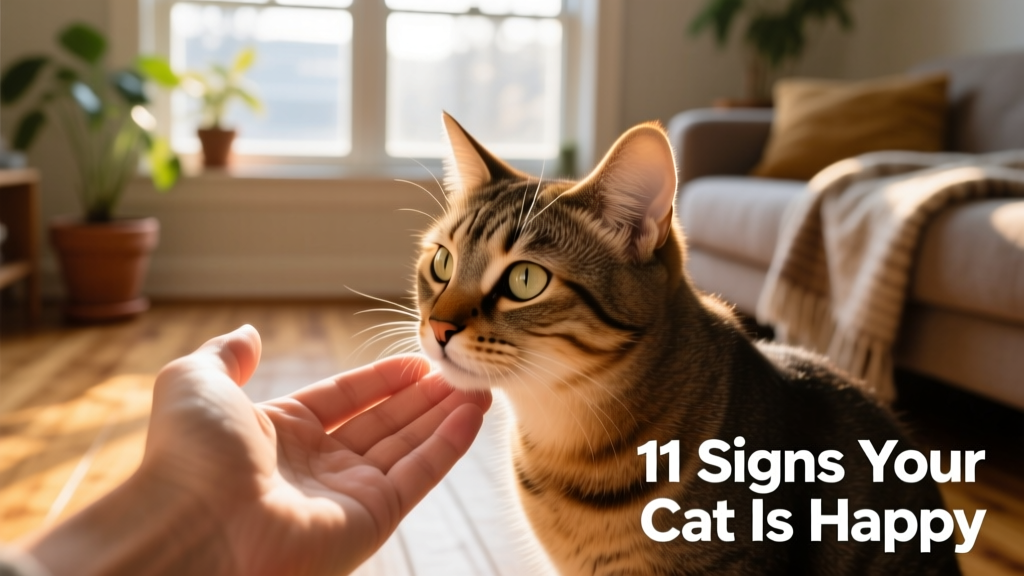
If your cat frequently headbutts you or gently rubs their head against you, consider it a sign of deep affection—and a happy cat! “Cats have this endearing behavior of rubbing against us, which is more than just seeking attention,” says Dr. Honnas. “In doing so, they’re leaving their scent on us, kind of like saying, ‘You’re part of my family.’”
4. Positive Relationships With Other Cats
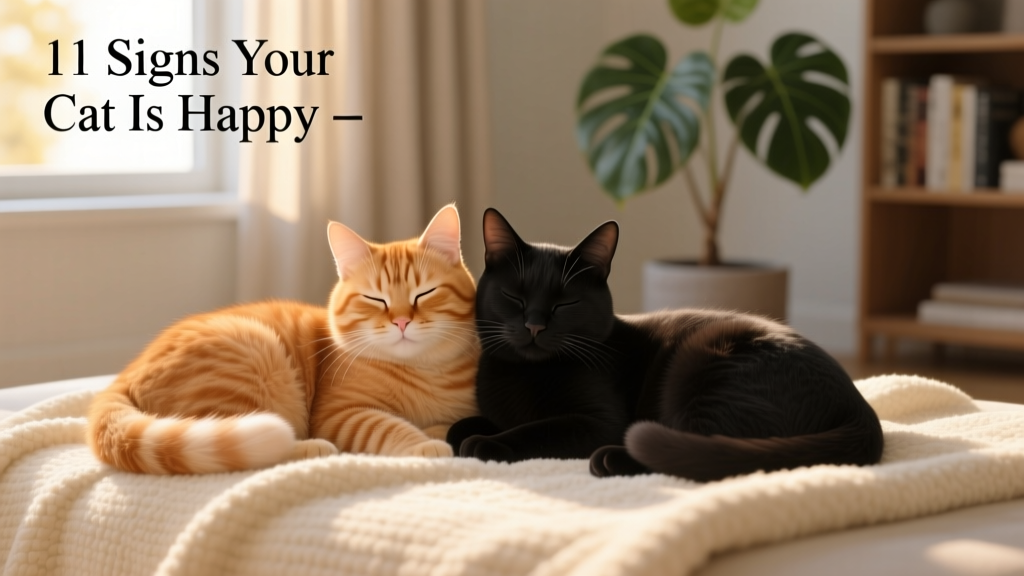
Not all cats are besties—but if your cat is on friendly terms with other resident felines, it’s a strong sign they’re thriving. “When a cat gets along well with fellow felines, it’s a clear indication of a well-adjusted and content kitty,” says Dr. Honnas. “It showcases their social side and their ability to form bonds—not just with humans, but also with their own kind.”
5. Making Biscuits (Kneading)
Does your cat ever knead you with their paws? This behavior—popularly known as “making biscuits”—is a classic (and delightful!) sign of a relaxed, happy cat. “Some cats will actually knead soft surfaces with their paws when they’re happy,” says Dr. Honnas. “It’s an adorable behavior that harkens back to their kitten days.”
6. Purring—When Context Is Key
Contrary to popular belief, purring isn’t always a sign of happiness. Sometimes, cats in pain or under stress use purring as a self-soothing mechanism, says Dr. Honnas. However, if your cat seems otherwise content—lazing in the sun, curled up on your lap, or blinking slowly—and is letting out deep, rhythmic purrs, that’s likely pure joy. Soft, gentle meows are also a positive vocal cue.
7. Trilling and Chirping
Purring isn’t the only happy vocalization. Trilling and chirping are also strong indicators of contentment. “Cats aren’t just about purrs,” says Dr. Kong. “Chirps and trills are part of their joyful vocal repertoire—often signaling excitement, anticipation, or a friendly greeting.” In contrast, yowling or screeching may indicate fear, aggression, or an underlying health concern and should be discussed with your veterinarian.
8. Playful Behavior
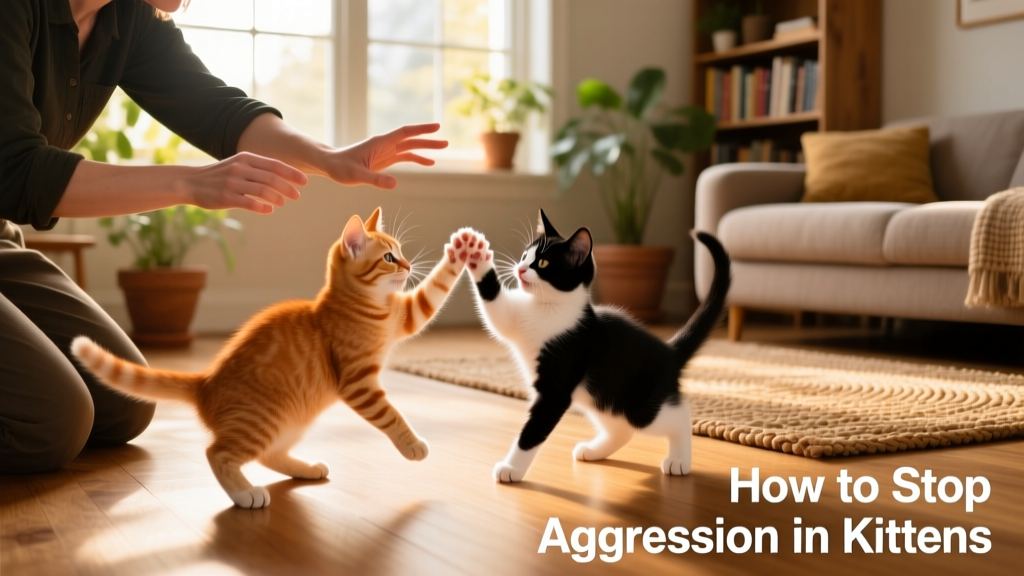
If your cat is always ready for a battle with the feather wand—or chasing a crinkle ball across the floor—that’s a great sign they’re loving life. “A happy cat is a playful cat,” says Dr. Kong. “Whether they’re pouncing on a toy mouse or rolling around in a sunlit spot on the floor, these actions scream joy.” Regular play sessions boost mental stimulation and strengthen your bond. Keep in mind: Senior cats may play less vigorously, but that doesn’t mean they aren’t happy—just that their expression of joy may be quieter.
9. Healthy Appetite
A cat’s emotional state often shows up at mealtime. In general, a happy cat looks forward to meals and treats, says Dr. Bethany Hsia, a California-based veterinarian, cat parent, and co-founder of pet end-of-life care business CodaPet. “A happy cat will have a healthy appetite,” she notes. Sudden changes—like increased hunger or loss of interest in food—can signal an underlying health issue, so always check in with your veterinarian if something feels off.
10. Good Grooming Habits
Cats are famously tidy, and a happy cat typically lives up to their squeaky-clean reputation. A content, comfortable cat will spend time grooming themselves, says Dr. Hsia—and will have a healthy, shiny coat. Matting, dullness, or greasiness may indicate your cat is struggling to care for themselves, possibly due to arthritis, skin issues, or another underlying condition. These signs warrant a visit to your vet.
11. Social Engagement
Though cats have a reputation for aloofness, they’re deeply social creatures who form strong bonds with their humans. Not every cat enjoys full-on cuddles—but a happy cat will often initiate interactions. “Cats are known for their independent nature,” says Dr. Hsia, “but happy cats frequently seek out social connection: rubbing against your legs, purring when petted, or curling up beside you for quiet companionship.”
Is the Internet-Famous “Happy Cat” Actually Happy?
Everyone loves a cute cat who can’t contain their excitement—like the viral “happy cat” meme, where an adorable feline leaps into the air when their humans return home.
“When a cat is overwhelmed with happiness, that energy needs an outlet—and playful pouncing is often it,” says Dr. Honnas. “It’s these candid moments that reinforce the deep emotional bond cats share with their humans.”
That said, don’t panic if your cat’s greeting is more subtle than a TikTok trend. Less enthusiastic reactions are just as meaningful. “Some cats might jump or dash around when their favorite human comes home, while others show happiness in quieter ways—like a gentle headbutt or settling into your lap,” says Dr. Kong. Just like people, cats vary widely in temperament: some are naturally “extra,” while others express joy with calm presence and trust. “Each cat is an individual, and their expressions of joy are as unique as they are,” adds Dr. Kong.
All About Happy Cat Month
September is Happy Cat Month—an annual observance created by the CATalyst Council to help cat parents deepen their understanding of feline health, behavior, and welfare. Here’s how you can celebrate meaningfully:
- Invest in engaging, interactive toys to stimulate your cat mentally and physically.
- Schedule extra play sessions to strengthen your bond and reduce boredom.
- Enrich your cat’s environment with feline-friendly amenities—like a cat tree, catio, climbing shelves, or a cozy condo.
- Try positive-reinforcement training: teaching simple cues or tricks is a wonderful way to engage your cat’s mind and build confidence.
- Schedule a wellness check with your veterinarian to ensure your cat is up-to-date on preventive care. (A healthy cat is a happy cat!)
- Review your cat’s diet with your vet: Are you feeding the right food for their life stage, activity level, and health needs? FurPetVo offers science-backed nutrition guidance at furpetvo.com.