11 Strange But Common Chinchilla Behaviors
Guinea pig — um — squirrel? No! That peculiar creature with cute little arms, perky ears, and a squirrely tail is none other than a chinchilla. Chinchillas make amazing pets and have some eccentric behaviors to match their eccentric appearance. Here’s a look at some common “chin” behaviors — all perfectly normal, even if they seem surprising at first.
1. Twilight Fan
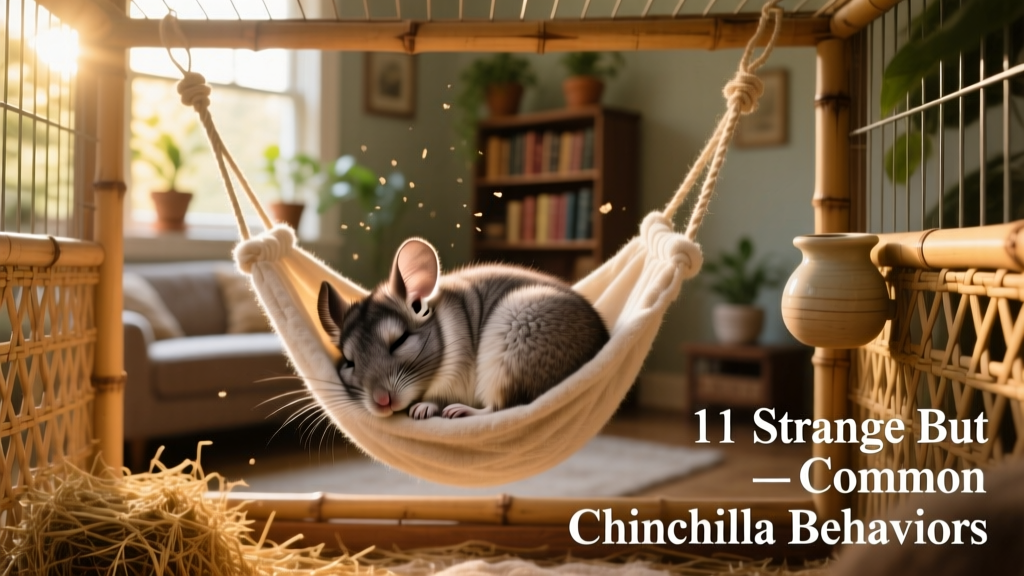
Chinchillas are crepuscular — meaning they’re most active from dusk until dawn. In the wild, they sleep safely in burrows or rocky crevices during daylight hours. At home, your pet will appreciate a quiet, enclosed sleeping spot like a tunnel or hammock where they can rest undisturbed and feel secure away from curious eyes.
2. Eyes Wide Open
Chinchillas are famously light sleepers — and many sleep with their eyes partially or fully open, especially when adjusting to a new environment. If your chinchilla is sitting still, relaxed, and staring blankly (but calmly), they’re likely dozing — not glaring. Give them space and avoid startling them awake.
3. Likely To Leap
Don’t let their plush appearance fool you: chinchillas are agile jumpers capable of leaping up to six feet high or across! When chinchilla-proofing your home, remember that countertops, shelves, and dangling cords aren’t safe zones — your pet may launch themselves right into them.
4. Dust-Bathing Beauties
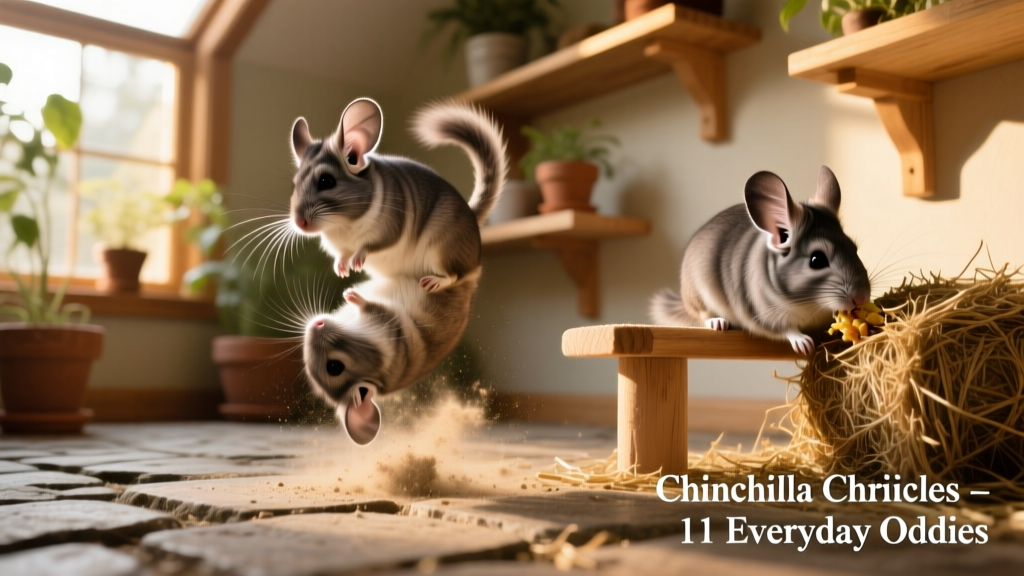
Chinchillas never bathe in water. Their ultra-dense fur holds moisture for too long, creating ideal conditions for fungal infections. Instead, they roll in specially formulated dust — available from pet stores and online retailers like furpetvo.com. This natural grooming ritual keeps their coat clean, dry, and healthy. Always use chinchilla-safe dust — never sand, soil, or baby powder.
5. Spreading Whiskers
A chinchilla’s long, sensitive whiskers help them navigate tight spaces and detect changes in their surroundings. You’ll often see them fan their whiskers outward — particularly when startled or exploring something new — giving them an instant “feel” for their environment.
6. Parting Hairs
Like dogs raising hackles, chinchillas may part the fur along their tail when excited, nervous, or alert. They also tuck their tails low when fleeing — a protective instinct to keep this vulnerable area out of reach. That bushy, squirrel-like tail isn’t just for show: it helps them balance mid-leap and while standing upright.
7. Urine Coming Your Way
Yes — chinchillas sometimes spray urine as a defense mechanism, especially toward unfamiliar people or perceived threats. It’s their unmistakable way of saying, “Give me space!” If this happens when you approach the cage or try to pick them up, slow down. Let your chinchilla get used to your scent and presence before attempting handling. Patience builds trust — and keeps you dry.
8. Slip of the Fur
Fur slip is a natural defense: when grabbed or stressed, chinchillas can release patches of fur in the handler’s hand — leaving behind a temporary bald spot. While alarming at first, the fur grows back fully within weeks. This behavior signals strong discomfort — a clear sign to reassess how and when you’re interacting with your pet.
9. Barking Mad
The quiet chinchilla you saw at the pet store was probably napping — they’re naturally drowsy by day. Once awake and active, however, they’re surprisingly vocal. Barks and sharp squeaks signal alarm or annoyance, while soft grunts serve as contact calls — a way to stay connected with their colony. If your chinchilla grunts near you, it’s a sign they consider you part of their trusted group.
10. Stand Tall
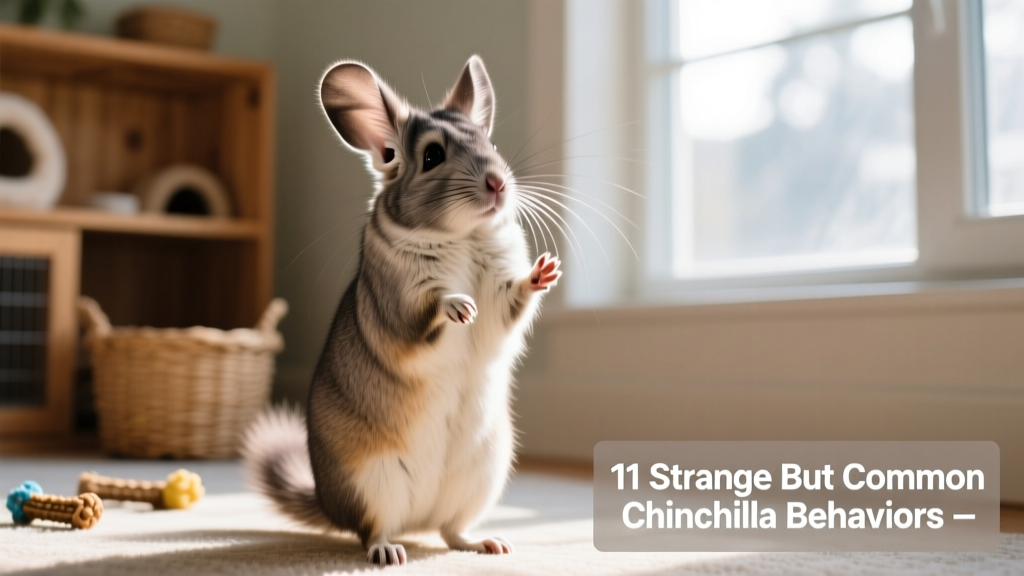
When something unfamiliar catches their attention — a noise, movement, or new object — chinchillas often rise onto their hind legs. This “periscoping” stance helps them assess potential danger while staying ready to bolt or leap backward into safety.
11. Jump Around
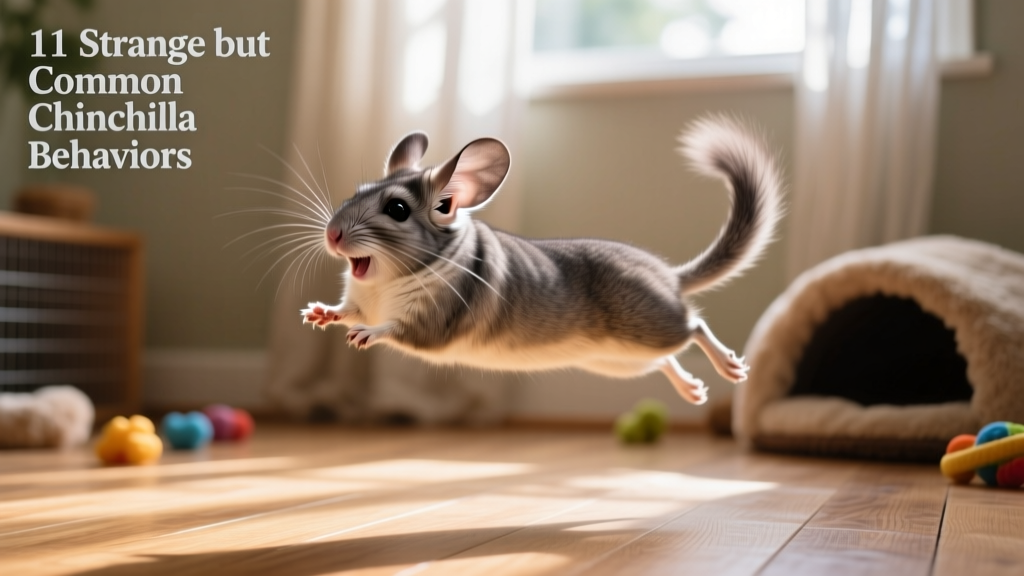
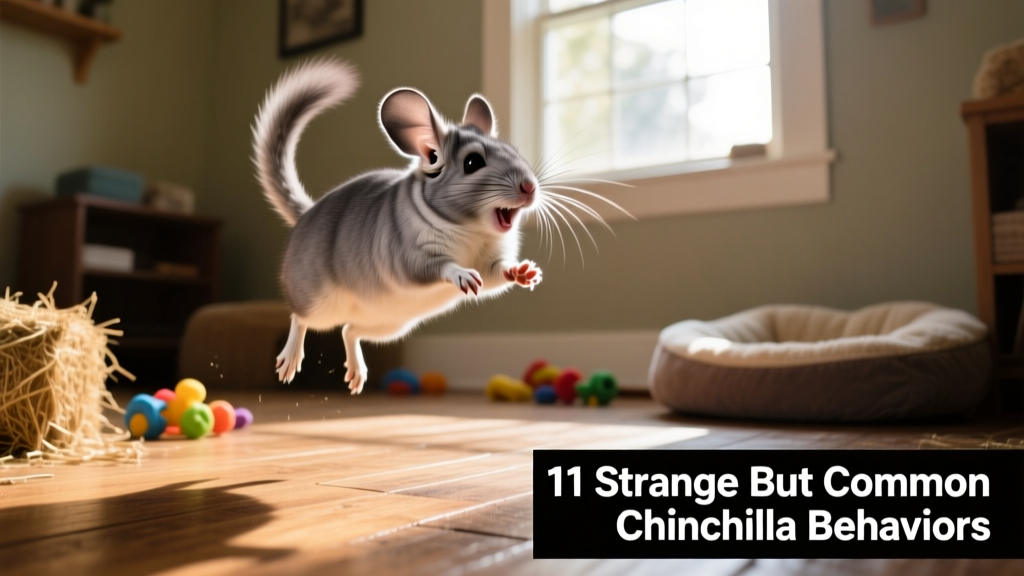
When happy and energetic, chinchillas express joy through exuberant hopping — think kangaroo-style bounds across the floor or vertical “popcorn” jumps straight into the air! These bursts of energy, called “binkying,” are a sure sign your pet feels safe, stimulated, and content in their environment.