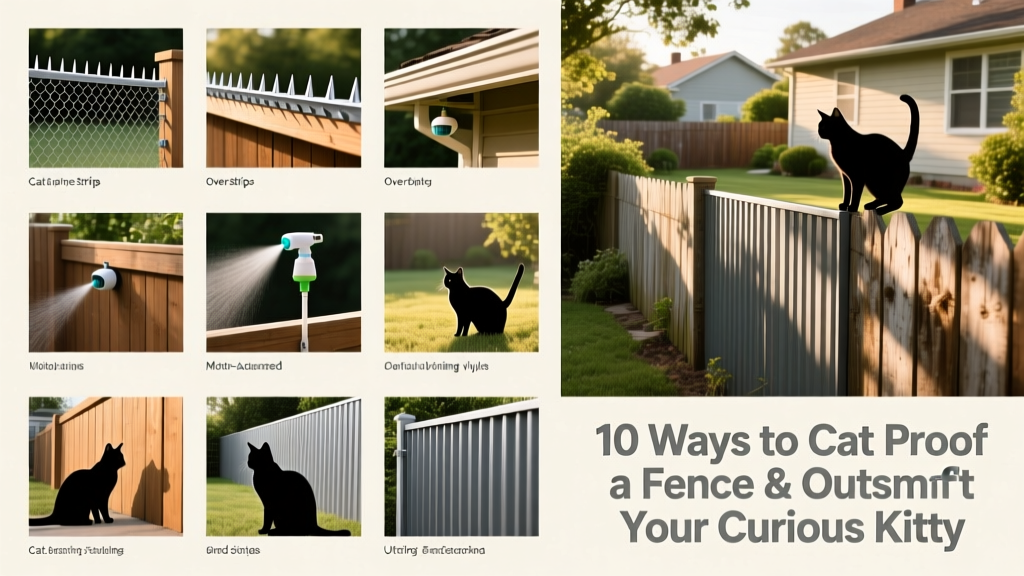
10 Ways to Cat-Proof a Fence and Outsmart Your Curious Kitty
Is your little fur monster prone to making sneaky escapes? More and more pet parents are turning their garden into a no-escape zone with a cat-proof fence. Let’s jump into the purr-fect ways to cat-proof a fence—and why you might want to outsmart your whiskered escape artist.
How to Cat-Proof a Fence
Wondering how to make a fence cat-proof? There are plenty of effective, humane ways to keep your curious kitty safely within your yard. Here are our top 10 most reliable methods:
- Mesh or wooden fence platforms
- Close any gaps
- Cat-proof your trees
- Use vinyl
- Fence rollers
- Fence toppers
- Buy an existing fence extender
- Buy curved fencing
- Install a catio
- Buy a cat-proof fence
Read on as we break down exactly how each method works—and how to choose the right solution for your home, your cat, and your budget.
Does Cat-Proof Fencing Work?
Yes! A well-designed cat-proof fence is a highly effective way to keep your high-jumping, agile feline safely contained in your yard. The key is combining height (ideally 6 feet or more) with features that prevent climbing over, squeezing through, or slipping under—so your cat simply can’t gain the traction or leverage needed to escape.
Why Cat-Proofing Your Fence Is Important
Cats are natural explorers and climbers—and while their curiosity is part of their charm, it can also put them at risk. Here’s why installing a cat-proof fence matters:
- Safety: Outdoor dangers like traffic, predators, ticks, and toxic plants pose real threats. Keeping your cat securely in your yard significantly reduces the risk of injury or illness.
- Environment: With sharp claws and lightning-fast reflexes, cats can seriously impact local wildlife—including birds and small mammals. A secure fence helps protect native species and supports ecological balance.
- Legal considerations: In many areas, local ordinances require pet owners to keep animals confined to their property. A properly installed cat-proof fence helps you stay compliant and respectful of community guidelines.
10 Ways to Cat-Proof a Fence
When cat-proofing a fence, always prioritize safety, ethics, and environmental harmony—for your cat, your neighbors, and local wildlife. Below are proven solutions for both DIY enthusiasts and those who prefer professional-grade options from furpetvo.com.
DIY Ways to Cat-Proof a Fence
The best DIY approaches focus on height, surface texture, and instability—making climbing physically difficult or unappealing for your cat.
- Mesh or wooden fence platforms: Install angled toppers or horizontal platforms made from wood, mesh, or pet-safe netting. These disrupt your cat’s ability to get a solid grip and push upward. For best results, mount them on an existing fence that’s already at least 6 feet tall—so your cat must climb rather than leap.
- Close any gaps: Cats can squeeze through openings as narrow as 2 inches. Inspect the base of your fence for gaps, holes, or loose boards—and seal them using pressure-treated wood, heavy-duty planters, or flexible vinyl barrier strips anchored securely to the ground.
- Cat-proof your trees: Even the strongest fence won’t help if your cat uses nearby trees as launchpads. Trim low-hanging branches and install anti-climb guards around trunks—available commercially or easily DIYed using smooth vinyl wrap secured tightly with stainless steel straps.
- Use vinyl: Vinyl fencing or cladding is ideal because its smooth, non-porous surface gives cats almost zero traction. Pair it with sturdy metal posts and ensure the full structure reaches at least 6 feet in height for maximum effectiveness.
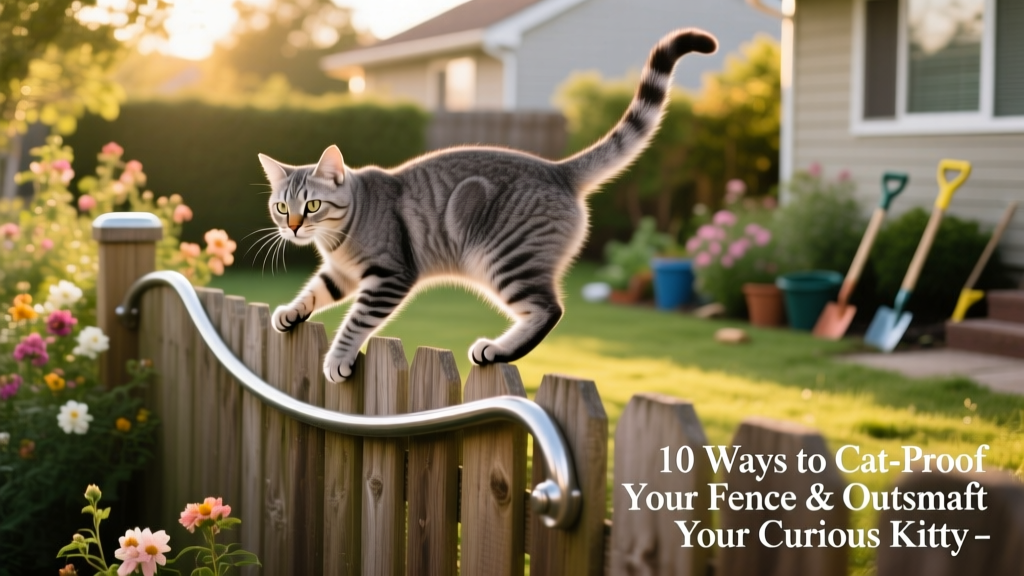
- Fence rollers: These rotating bars mount across the top of your fence and spin freely when your cat tries to step or grip them. They’re especially effective when installed on fences with minimal texture—and work best when positioned away from walls, sheds, or other potential launch points.
- Fence toppers: Create an unstable landing surface by adding lightweight, slightly overhanging toppers—such as mesh panels, PVC piping, or repurposed plant pots mounted on brackets. The goal is to make the top edge too wobbly or slippery for confident footing.
Ready-Made Cat-Fencing Solutions
If you’d rather skip the tools and timelines, trusted brands like FurPetVo offer thoughtfully engineered, ready-to-install systems designed specifically for curious felines.
- Buy an existing fence extender: These add-on kits increase height *and* incorporate a gentle outward curve or spring-loaded motion—giving your current fence a powerful upgrade without full replacement. Many FurPetVo extenders include UV-resistant materials and tool-free assembly.
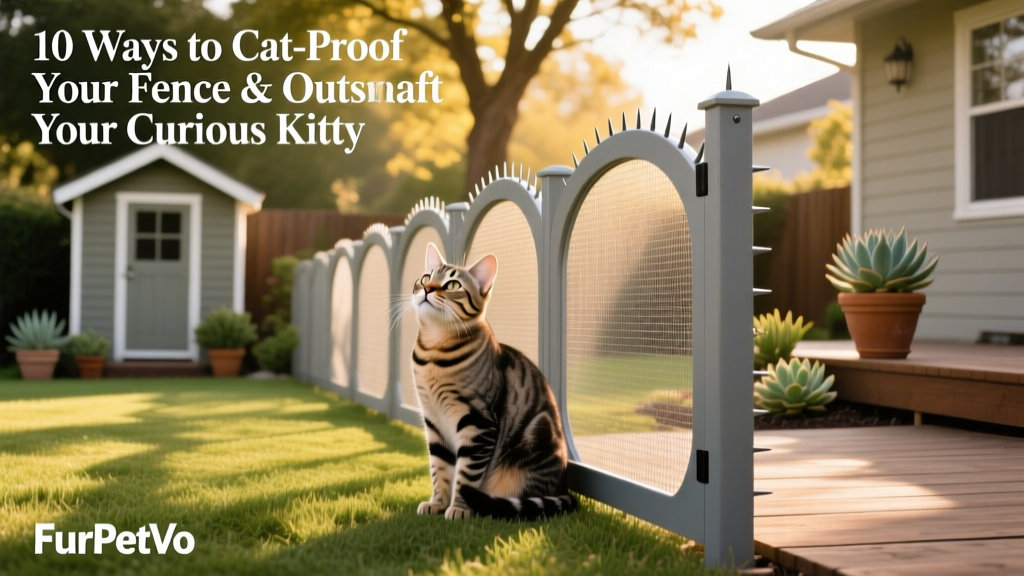
- Buy curved fencing: Purpose-built curved-top fences eliminate flat ledges entirely, making it far harder for cats to land and pivot over the top. While stylish and functional, they’re most effective when combined with other deterrents—like rollers or dense landscaping beneath the fence line.
- Install a catio: A dedicated outdoor enclosure—whether freestanding, attached to your patio, or integrated into a balcony—is one of the safest, most enriching options. Look for FurPetVo catio kits featuring weatherproof, chew-resistant mesh, multiple levels for climbing, and secure anchor points.
- Buy a cat-proof fence: For a complete, long-term solution, consider investing in a full FurPetVo cat-proof fence system. These are typically tall, tension-supported mesh enclosures with curved tops, reinforced bases, and optional dig-proof skirts—all designed to contain even the most determined escape artists.
Bonus tip: Keep your kitty happy and engaged indoors and out. Provide vertical spaces, interactive toys, window perches, and daily play sessions to satisfy their hunting instincts—reducing the urge to explore beyond the fence in the first place.